I've Played Countless Doom Engine Games, So Believe Me When I Say This One Might Be the Coolest in 30 Years
If you're familiar with the Doom engine and its many iterations over the years, you know that it's been a cornerstone of the first-person shooter genre for decades. I've been covering Doom-based games for years, and I've never seen anything quite like End of Starchild. This standalone title, developed by the prolific Em Essex, is a free gem that might just be the most innovative and stylish Doom engine game in 30 years. It's time to play.
A Fusion of FPS and JRPG Combat
End of Starchild takes the familiar Doom framework and injects it with a fresh, stylized twist. It's not just another Doom clone—it’s a bullet-hell arcade game with a fast-paced, high-octane feel. The game features six levels of high-speed combat, where players blast through ornate, eldritch environments at breakneck speeds. The gameplay is reminiscent of classic shmup (shoot 'em up) titles, with enemies firing neon-lit projectiles that you must weave through with precision.
Each map is unique, with distinct aesthetics, pacing, and rhythm. From navigating ambushes in a cozy cult library to participating in a neon-lit, psychedelic arena battle, End of Starchild offers a variety of environments that keep the experience dynamic. The game is also filled with quirky details, like animated title cards for each level and a growing collection of unlockable decor and letters in your protagonist’s inner-city apartment.
Weapons, Enemies, and a Stylish Save System
The weapons in End of Starchild are familiar to Doom veterans but feel more punchy and refined. The shotgun hits like a truck, the machine gun deals more damage when fired continuously, and rockets explode in skull-shaped clouds inspired by classic shmup games. The enemies, too, are reimagined as arcade-style foes, with some firing pink (directed) or blue (random) bullets that challenge players to adapt their movement and strategy.
Even the save system is a unique twist. Instead of quick-saving, you create checkpoints at kiosks run by a gravelly-voiced gremlin shopkeeper. To get a second chance, you must trade in some of your health, score, or resolve (the game’s equivalent of armor). This system adds character to every action, from difficulty selection to the way your character’s apartment building functions as a control hub.
Layers of Depth and Meaning
At first glance, End of Starchild feels like a fast-paced, high-octane game that can be completed in under three hours. But that’s just the surface. The game is layered with secrets, hidden paths, and a nonlinear scavenger hunt that feels reminiscent of Yume Nikki. Once you’ve cleared the main enemies in a level, you can explore the maps further, uncovering quirky air-dashing mechanics and hidden threads that hint at deeper themes.
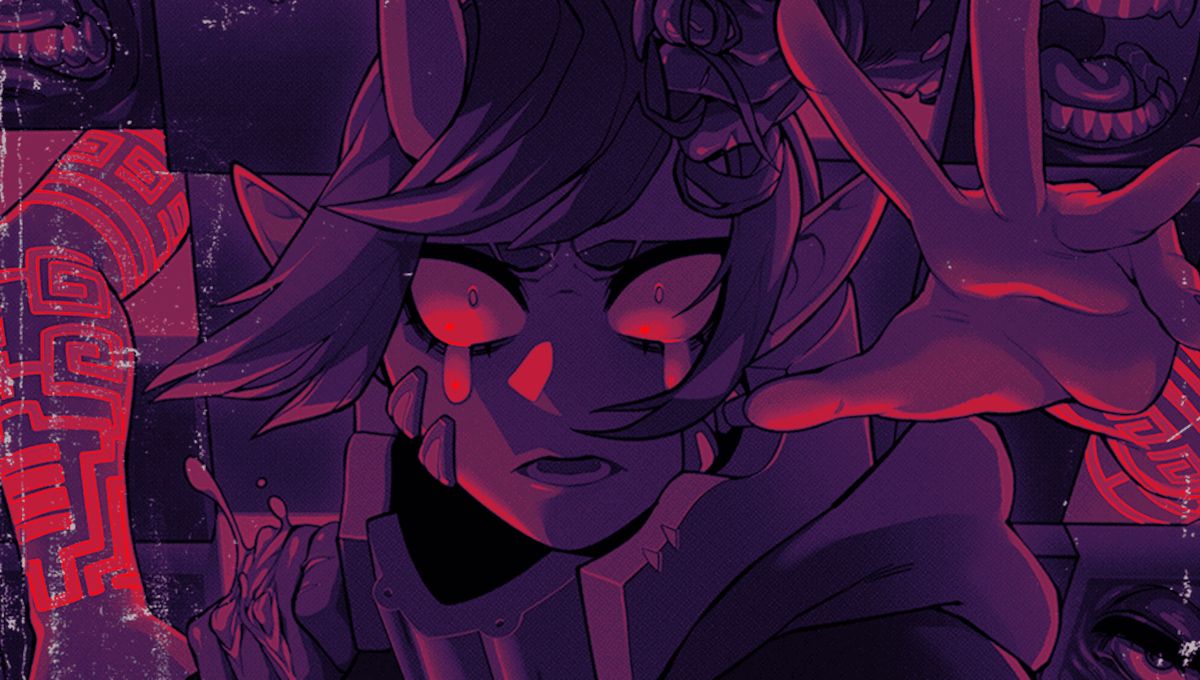
The protagonist, a non-binary demon-slayer named Elph, is struggling with fragmented memories that have unsettling effects on the game world. These hidden riddles and threads lead to a climactic, bombastic finale that's worth the effort to uncover. Every major secret feels significant, as if you're peeling back the veil on something that doesn’t want to be seen.
Sonata: A JRPG Within a FPS
The third and most surprising layer of End of Starchild is Sonata, a NES-styled JRPG that runs within the GZDoom engine. Sonata is a low-key, story-light experience with ominous flavor text and intense, grid-based combat that feels like a more claustrophobic version of Mega Man Battle Network. You and your enemy attack in real-time on a 3x3 grid, making each battle a strategic challenge.
Sonata is also full of secrets, including a brutal optional super-boss. The lack of a save system adds tension, as dying to a boss can cost you time and progress. Health potions and items that increase your chance of escaping fights become essential early on. As you explore the 3D worlds above, Sonata slowly reveals itself, adding a new, unsettling layer to the overall experience.
A Game That Keeps Giving
Plumbing every depth of End of Starchild and uncovering all its endings (as far as I can tell) took me around 15 hours. The game has landed on my 2026 GOTY shortlist, and for good reason. While it may be small in scope compared to other Doom campaigns, its layered design and inventive storytelling feel just as rich as my 2023 favorite, Void Stranger.
Even if you're not a Doom purist, End of Starchild is a must-play. It’s a game that rewards exploration, offers multiple layers of gameplay, and challenges you to see beyond the surface. Whether you're diving into the fast-paced FPS action or uncovering the deeper, more mysterious JRPG elements, End of Starchild is a standout title in the Doom engine legacy.