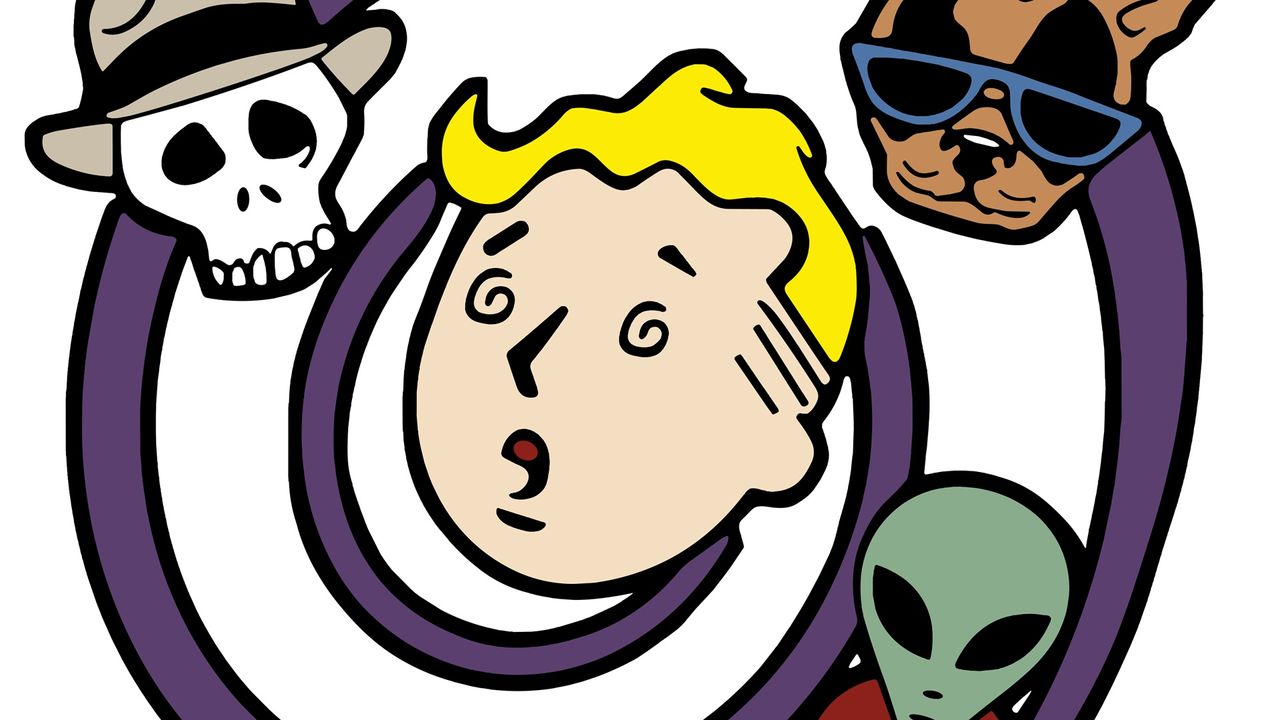
In a recent interview with YouTuber TKs-Mantis, former Obsidian creative director Chris Avellone shared his frustrations regarding how the Wild Wasteland feature was implemented in Fallout: New Vegas. He believes that making this specific trait part of the initial character creation process was a mistake for the game's mechanical balance.
The discussion centered on the zany, fourth-wall-breaking humor found in certain Fallout titles and whether such content should be optional. While TKs-Mantis appreciated having the choice to engage with this content, Avellone argued that its placement in character creation creates a flawed decision-making process for players.
Why the Wild Wasteland Trait Shouldn't Be Part of Character Creation
The Wild Wasteland trait is one of two selectable traits available at the start of New Vegas, offering character-defining abilities with both positive and negative aspects. These traits trigger unique, often wacky encounters throughout the game world.
Avellone noted that because these traits provide extra content, they essentially become a "no-brainer" choice. This creates a bias that undermines the purpose of other available character traits.
"It is one of enough those traits—and Fallout 3 also had these traits—where, if you choose it, you get more content," said Avellone. "You might be saying, 'Ok, well just choose it.' Well, the problem is, that's something that you're taking in character creation that's actually depriving other people of the full content."
A Better Implementation Method
Avellone suggested that rather than tying the choice to a player's permanent character stats, it should have been a separate toggle within the game interface. He believes this would have provided a more "fair" experience for players.
He expressed concern that the Wild Wasteland mechanics effectively tell players to ignore other options. According to Avellone, the presence of extra content makes the choice biased:
"From a system mechanics standpoint, you're actually telling players that, 'Hey, you're gonna want this choice, regardless of other options, because this gives you more content.' That's biased," Avellone argued. "For me, I'm like, 'Well, I'm gonna choose that no matter what. Because I don't want to miss a damn thing.' I want as much of the experience as I can get. It's not even a question."
The Cost of Choosing Chaos: YCS/186 vs. Alien Encounters
While Avellone focuses on the loss of content variety, TKs-Mantis pointed out a significant mechanical downside to selecting this trait. Choosing Wild Wasteland can actually overwrite certain high-tier loot and encounters in the game.
A prime example is the YCS/186, the unique version of the New Vegas Gauss Rifle. When the trait is active, the following changes occur:
- The standard mercenary encounter is replaced by an alien incursion.
- The captain of the mercenaries is replaced by an alien.
- Players may find the Alien Blaster, a fun but less build-defining weapon, instead of the powerful YCS/186.
The Value of RPG Friction
Despite the critique, there is a strong argument to be made for the "friction" created by these choices. While losing out on a weapon like the YCS/186 is a loss, the sacrifice can make certain playthroughs feel more meaningful.
As players mature in the RPG genre, the weight of a consequence—such as passing up a beneficial trait to see a specific gag—can enhance the experience. This sense of mechanical sacrifice is something often missing from modern titles like Baldur's Gate 3, which avoids such "alienating" design choices.
This tension is similar to the experience in 3rd Edition D&D, where choosing a race other than a human (who receives an extra feat) requires a genuine gameplay trade-off. Ultimately, players must decide: do they prefer the "beastmode" power of the YCS/186, or the simple joys of a Zybourne Clock reference and cyberdogs playing poker?