The vulnerability of trans-oceanic supply chains represents one of the most significant strategic hurdles in modern, high-intensity conflict. In a potential Pacific theater engagement, the thousands of miles separating U.S. manufacturing hubs from the front lines create a massive target for interdiction. This logistical gap is precisely why Firestorm Labs raises $82M to take drone factories into the field, moving the factory itself directly into the combat zone.
How Firestorm Labs Raises $82M via Decentralized Production
The San Diego-based defense startup announced its $82 million Series B funding round this week, led by Washington Harbour Partners. With participation from industry heavyweights such as Lockheed Martin, In-Q-Tel, and Booz Allen Ventures, the company has brought its total capital raised to $153 million.
As Firestorm Labs raises $82M to take drone factories into the field, it marks a significant pivot for a company that began as a traditional drone manufacturer. The firm has since evolved into a specialized provider of decentralized manufacturing capabilities, focusing on bringing production closer to the point of friction.
The xCell Platform: Manufacturing at the Edge
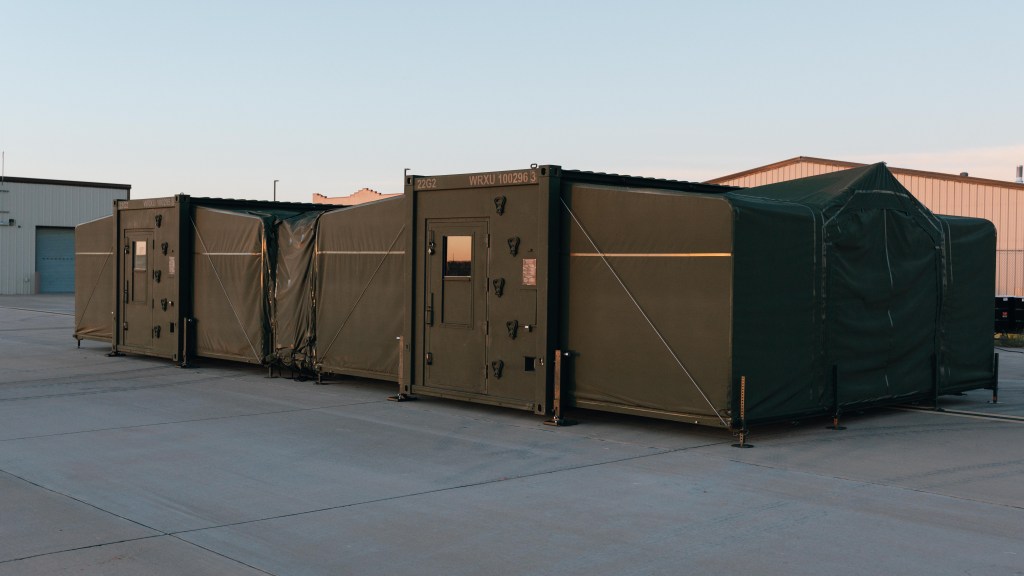
At the heart of this strategy is xCell, a containerized manufacturing platform designed to fit within standard shipping units. The system utilizes industrial-grade HP 3D printing technology—supported by a five-year global exclusive agreement—to produce drone airframes and shells in under 24 hours.
Unlike traditional manufacturing, which relies on stable, long-term logistics, xCell allows for rapid iteration at the edge of the battlefield. Because the drones are not fixed to a single mission profile, they can be reconfigured based on real-time intelligence. Depending on the needs of a commander, an xCell-produced unit can be optimized for:
- Surveillance and reconnaissance missions
- Electronic warfare and signal disruption
- Logistical support and part replacement
- Lethal strike configurations (when deployed by authorized commands)
This versatility extends beyond aerial platforms. The company has already demonstrated that the additive manufacturing capabilities of xCell can be applied to ground vehicle maintenance, such as printing replacement parts for a Bradley Fighting Vehicle on-scale, bypassing months of traditional procurement cycles.
Addressing the Crisis of Contested Logistics
The Pentagon has officially identified contested logistics—the ability to maintain movement and supply under fire—as one of its six national critical technology areas. Lessons from the conflict in Ukraine have been stark: fixed manufacturing sites are easily targeted, and the speed of technological evolution is currently outpacing traditional industrial capacities.
With xCell, a design flaw or an effective countermeasure can be addressed almost immediately by printing a local update. This capability is supported by a high-level leadership team, including CEO Dan Magy, co-founder Chad McCoy, and CTO Ian Muceus, whose portfolio includes over a dozen patents in 3D printing technology.
The Future of Defense Procurement
This expertise has already translated into tangible government contracts. While the company currently operates two xCell units domestically—one with the Air Force Research Laboratory and another with Air Force Special Operations Command—the broader goal is focused on the Indo-Pacific. The company aims for full operational deployment in this region within the next two years to mitigate long-range maritime logistics risks.
The influx of capital suggests a shift in how the Department of Defense views "the edge." An Air Force contract with a $100 million ceiling indicates that the military is willing to invest heavily in moving production closer to the fight. As manufacturing and deployment continue to blur, the success of Firestorm Labs will depend on its ability to scale these containerized units across larger geographical footprints.