Fumito Ueda is Rethinking The Companion Relationship That Defined His Career
First revealed a year and a half ago at 2024's The Game Awards as Project Robot, Fumito Ueda’s new game broke cover at Summer Game Fest earlier this month with new details (it has guns?), a new name (Gen Atlas), and some face time with its renowned creator.
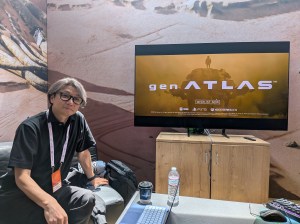
Ueda is one of gaming’s true auteurs, having directed three of the medium’s most beloved, singular games: Ico (2001), Shadow of the Colossus (2005), and The Last Guardian (2016), each produced for PlayStation consoles. The first two were developed under Ueda’s Team Ico banner inside Sony while The Last Guardian took a more complicated route to release, with Ueda directing inside Sony, then as a contractor, and then as the lead of his own independent studio, GenDesign. Now, a decade after the release of his last game, Ueda and GenDesign are back with a new publisher, a new game, and maybe a new outlook on game development. GameSpot spoke with him inside Epic Games’ booth at Summer Game Fest earlier this month.
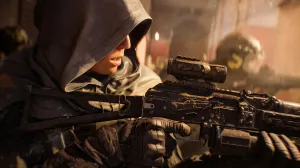
We started, where else, by asking Ueda about the scene that literally elicited gasps from the crowd when it was revealed in the trailer: The protagonist uses guns.
Perhaps unsurprisingly for a game codenamed Project Robot, the project “started with giant robots at its core, and then slowly but surely, we started world building,” Ueda tells GameSpot. “Once we got into this phase of, okay, this is going to be a sci-fi universe, I think it's not unnatural to have guns, other weapons and to have shooting in action. And so as a gameplay experience, I think it's somewhat maybe even expected when you hear a sci-fi action adventure game that you're going to be able to wield a weapon and do some shooting.”
While Ueda followed this up by declaratively stating, “This is not a shooting game,” he did suggest that some of the logic for equipping the player character with a weapon was born of player frustration from his earlier games. “For example, The Last Guardian, the player character didn't really have a weapon,” Ueda explains. “And so I think that also created a little bit of frustration as a player character. And so in order to sort of lessen the frustration or kind of soften that frustration, there was thought that went into this in terms of what are some of the tactics that the player character can use. And shooting is one of them.”
A New Era of Interaction
In Ueda’s previous games, the player character had a companion that was alive, albeit unable to directly communicate. In Ico it was Yorda, a princess whose language you couldn’t understand; in Shadow of the Colossus, it was your horse Agro who obeyed your commands (“Agro!”) but obviously couldn’t communicate back; and lastly in The Last Guardian, the impossibly charming Trico, a giant bird dog cat thing whose unspoken partnership is the actual thesis of the game.
Each of these games had a sort of fantasy theme to them, as barren as the narratives may be, so the shift to science fiction and big robots (and their detached heads) raises questions about that companion relationship central to his games. “The robot head is going to have different roles and functions,” Ueda says. “I can say that it could be at times a vehicle for your transportation. At times it will be your navigator. At times it can be a tool as just a functionality.”
If that sounds somewhat familiar to the basic companion structure of his previous games, Ueda clarified that the “kind of relationship that the main character is going to establish and build throughout the game [is not] necessarily the same kind of ‘you need to protect your companion or you are being protected.’ It's a little different from what you've seen in my past games.”
Ueda says that his previous games omitted direct communication between the player character and the companion because that was the reality of the game’s fiction (ie: horses can’t talk). But also having direct communication “kind of ends that conversation maybe by a line or by the next command or if the character says, ‘Oh, go to the north and to the woods and you can find this,’” Ueda explains. In keeping with that sense of “what is real in this setting, in this world, and the relationship that I am continuing to grow” with a companion, Ueda says that Gen Atlas’s player character and robot head companion will have some communication, in part owing to its sci-fi setting. “It’s not going to be a situation where you can't have communication,” he says. “You will. It's not going to be maybe as blatantly direct, but you will actually be able to have some level of communication.”
“There are some very fundamental setting differences such as going into the sci-fi world that has allowed me to make some different decisions and adjustments between how your character and companion used to communicate in my past games versus this one,” Ueda says. “So you'll probably be able to notice those differences and why they're happening and it's probably thanks to the setting that it's in sci-fi.”
The switch to sci-fi is perhaps not even the biggest change for Ueda in Gen Atlas; it’s also his first time developing a game for a multiplatform release, and inside of an off-the-shelf game engine (in this case, publisher Epic Games’ ubiquitous Unreal Engine). When asked if the access to a more powerful game engine and a multiplatform target has changed how he approaches development, Ueda was ambivalent. “Maybe there are challenges that […] haven't crept up yet for me because it hasn't been such a huge challenge. The one biggest difference for me though, is that all my previous games we had our own engine that we worked off of and Gen Atlas is built on Unreal. And so perhaps if I look at just the large subject of reporting on different consoles, yes, there are things that are different. But in a sense it hasn't really greatly […] changed anything that I've had to do.”
Game development as