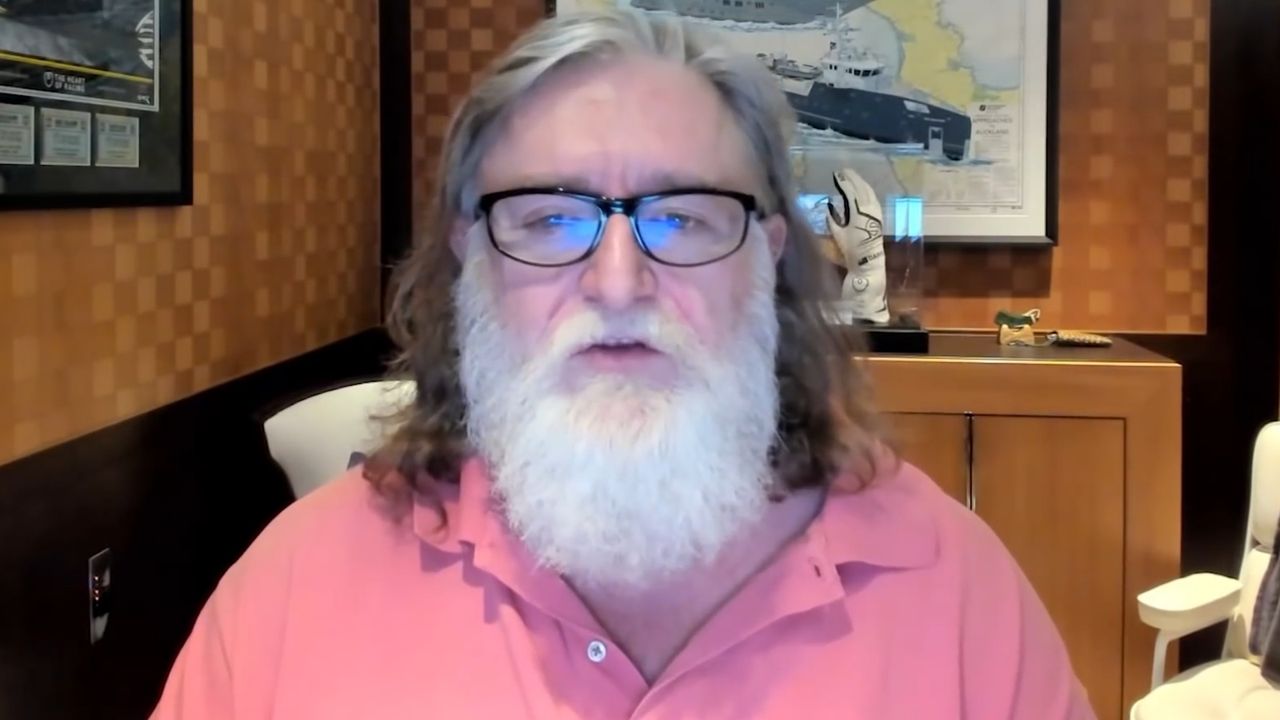
Valve boss Gabe Newell has a legendary track record of being right, most notably when he made Steam an essential component of Half-Life 2. At a time when the industry believed digital storefronts would never take off, his decision changed PC gaming forever. However, he was slightly off the mark eight years later when he suggested that Steam wasn't 'the answer to digital distribution' and predicted a future where the platform might be left in the dust.
When Gabe Newell Claimed Steam Wasn't 'The Answer to Digital Distribution'
In a 2011 interview, Newell expressed a cautious view of the industry's future. He noted that it is tempting to assume today's landscape will remain permanent, but experience taught him otherwise. "I and everyone at Valve know that you's only as successful as what you've done lately," Newell told us.
He warned that the idea that Steam wasn't 'the answer to digital distribution' ignored the rapid shifts caused by new technologies like the Wii or social gaming. He believed that if a platform stands still, it risks being left behind incredibly quickly.
At the time, Electronic Arts (EA) was positioning its own platform, Origin, as a direct competitor. EA even used quarterly financial reports to compare Origin's features against its "leading competitor." This era was marked by significant tension, including:
- The temporary removal of Crysis 2 from the Steam store.
- EA attempting to peel its library away from Valve.
- A growing sense of uncertainty regarding platform dominance.
Responding to the drama, Newell stated that it was incumbent on Valve to "create value for those partners," specifically mentioning developers like EA, Ubisoft, and Take-Two.
Why Steam Remained the Definitive Answer
While the industry has changed immensely in the last 15 years, Steam has managed to avoid being overtaken. Despite the arrival of the Epic Games Store and other challengers, Valve has focused on adding a steady stream of features rather than fighting purely for exclusives.
The landscape has shifted back toward Valve in many ways. A decade after that fateful interview, many of the industry's biggest players eventually "kissed the ring" and returned to the platform. This includes major heavyweights such as:
- Electronic Arts (EA)
- Activision
- Ubisoft
- Take-Two Interactive
Even massive competitors like Amazon failed to make a lasting dent in Steam's dominance. Through all the competition, Steam has continued to grow, recently surpassing 42 million concurrent users and adding thousands of new titles annually.
Perhaps most impressive is that Valve has maintained its 70/30 revenue split despite pressure from platforms like Epic and Microsoft, which offer lower percentages. Even though developers may not love the high cut, they keep coming back to the platform. It turns out that, despite Newell's 2011 doubts, Steam really was the answer after all.