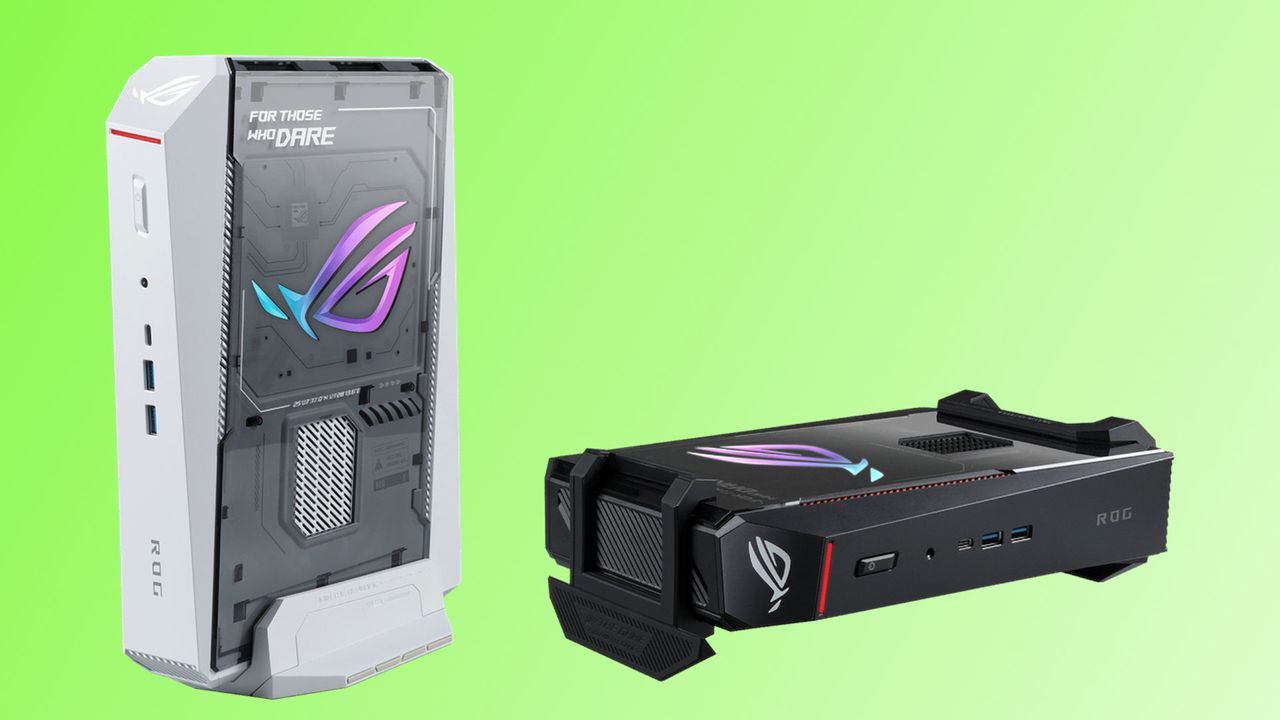
If you find traditional gaming laptops too bulky for your setup but are willing to spend a fortune for extreme portability, the new Asus ROG NUC might look like a dream come true. However, beneath its flashy exterior lies a device that challenges the very logic of the mini PC market.
The Specs of the Asus ROG NUC 16
Following Asus taking over Intel's Next Unit of Computing (NUC) line, the latest iteration—the ROG NUC 16—has arrived. While it maintains a similar foundation to last year’s model, there are some notable internal upgrades:
- Processor: Features Intel Arrow Lake HX processors (including Plus models).
- Graphics: Equipped with NVIDIA GeForce RTX 50-series mobile GPUs.
- Memory: Supports up to 128 GB of RAM (an increase from the previous 96 GB limit).
- Storage: Dual M.2 SSD slots for expandable high-speed storage.
Visually, the ROG NUC 16 has received a cosmetic spruce-up to appear flashier. While the "Moonlight White Edition" might strike some as looking a bit budget-tier, mini PC aesthetics remain highly subjective.
A Premium Price Tag for Niche Performance
Despite the hardware bumps, the Asus ROG NUC comes with a price tag that is difficult to justify for most gamers. While official MSRPs haven't been finalized globally, reports from Videocardz suggest pre-orders in China are hovering around the $4,400 mark.
For comparison, you can currently find the previous NUC model—featuring an RTX 5080, 32 GB of DRAM, and a 2 TB SSD—for approximately $3,868 on Amazon. If you are looking for the best value in high-end gaming, consider these alternatives:
- Lenovo Legion Pro 7i: Offers similar hardware for significantly less than $4,000.
- Framework Desktop: A superior choice for those needing massive unified memory for AI tasks.
The Problem with High-End Mini PCs
The core issue with the Asus ROG NUC is its target demographic versus its cost. Asus claims the massive memory capacity ensures "smoother high-FPS gameplay," yet the NPU in the Arrow Lake processor isn't quite powerful enough to fully leverage such large amounts of DRAM for AI workloads. Furthermore, if you rely on the GPU, you are still capped at 16 GB of VRAM on the RTX 5080 variant.
Mini PCs are traditionally defined by their ultra-compact footprint and a price point that offsets any minor performance compromises. By pushing prices toward $4,000, Asus has moved away from the "compact utility" concept and into a territory where the ROG branding alone is doing most of the heavy lifting. Unless you specifically need to save desk space at any cost, this device feels less like a gaming essential and more like a luxury item for those with deep pockets.