GM’s electric future depends on a new battery — and this building
A $900 million investment in a new battery chemistry and a modest-looking building in Warren, Michigan, is quietly reshaping General Motors’ electric vehicle ambitions — even as the broader EV market wavers.
A New Chemistry, A New Strategy
General Motors’ Battery Cell Development Center, tucked within its Warren Tech Center, represents a pivot from the expensive NMC (nickel-manganese-cobalt) chemistry that once underpinned its Ultium platform. NMC batteries, while powerful, were costly and vulnerable to global supply chain pressures — particularly from China’s dominance in critical minerals. Now, GM is placing its bets on LMR (lithium-manganese-rich), a chemistry it claims can deliver comparable energy density to NMC but at a significantly reduced cost.
LMR batteries could reduce the cost of the Chevrolet Silverado EV by $6,000. The chemistry is being positioned as a mid-tier alternative to NMC and LFP (lithium-iron-phosphate), offering a balance between performance and affordability.
This shift is not just about price. It’s also about scalability. LMR has the potential to make GM’s EVs more competitive with internal combustion vehicles, especially in the mid-range segment that has remained stubbornly resistant to electrification.
From Lab to Factory Floor
The challenge in battery development lies not in invention, but in commercialization. A new chemistry must be scalable, cost-effective, and reliable — and GM is betting the BCDC will be the bridge between the two.
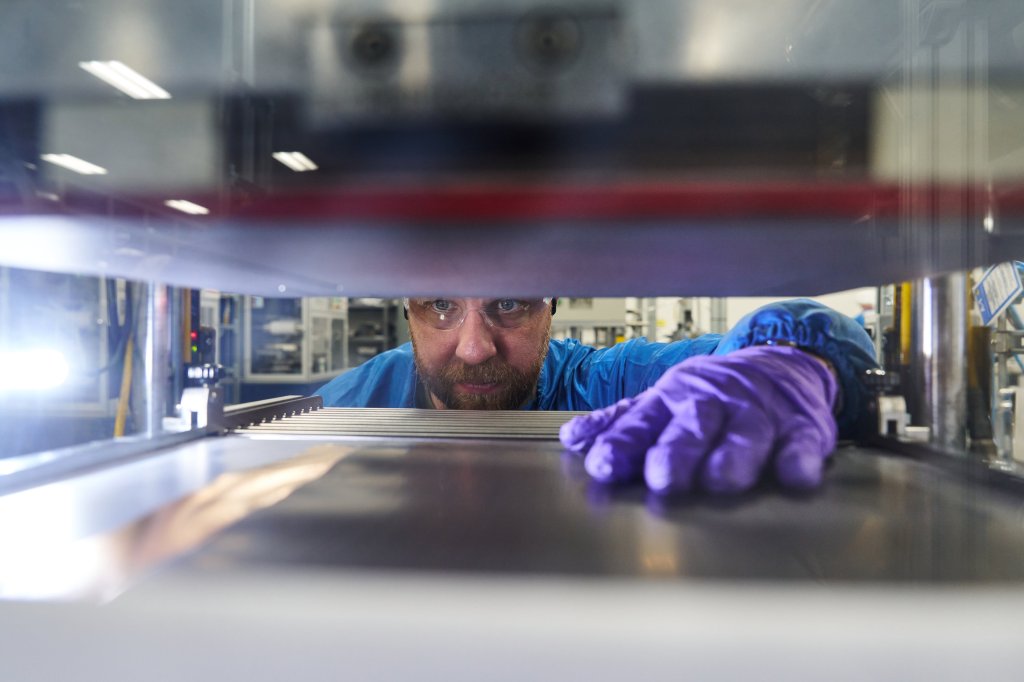
The center, which is about one-fifth the size of GM’s Tennessee Ultium plant, is designed to rapidly test and refine battery production techniques. It will produce 2,500 cells per day, enough to validate processes before scaling up to full production. This intermediate step is critical — many battery innovations fail to translate from small batches to mass production.
- The BCDC can produce 0.5 gigawatt-hours annually, compared to 45 gigawatt-hours from Ultium
- It is equipped with 40-liter mixing tanks, as opposed to 2,000-liter tanks in full-scale factories
- The facility acts as a "pilot line" to reduce risks before committing to full-scale manufacturing
Inside the BCDC, engineers are using advanced simulations and digital twins to optimize everything from mixing ratios to control systems. These virtual models help GM avoid costly trial-and-error cycles, shortening the time it takes to bring new chemistries to market.
The Road Ahead
For GM, the next few years will be critical. If LMR can be commercialized by 2028, it could help the automaker regain traction in a slowing EV market. But the path is anything but certain. Battery development is a high-stakes gamble, one that requires precision, timing, and a deep understanding of both chemistry and manufacturing.
The BCDC is more than a facility — it’s a symbol of GM’s renewed commitment to innovation. As the EV landscape continues to evolve, the automaker’s ability to iterate quickly and bring down costs will define its success in the coming decade. For now, the future of GM’s electric ambitions rests not just on a battery, but on a building — and the people inside it.