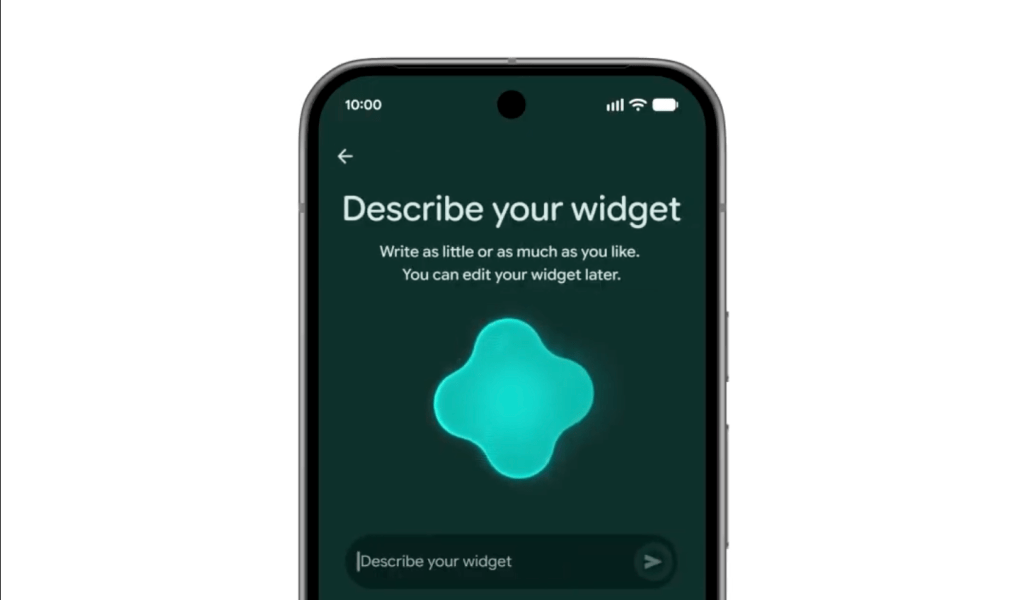
Google’s ‘Create My Widget’ feature will let you vibe code your own widgets
What if crafting a digital tool required only a conversational prompt? Google’s Create My Widget platform introduces a paradigm shift by empowering users to vibe code bespoke interfaces directly on their devices. This capability redefines personalization in Android ecosystems, turning abstract ideas into functional home screen additions without traditional coding expertise.
From Concept to Reality
Natural Language Interaction: Users describe intent using plain English, prompting the system to generate tailored widget logic. Adaptive UI Design: The platform resizes and positions widgets autonomously based on layout context and user preferences. Cross-App Integration: Gemini APIs connect external data sources like Gmail, Calendar, and third-party services to enrich widget functionality.
Generative AI at the Core The feature leverages large language models (LLMs) to interpret intent and translate it into structured code snippets. By parsing contextual cues, Google's backend aligns output with material constraints of Android's layout system. This blend of conversational design and automation reduces friction between user goals and technical execution. User Empowerment and Business Impact By removing barriers to customization, Google broadens its appeal beyond developers to hobbyists, creatives, and productivity seekers. The approach mirrors trends in no-code platforms but integrates natively within native experiences. Early demos showcase scenarios ranging from fitness tracking dashboards to event planners that synthesize live data streams. Technical Implementation Under the hood, Natural Language Understanding (NLU) processes user prompts while backend services orchestrate widget rendering pipelines. Google's Gemini engine handles inference, pulling real-time information via secure APIs to ensure compliance with privacy standards. Future Outlook The initiative signals Google's strategic push toward context-aware computing, where devices anticipate needs through generative models. If refined, similar systems could streamline workflows across industries by adapting tools to individual workflows without manual configuration. The feature's rollout on flagship hardware establishes a blueprint for democratizing development. As adoption grows, third-party modules may emerge, fostering ecosystems of specialized widgets tailored to niche use cases while maintaining platform stability and security. The AI-driven approach ensures rapid iteration cycles and user feedback loops that continuously improve relevance. Ultimately, Google's widget builder epitomizes the convergence of conversational interfaces and automated code generation, empowering creators who previously lacked technical capacity to deliver meaningful digital artifacts. Its success hinges on balancing innovation with usability while addressing ethical considerations inherent in generative systems.