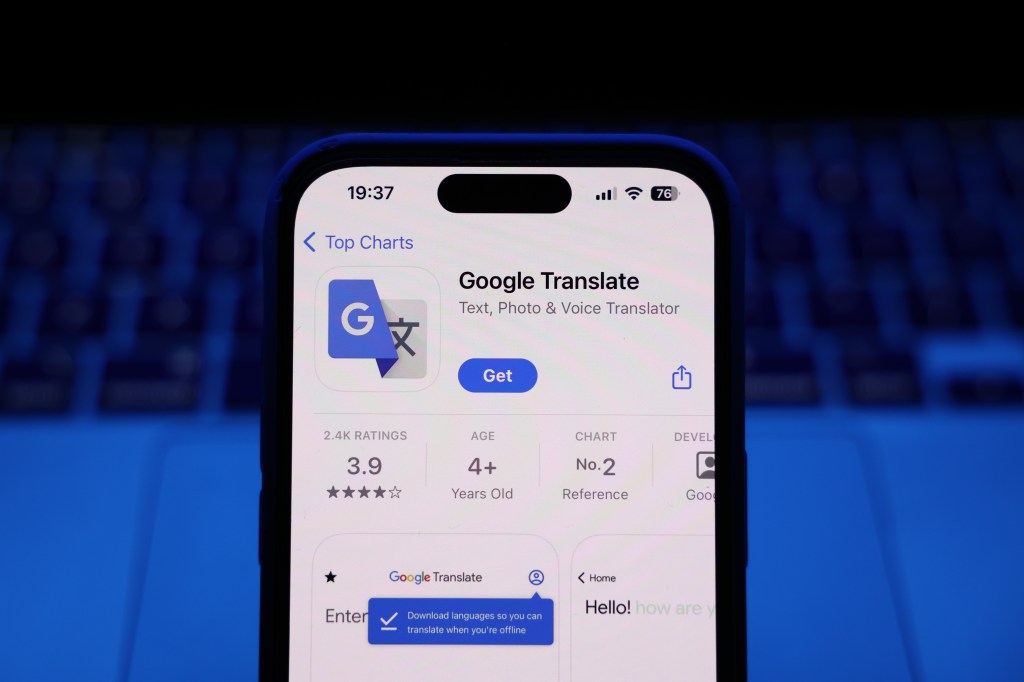
For two decades, Google Translate has functioned primarily as a passive bridge between languages—a digital dictionary used to decode the unknown rather than master it. However, to celebrate its twentieth anniversary, Google Translate now lets you practice pronunciation, marking a fundamental shift from translation to active instruction. The tool is transforming from a simple text-decoder into an active linguistic tutor.
How Google Translate Now Lets You Practice Pronunciation
The core of this update lies in a new interface designed to move users beyond mere reading. Within the app, a new "Practice" menu has been introduced, housing a dedicated "Pronounce" button. This feature allows users to interact with translated text on a much deeper level than previously possible. Instead of simply viewing a phonetic transcription, users are presented with specific phonetics that serve as a guide for vocalizing words and phrases out loud.
The fact that Google Translate now lets you practice pronunciation changes the fundamental user journey within the app. Previously, the process ended once the text was rendered in the target language; now, the process begins there. By providing an audio reference point, the software allows users to listen to the correct cadence and inflection before attempting to mimic it.
This creates a closed-loop learning environment where the technology acts as both a model and a judge. This transition ensures that the app is no longer just a reactive utility for travelers, but a proactive tool for language mastery.
Real-Time Acoustic Evaluation and Feedback
The most significant technological leap in this update is the implementation of an automated feedback loop. Much like specialized language-learning platforms such as Duolingo, Google Translate now utilizes sophisticated speech recognition to score user performance. The app evaluates the accuracy of the user's pronunciation and provides immediate, granular critiques.
When a user fails to hit the correct phonetic mark, the system provides corrective feedback. It may use prompts such as "Some sounds were a little unclear" to guide the learner toward better enunciation. This capability suggests that Google is leveraging its massive datasets in acoustic modeling to provide a level of precision once reserved for human tutors.
The initial rollout of these features is focused on key markets and high-demand languages:
- Target Regions: Currently available in the United States and India.
- Supported Languages: Initial support includes English, Spanish, and Hindi.
- Core Functionality: Includes phonetic guides, audio playback, and automated scoring.
The ability to receive instant, non-judgmental feedback allows for a low-stakes environment where learners can iterate on their speech patterns without the social anxiety often associated with practicing a new language.
Expanding the Global Linguistic Ecosystem
This update is part of a broader strategic push by Google to dominate the global communication landscape. Recently, the company expanded its live headphone translation feature to several more territories, including Germany, Spain, France, Nigeria, Italy, the United Kingdom, Japan, Bangladesh, and Thailand.
By integrating these advanced features across both iOS and Android, Google is positioning its ecosystem as a comprehensive toolkit for real-time, bidirectional communication. The integration of pronunciation training suggests that Google's long-term vision extends far beyond mere word substitution.
As Large Language Models (LLMs) continue to improve the nuance of text translation, the next frontier is clearly the mastery of spoken interaction. Ultimately, the move toward interactive language instruction signals a shift in how we perceive mobile utilities; Google Translate is no longer just helping us understand what others are saying—it is preparing us to join the conversation.