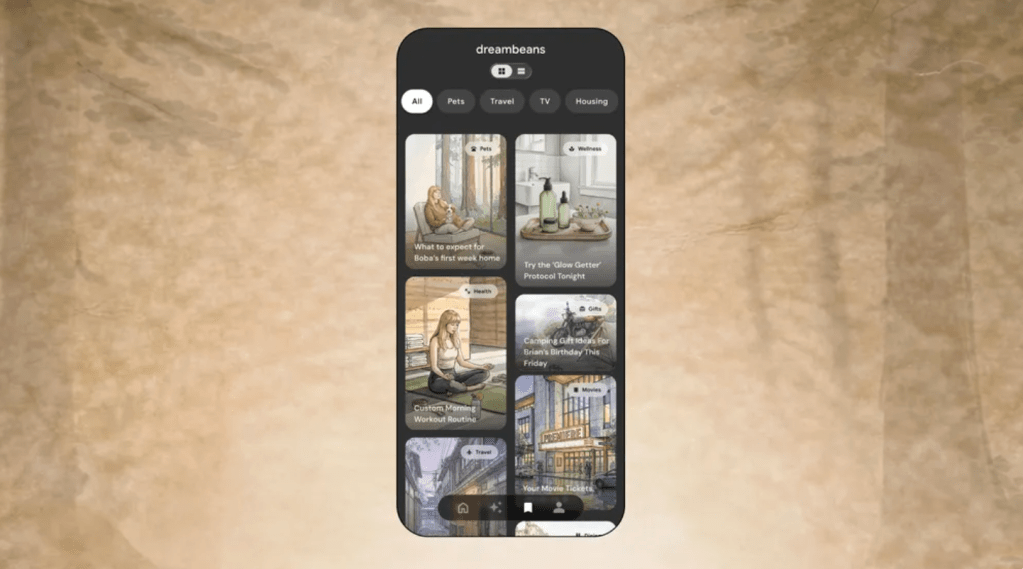
The evolution of personal computing has long been defined by the quiet revolution of data aggregation. From early web portals that curated news to smartphones that managed calendars, the trajectory of digital life has always been about connecting disparate pieces of information into something meaningful. Today, that process is accelerating through artificial intelligence, and Google’s latest experimental tool, Dreambeans, pushes that concept further than ever before—transforming personal data into something unexpectedly whimsical: a daily dose of cartoon-like life suggestions.
A New Era of Personalized AI Insights
Dreambeans is not your typical AI assistant. Unlike chatbots that respond to queries or algorithms that recommend content, this new tool from Google Labs uses a blend of Personal Intelligence and machine learning to create a narrative of daily "stories" tailored to each user. These aren’t just recommendations; they are conceptual snapshots of life, rendered in visual form. Think of it as a self-curated, AI-generated storyboard of your existence, designed to spark curiosity rather than just offer convenience.
- Suggests new coffee shops based on location and past preferences
- Provides insights into life with a new dog, if such an event is noted
- Curates news articles based on historical interest patterns
- Recommends upcoming trips or events based on calendar data
- Generates lifestyle ideas tied to a user’s search history and media consumption
The app is deliberately limited in scope, offering between 10 and 14 stories per day. This design choice is strategic: it combats the modern dilemma of information overload and the resulting fatigue from constant digital engagement. In a world where AI can easily become a crutch for decision-making, Dreambeans aims to be a gentle nudge toward exploration rather than an all-consuming feed.
The Name Behind the Concept
Google has a history of choosing quirky, memorable names for its experimental projects, and Dreambeans is no exception. The name itself is a clever metaphor for the app’s function. As product lead Gozde Oznur explained, the "dream" part reflects how the app processes data while the user sleeps, distilling vast amounts of information into something more digestible. The "beans" reference the ritual of starting the day with a cup of coffee, symbolizing the app’s role in offering a concentrated, inspirational boost each morning.
This approach to naming is not just whimsical—it’s a reflection of how Google is increasingly trying to humanize its AI efforts. With competitors like Anthropic and Meta pushing the boundaries of AI, Google is responding with tools that are as much about emotional engagement as they are about utility.
The Future of AI and Personal Curation
As Dreambeans enters the market, it sits at the intersection of two major trends: the growing demand for AI that enhances, rather than replaces, human experience, and the increasing desire for digital detox. With its limited output and focus on inspiration, the app seems to be targeting users who want to be guided, not overwhelmed, by technology.
For now, access is restricted to Google AI Ultra subscribers in the U.S., but the waitlist suggests broader interest. Whether Dreambeans becomes a cultural touchstone or a niche experiment will depend on how well it balances novelty with usefulness. But in an age where AI is increasingly shaping daily life, the idea that our data could be transformed into a story—cartoonish or not—marks a pivotal moment in how we relate to the technology that surrounds us.