A Bold Reimagining: Hamlet Review of Karia’s Desi Adaptation
The Hamlet review we present today examines a bold new take on Shakespeare’s tragedy that arrives in theaters on April 10. From Laurence Olivier to The Lion King, and from Kenneth Branagh to Bollywood adaptations like The Bad Sleep Well, few stones have been left unturned when adapting the Bard's greatest work for the big screen. Yet, as evidenced by this year's Best Picture nominee Hamnet—which explores the play’s tragic origins—the possibilities for reinterpretation remain infinite. Aneil Karia’s latest film offers a novel remix starring Riz Ahmed in the title role, transposing the story to an Indian business community in contemporary Britain. While the result is an audiovisually intriguing film with great performances, this Hamlet review concludes that it remains an emotionally middling experience that brings little new to the table despite its allure.
A Modern Desi Setting for a Timeless Tragedy
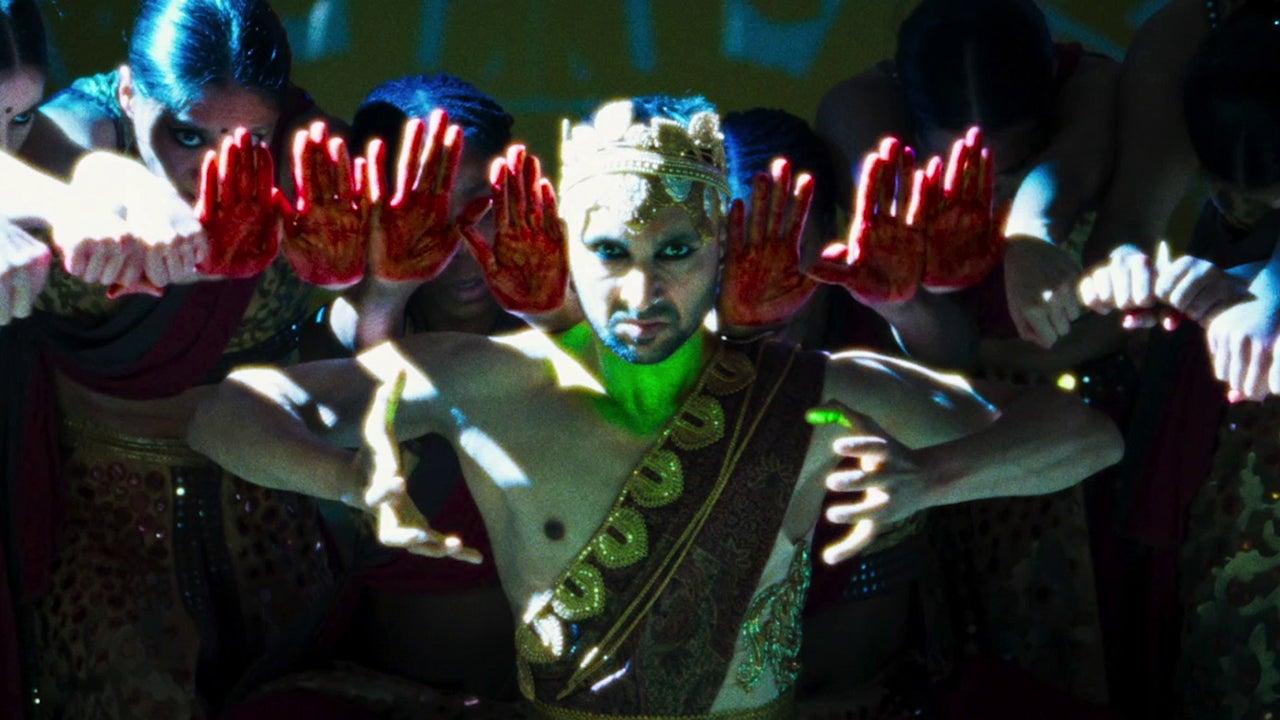
The story follows Hamlet, a Danish prince plagued by ghostly visions seeking revenge against his uncle Claudius. In Karia’s version, this foundational tale of familial betrayal and vengeance is retold within the context of an Indian diaspora community. The film opens with a Hindu funeral featuring chants of the Gayatri Mantra and images of cremation, gesturing towards purification while highlighting that Hamlet (Ahmed) remains emotionally stained. He begins glimpsing his departed father (Avijit Dutt), who speaks to him from the shadows in flowery, subtitled Hindi.
This adaptation feels especially natural given South Asia’s deep connection to the play; it is such a Desi favorite that the first ever Hamlet sound film was produced in India back in 1935. The narrative unfolds through the lens of Stuart Bentley’s handheld camera, which keeps the frame tight and intimate. This forces viewers into Hamlet's uneasy orbit as he reunites with his grieving mother (Sheeba Chadha) and Ophelia (Morfydd Clark), his former flame.
Whispered Monologues and a Stalled Narrative
The film’s most distinct stylistic choice involves how the actors deliver their lines. Instead of projecting to the back row, the performers whisper the monologues under their breath. This approach forces viewers to lean forward and intuit the subtext rather than hearing every word clearly. However, this level of restraint ensures that, apart from Ahmed’s occasional outburst, the movie quickly runs out of steam. A work of such visual intensity either needs breathing room for emotions to land or should go "f*cking balls to the wall" with obsessive fervor. While Karia knows how to hit the gas pedal, it is hard not to wonder if he ought to have let up a little or pushed the pedal twice as hard.
Key performances and moments in this Hamlet review include:
- Riz Ahmed delivers a considered clinic of haggard desperation as he descends from London’s posh interiors to temples and homeless shelters.
- The supporting cast, including Joe Alwyn and Timothy Spall, brings subdued gusto to their roles despite the film's mechanical top-down structure.
- Scenes like "To be, or not to be" are transformed into a distraught, midnight drive, showcasing the film's ability to hit the gas pedal literally.
Why This Hamlet Review Points to Missed Potential
Ultimately, the movie’s conception ends up far too straightforward for a text this rich and varied. While Hamlet the play works because of its psychological ebb and flow over four hours, Karia’s streamlined version struggles to match Ahmed’s unhinged energy with the film around him. Unlike Bornila Chatterjee’s culturally similar adaptation of Titus Andronicus, which often embraces full intensity, this Hamlet feels like a vision on aesthetic auto-pilot.
The result is an interesting artistic curio that is fun to look at and listen to, but it fails to stir the soul or rigorously reinforce Shakespeare's original text. While several individual moments are crafted with curiosity, the film as a whole never grabs you by the throat the way a story of this stature should. It remains a mechanically sound but emotionally detached entry in the long lineage of Hamlet adaptations.