How Hightouch Leverages AI Marketing Tools to Hit $100M ARR
The rapid convergence of generative AI and enterprise data infrastructure has dismantled the traditional bottleneck where brand safety required manual design approval, a shift that has allowed Hightouch to leap from a specialized data sync tool to a $100 million annualized recurring revenue (ARR) powerhouse in under two years. While many startups chase the hype of autonomous agents, Hightouch's trajectory proves that the most valuable AI applications are those that act as disciplined intermediaries between raw generative models and rigid brand guidelines. By anchoring its technology to existing creative ecosystems rather than attempting to replace them, the seven-year-old company has solved the "hallucination" problem that initially plagued early adopters of marketing tools powered by AI.
The Architecture of Brand-Safe Generativity
The core friction in modern digital advertising has long been the tension between speed and brand fidelity. Marketers need to churn out personalized campaigns at a scale impossible for human teams, yet they cannot risk an AI generating a product that doesn't exist or using a font that violates trademark law. General foundational models, which power many off-the-shelf chatbots and image generators, lack this crucial contextual memory of specific corporate identities. They do not inherently know the hex codes for a brand's primary blue or the specific tone of voice required for a financial services email versus a pet food advertisement.
Hightouch differentiates itself by refusing to operate as an isolated black box. Instead, its AI agents connect directly to a company's existing source of truth: Figma design files, high-resolution photo libraries, and content management systems (CMS). This architectural choice allows the platform to "learn" a brand's DNA before it attempts any generation. When Domino's uses the tool, for instance, the system understands that it must never generate a new image of a pizza from scratch. Instead, it retrieves an existing, approved asset of a pepperoni slice and places it within a newly generated background scene, ensuring the product itself remains accurate while the surrounding context adapts dynamically to user data.
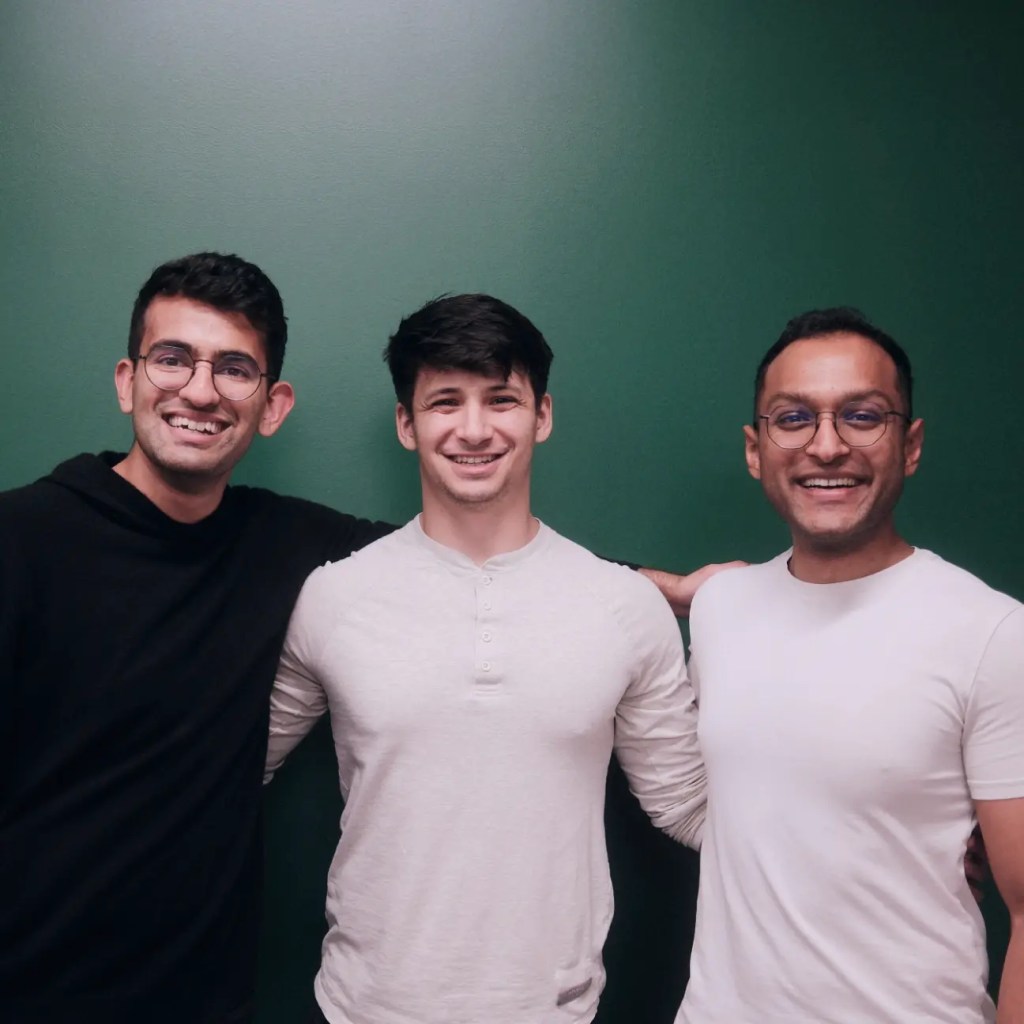
This approach has transformed Hightouch into a critical utility for enterprise clients like Chime, PetSmart, and Spotify. The company's co-CEO Kashish Gupta notes that before the advent of generative AI with brand guardrails, creating consumer-level assets required years of design training. Now, marketing professionals can bypass the queue in the design department or the backlog at ad agencies to deploy campaigns autonomously. The result is a workflow where AI handles the heavy lifting of composition and variation, while human oversight remains focused on strategy rather than pixel-pushing.
From $30M to $100M: The Commercial Tipping Point
The financial metrics tell a compelling story about market demand for this specific type of AI application. Hightouch added $70 million in ARR specifically since launching its AI-powered marketing service roughly 20 months ago, bringing the company's total valuation to $100 million. This growth trajectory occurred during a period where many AI startups struggled to convert technical novelty into recurring revenue, suggesting that marketers have finally found a use case that solves a genuine pain point rather than just offering a gimmick.
The commercial success is underpinned by the company's strategic positioning as a bridge between data platforms and creative execution. Founded by former engineers from Segment—a customer data platform acquired for $3.2 billion in 2020—Hightouch has always operated at the intersection of data engineering and business logic. This background allowed them to build AI agents that understand not just how to make an image, but how to use customer data to inform which image variations should be generated for specific user segments.
Key drivers behind this explosive growth include:
- Direct Integration: The ability to pull brand assets from Figma and CMS ensures immediate compatibility without complex migration projects.
- Hallucination Mitigation: By anchoring generation to existing approved assets, the tool eliminates the risk of promoting non-existent products or violating IP rights.
- Autonomous Scaling: Marketing teams can now generate thousands of variations for A/B testing without waiting on designer availability, drastically reducing time-to-market.
The Human Element in an Automated Workflow
Despite the automation headlines, Hightouch's model relies heavily on a hybrid approach where AI augments rather than replaces human creativity. The company has grown its workforce to approximately 380 employees, indicating that building and maintaining these sophisticated brand guardrails requires significant ongoing engineering and product development effort. The tool is designed to produce outputs that look indistinguishable from those created by professional designers, avoiding the tell-tale artifacts or generic aesthetics often associated with early generative AI tools.
This focus on "on-brand" consistency has been the key differentiator in a crowded market of marketing tools powered by AI. While competitors offer broad creative freedom, they often leave marketers to manually correct errors that violate brand guidelines. Hightouch's system pre-emptively enforces these constraints, allowing marketing teams to trust the output enough to deploy it directly into production campaigns. The technology effectively democratizes high-quality design capabilities while maintaining the strict control necessary for enterprise compliance.
As the industry matures, the winners will likely be those tools that successfully integrate deep brand context with generative power, rather than those promising full autonomy. Hightouch's path to $100 million ARR suggests a market shift toward practical, compliant AI solutions that respect existing workflows. The next phase of growth for Hightouch and similar innovators will depend on their ability to further refine this balance between automated efficiency and human creative oversight.