The electric vehicle (EV) market has transitioned from a niche interest into a mainstream powerhouse over the last two decades. Driven by breakthroughs in battery chemistry and global policy support, automakers are now locked in an intense battle over range, charging speed, and software integration. However, as the industry matures, the ability to predict long-term growth is becoming increasingly difficult.
Amidst this shifting landscape, Lucid Motors finds itself at a crossroads. While the company previously entered the public conversation with highly ambitious production targets, recent developments suggest that Lucid Motors doesn’t know how many EVs it will build this year with absolute certainty.
Navigating Uncertainty in EV Production
In February, Lucid announced an intention to manufacture between 25,000 and 27,000 vehicles, a significant jump from the roughly 18,000 units produced the previous year. However, the current lack of definitive guidance reflects broader industry hurdles, including volatile consumer sentiment and unpredictable economic headwinds.
The company is currently managing several critical operational shifts to stabilize its trajectory:
- Strategic leadership review: Incoming CEO Silvio Napoli is conducting a comprehensive operational audit, focusing on simplifying product lines and increasing execution speed.
- Workforce restructuring: A 12% reduction in force implemented in February is part of a plan to save up to $500 million over the coming years, prioritizing long-term competitiveness.
- Supply chain stability: Recent production disruptions—including a 29-day delay caused by seat-supply issues—have forced the company to adopt tighter inventory management and more cautious scaling.
The Path Toward Mass-Market Scalability
Despite the current ambiguity regarding annual production numbers, Lucid is still working toward significant long-term milestones. The firm remains focused on launching a high-volume model by the end of 2026, specifically targeting a price point below $50,000 to attract a broader consumer base.
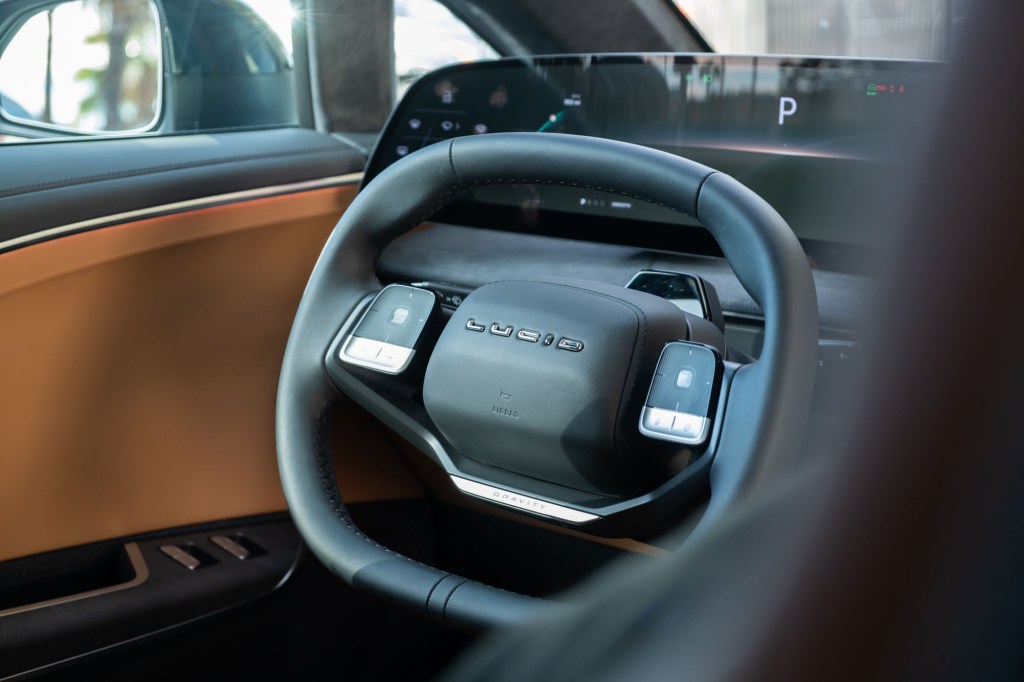
Furthermore, the company is laying the groundwork for future mobility services. Using its Gravity SUV platform, Lucid is preparing for a robotaxi service partnership involving Uber and Nuro. Success in these ventures will depend heavily on execution quality and the ability to manage complex supply chains.
As investors await the next quarterly results, all eyes will be on whether Lucid can demonstrate margin improvements and a clear path toward profitability. The company’s ability to balance bold engineering ambitions with disciplined capital allocation will serve as a litmus test for the entire high-growth EV sector.