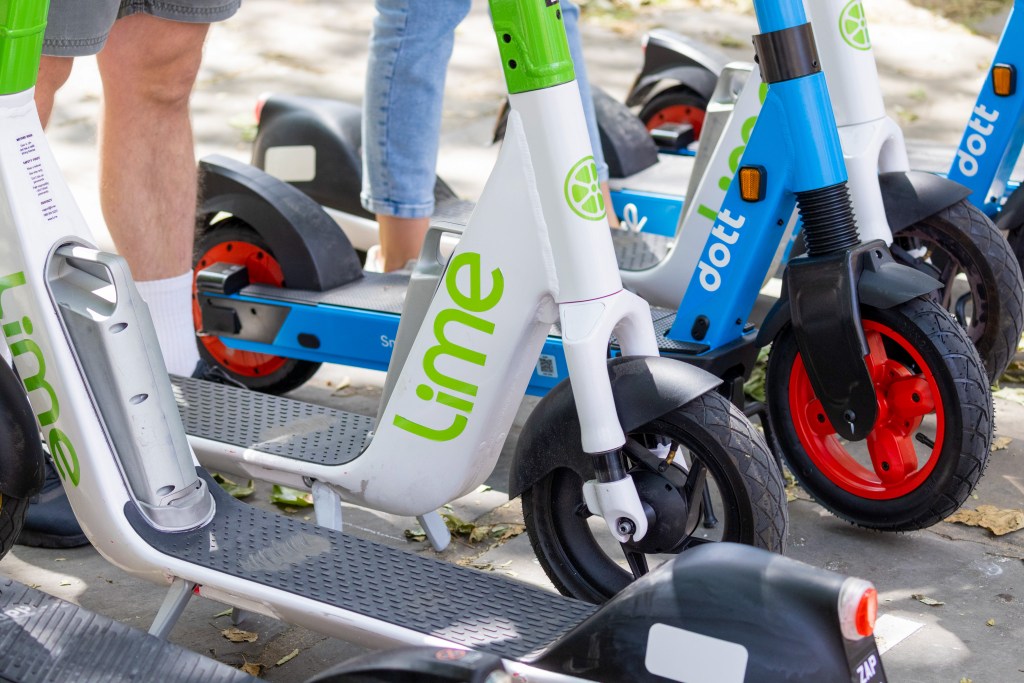
The most striking aspect of Lime’s recent move is how a company once defined by rapid growth and aggressive expansion now stands at the threshold of public markets, an arena traditionally reserved for mature, profit-oriented businesses. This transition from private to public underscores a shift in micromobility’s role within urban transportation ecosystems. While skepticism persists about long-term sustainability, Lime’s filing signals confidence from both investors and leadership.
Financial Trajectory and Market Positioning
Lime’s financial narrative reflects the classic arc of a high-growth startup: substantial revenue gains offset by persistent losses. Key figures reveal momentum:
- Revenue Growth: $521 million in 2023, rising to $686.6 million in 2024, and reaching $886.7 million in 2025.
- Loss Reduction: Net losses narrowed dramatically—from $122.3 million in 2023 to $33.9 million in 2024, then $59.3 million in 2025, despite continued operational expansion.
- Cash Flow Strength: Free cash flow surged to $104 million in 2025, nearly doubling year-over-year, driven by operational efficiencies and scaling.
These metrics suggest Lime is balancing growth with financial discipline—a critical prerequisite for an IPO.
Strategic Foundations and Uber Synergy
The company’s relationship with Uber transcends mere partnership; it represents a vertical integration of mobility services. Uber’s investment in 2020, followed by the acquisition of Jump (a move that absorbed its assets into Lime), solidified the ecosystem where ride-hailing and micromobility coexist within single user experiences. This synergy now offers Lime distinct advantages:
- User Acquisition: Exclusive integration within Uber apps provides access to millions of existing users.
- Revenue Diversification: A portion of revenue (about 14.3% in 2025) flows directly from this partnership, stabilizing cash streams.
The combination of broad geographic reach—230 cities across 29 countries—and deep tech integration positions Lime as a leader navigating regulatory and infrastructural complexities worldwide.
Regulatory Considerations and Investor Outlook
An IPO demands more than financial metrics; it requires alignment with public market expectations around governance, scalability, and risk management. Lime’s SEC filing indicates proactive preparation, though challenges remain:
- Profitability Timeline: Achieving consistent profitability while maintaining aggressive growth remains a balancing act.
- Market Conditions: Timing is crucial; investor appetite for mobility tech fluctuates with macroeconomic trends and policy shifts.
However, the company’s focus on cash flow generation and expanding free‑money metrics may appeal to investors prioritizing sustainable scaling over pure volume growth.
Forward Momentum
Lime’s journey reflects broader themes in modern transportation: urbanization pressures, decarbonization goals, and the convergence of shared mobility models. The IPO could unlock capital for further expansion into emerging markets and next-gen vehicle technologies. Whether this transition proves transformative will depend on execution, policy landscapes, and evolving consumer habits—but the filing marks a pivotal moment for micromobility’s institutional acceptance.
The stage is set for scrutiny and opportunity alike. Investors will watch not only quarterly results but also Lime’s ability to maintain innovation momentum while navigating regulatory hurdles across diverse geographies. For now, the company stands poised at a crossroads where ambition meets accountability—a defining test for an industry reshaping how millions move daily.
Conclusion: The journey from private disruption to public scrutiny underscores micromobility’s maturation, with Lime emblematic of both its promise and inherent complexities. Success hinges not just on numbers but on building resilient systems that align with long-term societal needs.