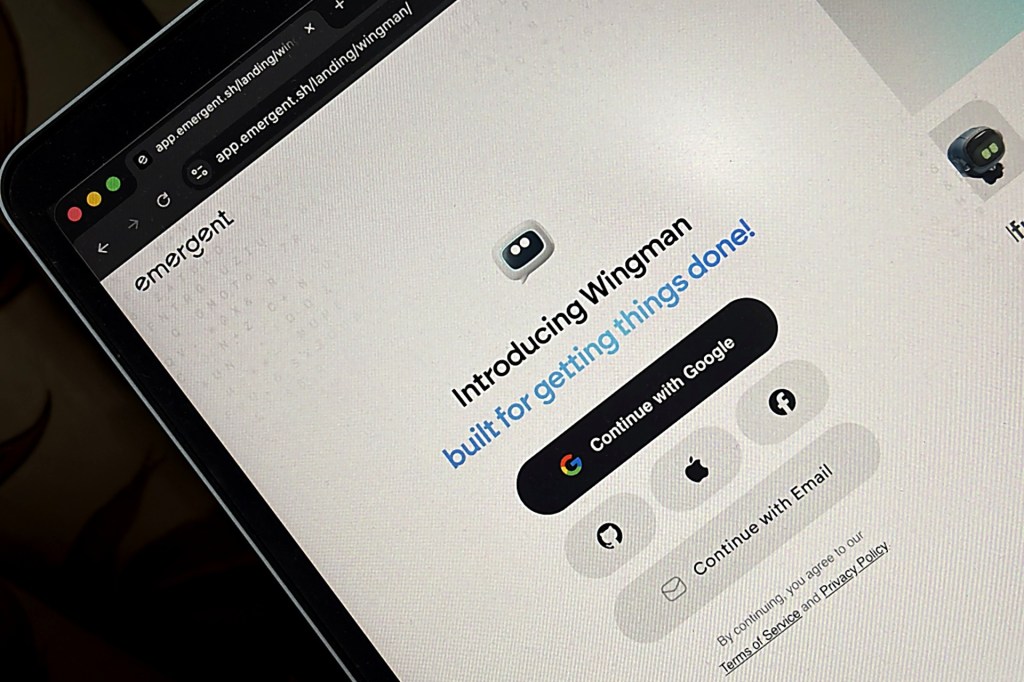
Emergent’s Wingman Brings AI Agent Power to India’s WhatsApp Ecosystem
India’s vibe-coding startup Emergent has officially entered the competitive space of autonomous AI agents, challenging established players like OpenClaw with a uniquely localized approach. The launch marks a pivotal moment for Emergent, as the Bengaluru-based innovator pivots from its core "vibe-coding" creation model to an execution-first strategy via its new agent, Wingman. This shift transforms how non-technical founders and enterprise users interact with software, moving beyond simple code generation to seamless background management directly within messaging apps.
As the chat interface on WhatsApp pulses with a soft blue glow, processing complex requests like calendar syncing and email drafting in mere seconds, it becomes clear that Wingman is redefining the user experience. By eliminating the need for new desktop applications or complex dashboards, Emergent ensures that AI operations happen entirely where users live: inside their familiar messaging threads. This strategic move leverages India's massive mobile-first ecosystem to democratize access to advanced autonomous capabilities.
From Vibe-Coding Creation to Autonomous Execution
The trajectory of Emergent has been nothing short of meteoric since its founding in 2025. The company’s original platform has empowered over eight million builders to create and deploy software, boasting an impressive 1.5 million monthly active users. Backed by industry heavyweights including SoftBank, Khosla Ventures, and Lightspeed Venture Partners, the startup secured a staggering $70 million in funding last January at a $300 million valuation. This substantial capital is now being channeled into the high-stakes race to build AI agents capable of operating autonomously.
While the initial "vibe-coding" interface allowed users to describe applications in plain English and watch them materialize—competing with tools like Cursor and Replit—the focus has shifted dramatically. Mukund Jha, co-founder and CEO of Emergent, argues that building software is merely the first step; the true value lies in operation.
"The obvious next step for us was, can we help them not just build the software, but actually operate more autonomously through it?" Jha stated. "You move from software that supports the business to software that can actively help run it."
This philosophy drives Wingman's architecture, which differs fundamentally from traditional AI assistants:
- Proactive Monitoring: Unlike tools requiring constant prompting, Wingman monitors connected environments like email inboxes and project boards to act when patterns emerge.
- Trust Boundaries: A critical safety mechanism ensures routine, low-stakes tasks execute without human intervention, while sensitive actions trigger a request for user approval.
- Strategic Autonomy: The agent is designed to manage workflows across disconnected digital tools, reducing the cognitive load on users.
Messaging as the New Operating System for AI Agents
Emergent has made a calculated decision to bypass new interfaces in favor of ubiquity. While competitors like OpenClaw and Anthropic’s Claude build their agent capabilities into dedicated web portals or desktop widgets, Wingman embeds itself directly into messaging platforms: WhatsApp, Telegram, and Apple’s iMessage. This approach treats chat as the primary operating system for AI agents, aiming to drastically reduce friction in adoption rates within the Indian market.
The implications of this strategy are profound for user behavior and workflow efficiency:
- Zero-Setup Integration: Users can deploy Wingman simply by sending a message to its dedicated contact or inviting it into an existing group chat.
- Context-Rich Interaction: Agents can reference conversation history, voice notes, and shared documents to understand nuance without repetitive prompts.
- Asynchronous Management: Users can assign complex tasks like "coordinate travel for next week's conference" and return later to receive a summary, rather than being tied to a live coding session.
This conversational approach mirrors the early success of tools like OpenClaw (formerly Clawdbot), which gained traction by making agent interaction feel natural rather than transactional. However, Emergent's deep integration with WhatsApp offers a unique advantage in regions where mobile-first communication dominates enterprise workflows.
The Limits of Autonomy and Future Scalability
Despite the ambitious rollout, Wingman is not without its constraints. Jha acknowledges that consistency remains a challenge in ambiguous scenarios, messy edge cases, or complex workflows demanding deep human judgment. The system currently struggles when goals are unclear or when the stakes involve critical decision-making where an AI's probabilistic nature could lead to costly errors.
To address these challenges, the launch includes a limited free trial before transitioning to a paid model, with existing Emergent users able to access Wingman through their current accounts. This tiered approach allows the company to gather usage data and refine its "trust boundaries" before scaling autonomous features broadly. As the industry continues to race toward fully autonomous software management, Emergent’s strategy of embedding intelligence into daily communication tools could define how the next generation of digital workers interacts with their machines. The era of silent background agents is here; the question now is whether they can learn to navigate the chaos of real-world business without breaking a sweat—or a workflow.