Inertia Moves to Commercialize One of the World’s Most Elaborate Science Experiments
The path to commercial fusion power has stretched from speculative theory into a high-stakes industrial race, marked by decades of incremental breakthroughs and sudden moments of validation. For years, the promise of limitless energy remained trapped within the constraints of physics experiments that struggled to break even, let alone generate surplus electricity for the grid. That dynamic shifted in late 2022 when the National Ignition Facility (NIF) at Lawrence Livermore National Laboratory finally achieved scientific breakeven, proving that laser-driven inertial confinement fusion could produce more energy than was required to ignite it. Now, nearly four years later, the focus has swung sharply from pure research to commercialization, with Inertia Enterprises leading a new wave of startups poised to translate these laboratory miracles into utility-scale power plants.
From Experimental Breakthrough to Industrial Scaling
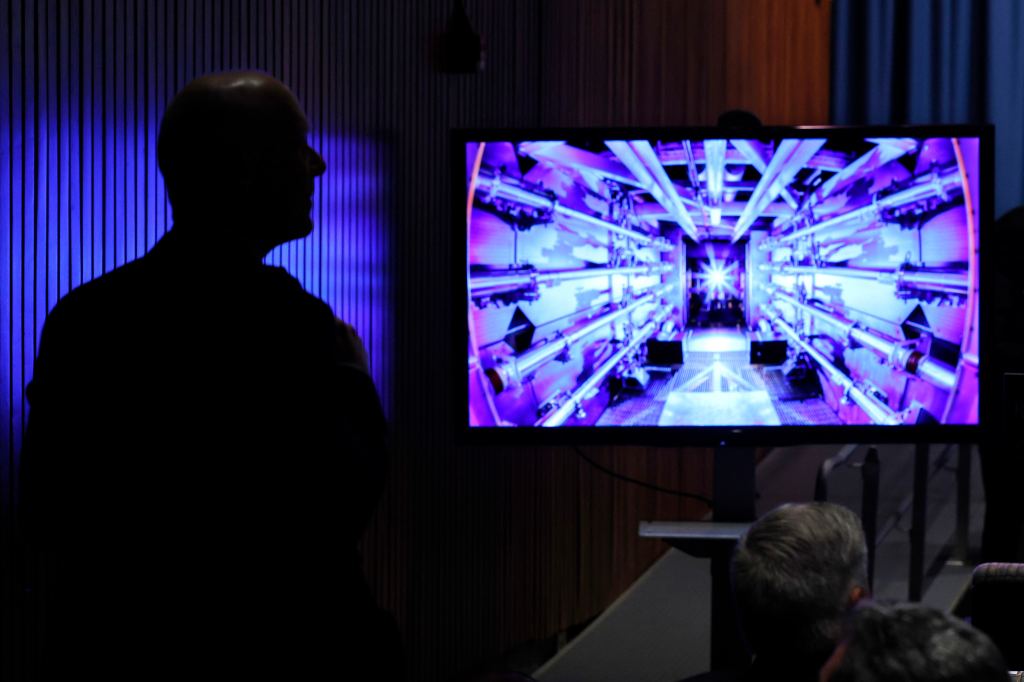
The core challenge facing inertial confinement fusion is not just igniting a reaction once, but doing so reliably and repeatedly enough to generate continuous power. The NIF setup utilizes 192 massive laser beams converging on a gold cylinder known as a hohlraum, which contains a diamond-coated fuel pellet roughly the size of a BB. When the lasers strike the hohlraum, they are converted into X-rays that compress the fuel with such force that deuterium and tritium atoms fuse, releasing vast amounts of energy. For this to become a power source, the process must occur several times per second, requiring laser systems far more efficient than the legacy technology currently housed at NIF.
Inertia Enterprises is addressing these critical bottlenecks by replacing aging lasers with modern alternatives capable of higher repetition rates and greater efficiency. The company plans to collaborate directly with LLNL scientists to develop next-generation laser architectures that can sustain the frequency needed for grid deployment without consuming excessive power. This partnership also extends to optimizing fuel targets, ensuring that the diamond-coated pellets can be manufactured at scale with the precision required for consistent fusion yields.
The financial backing supporting this industrial pivot is substantial. Inertia raised a $450 million Series A round in February 2026, one of the largest funding rounds in the nascent fusion sector, signaling investor confidence in its ability to scale rapidly. This capital infusion allows the company to attract top talent and build the specialized infrastructure needed for high-frequency laser operations. While other competitors like Xcimer and First Light explore similar paths, Inertia Enterprises holds a distinct operational edge due to deep ties with the NIF team, including co-founder Annie Kritcher who helped design the historic breakeven experiment.
Building a Commercial Fusion Infrastructure Through Strategic Alliances
The agreements signed between Inertia and LLNL cover distinct but interconnected areas of development, each addressing a specific hurdle in the commercialization roadmap:
- Advanced Laser Development: A strategic partnership to design and deploy new laser systems that improve energy efficiency and repetition rates beyond current capabilities.
- Fuel Target Optimization: Collaborative research aimed at refining the manufacturing processes for diamond-coated fuel pellets to ensure consistency and yield stability.
- Patent Licensing and IP Transfer: An agreement granting Inertia access to a portfolio of nearly 200 patents, providing a legal and technical foundation to accelerate product development.
These components form a cohesive strategy to move beyond the experimental phase and into a realm where fusion can compete with established energy sources. The involvement of Annie Kritcher as chief scientist ensures that the scientific rigor achieved at LLNL is preserved while adapting to the constraints and goals of commercial engineering. Her unique position, allowed under provisions of the 2022 CHIPS and Science Act, bridges the gap between public sector discovery and private sector execution.
The Race for Energy Dominance
As multiple startups vie to commercialize inertial confinement fusion, the stakes extend beyond financial returns; they involve global energy security and climate stability. Inertia Enterprises' approach of tightly integrating with its founding research institution offers a unique advantage in navigating the complex technical terrain required for grid-scale deployment. However, the journey from NIF's laboratory table to a power plant is fraught with engineering challenges that have yet to be fully solved. The ability to compress fuel pellets at high frequency while maintaining efficiency remains the holy grail of this sector.
The coming years will determine whether inertial confinement fusion can transition from a scientific marvel into a cornerstone of global energy infrastructure. With significant capital and strategic partnerships in place, Inertia Enterprises is currently leading the charge, but the path forward requires sustained innovation in laser technology and manufacturing processes. The success or failure of these early commercialization efforts will likely define the trajectory of fusion power for decades to come, potentially unlocking a future where clean, limitless energy powers the world without carbon emissions.