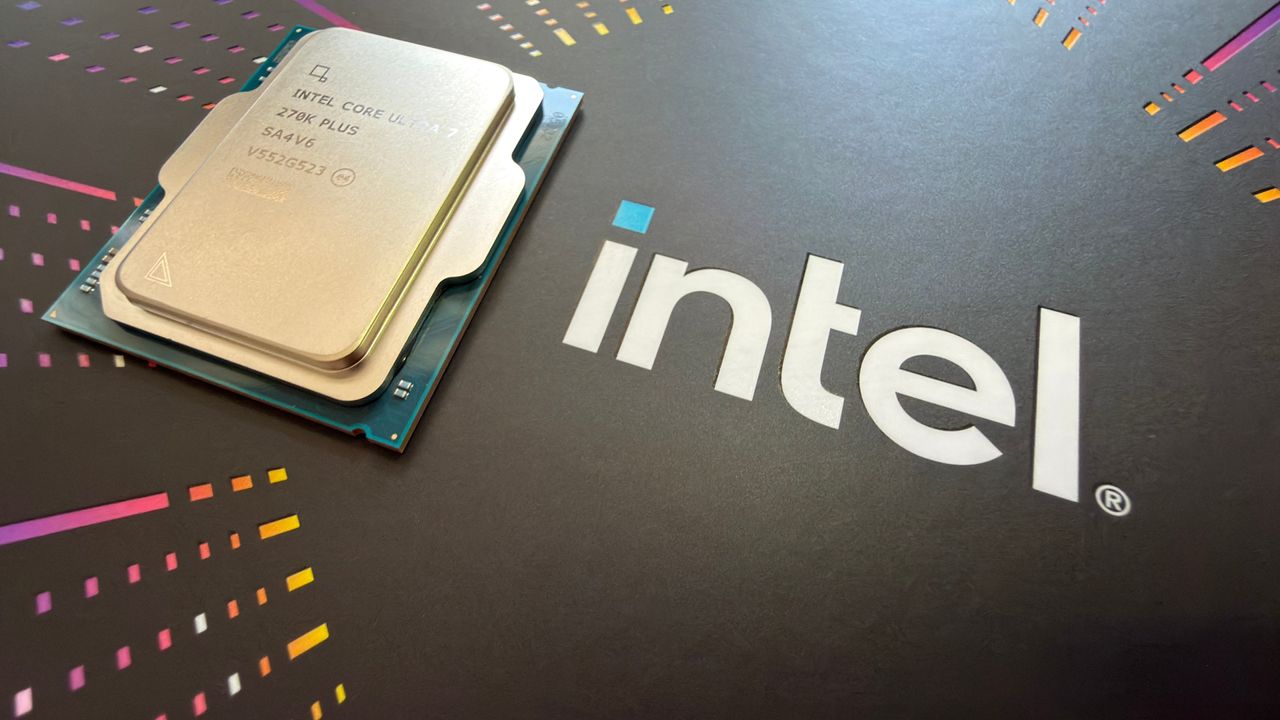
Intel has recently dominated the tech news cycle, and for once, the sentiment is overwhelmingly positive. With Panther Lake and the refreshed Arrow Lake chips delivering top-tier performance, coupled with the long-awaited start of orders for its own foundry services, the company is back in the driver’s seat. Now, a newly leaked roadmap from the YouTube channel Moore’s Law is Dead suggests that Intel’s future desktop and laptop lineups will be just as compelling, even if navigating the details is a challenge in itself.
Deciphering this claimed roadmap requires significant mental processing power. Currently, Intel’s portfolio relies on Arrow Lake (ARL) for desktops and laptops, alongside Panther Lake (PTL) for mobile and handheld devices. These architectures are set to be succeeded by a series of complex microarchitectural shifts that promise to redefine how Intel designs its consumer processors.
The Shift to Unified Core Architecture
The immediate next step in Intel’s roadmap is Nova Lake (NVL), which is expected to arrive toward the end of this year. While the basic launch window is known, recent leaks have filled in the critical architectural gaps. Following Nova Lake, the roadmap points to Razer Lake, though it is worth noting that many SKUs in this generation will likely be rebranded versions of Nova Lake chips.
The most significant change begins with Titan Lake, which will replace Panther Lake. This marks a pivotal moment in Intel’s design history. Since the launch of Alder Lake in 2021, Intel has utilized a hybrid approach, pairing powerful Performance (P) cores with power-efficient Efficient (E) cores. While this strategy will persist in Nova Lake and Razer Lake, Titan Lake introduces a new "unified" core design.
This isn't a complete abandonment of the hybrid philosophy, but rather an evolution. Intel appears to be adopting a strategy similar to AMD’s, where the P-cores and E-cores are architecturally identical. The distinction will lie in physical size and clock speeds, with the "E-cores" being more compact and lower-clocked. This mirrors the approach seen in AMD’s Ryzen laptop chips, which mix Zen 5 and Zen 5c cores to balance performance and efficiency.
Desktop Powerhouses and the Return of Hyper-Threading
On the desktop front, the successor to Razer Lake is Hammer Lake, a name that has already inspired a wave of internet memes. This architecture is set to introduce the second generation of Intel’s unified core design. More importantly, it marks the return of Hyper-Threading for desktop processors.
Hyper-Threading was dropped in the Arrow Lake generation to help chips stay within strict power consumption windows. However, given how well the Core Ultra 7 270K Plus performs in multi-core tasks without it, its absence was not immediately noticeable to most users. Its return in Hammer Lake suggests Intel is prioritizing raw multi-threaded performance once again.
Key features of the upcoming desktop lineup include:
- P-Core Only Designs: The majority of Hammer Lake desktop models will feature only Performance cores, aligning with AMD’s strategy for socketed Ryzen chips, which do not use compact E-cores.
- Unified Core Layout: A second generation of the identical core architecture, simplifying the design while maintaining high efficiency.
- Socket Continuity: Nova Lake, Razer Lake, and Hammer Lake will reportedly all use the same LGA 1954 socket.
Navigating the Future of Intel Processors
The roadmap details become increasingly complex when considering the specifics of cache configurations and compute tile variants. It remains unclear whether the LGA 1954 socket will support the massive cache and dual compute tile variants that are rumored to be part of these future chips. However, the promise of backward compatibility across three major generations is a significant win for platform longevity.
While the current "RAMpocalypse" threatens to disrupt PC building and upgrades, Intel’s strategic pivot toward unified cores and the return of Hyper-Threading could offer a refreshing change of pace. By the time these unified chips hit the market, the memory market may have stabilized.
For those who have held off on upgrading their gaming PCs, the wait may be worth it. If Intel delivers on these promises, the next generation of Core Ultra processors could offer a potent blend of efficiency, compatibility, and raw power that finally simplifies the desktop CPU landscape.