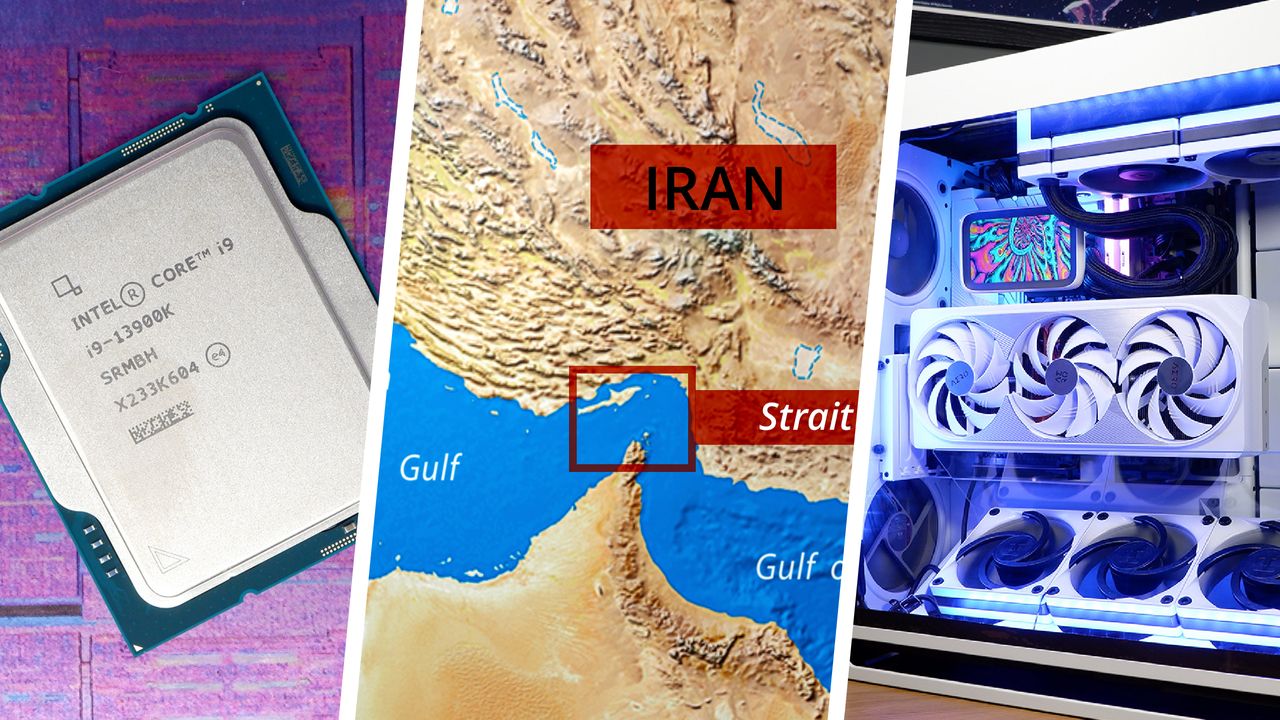
The ongoing conflict in Iran is triggering a severe global supply shock, extending far beyond the immediate geopolitical tensions. While the closure of the Strait of Hormuz has caused widespread anxiety over constrained gas and oil supplies, the ripple effects are now hitting the heart of the global technology supply chain.
We are already witnessing critical shortages in materials essential for semiconductor and component manufacturing. When combined with existing memory shortages, these disruptions paint a challenging picture for the future of PC gaming and consumer electronics.
I spoke with multiple technology supply chain experts to determine exactly which materials are at risk and what this means for the semiconductor market. The consensus? The effects are broad, deep, and will not be resolved even if trade routes reopen immediately.
Critical Material Shortages Impacting Hardware
The conflict has disrupted the flow of several key materials, each playing a pivotal role in the production of everything from GPUs to motherboards. The following components are facing significant strain:
- Helium: Essential for semiconductor fabrication.
- Sulphuric Acid: Critical for wafer cleaning and PCB manufacturing.
- PPE Resin: The binding agent for printed circuit board (PCB) substrates.
- Aluminium: A primary material for heatsinks and chassis.
- Photoresist Solvents: Necessary for etching circuit patterns onto chips.
The Helium Crisis: No Substitute Available
Of all the affected materials, helium poses the most immediate threat to PC technology. Helium’s unique ability to reach temperatures as low as -269 °C without liquefying makes it indispensable for keeping components cool during manufacturing. Most importantly, it is required to keep chips cool while their circuitry is being etched onto wafers during fabrication.
Derek Lemke, Senior Vice President of Product Level Intelligence at Exiger, emphasizes the irreplaceable nature of this resource. "Helium is not optional in semiconductor manufacturing. It is used in wafer cooling, etching, and EUV lithography processes, and there is no substitute," Lemke states. This makes helium essential for GPU and CPU production, as well as increasingly critical for DRAM manufacturing.
The supply crisis is exacerbated by geopolitical targeting. Qatar produces approximately one-third of the world’s helium supply. However, Iranian attacks on Qatari energy sites have effectively shut down production there. Adding to the problem, the closure of the Strait of Hormuz has blocked existing supply lines.
Jonathan Colehower, Managing Director of Global Operations & Supply Chain Practice at UST, describes the situation bluntly: "Clearly the helium example coming out of Qatar is disastrous. And unfortunately there's not a substitute."
Sulphuric Acid and the Copper Connection
Sulphuric acid supply has also been severely impacted by the closure of the Strait of Hormuz. This acid is a workhorse in the industry, used for:
- Wafer Cleaning: Preparing silicon wafers for processing.
- PCB Manufacturing: Creating copper plating baths for cleaning and etching.
- Copper Extraction: Helping to extract copper from raw ore.
The disruption of sulphuric acid creates a secondary crisis: a potential shortage of copper. Copper is fundamental to PC components, forming the conductive connections in CPUs, motherboards, and the heat pipes found in high-end coolers. A break in the sulphuric acid chain directly threatens the availability of this vital metal.
PCB Prices Surge Amid Resin Shortages
The conflict has also targeted the backbone of all electronics: the printed circuit board (PCB). Specifically, Polyphenylene Ether (PPE) resin, which acts as the "glue" that holds the fibreglass layers of a PCB substrate together, is in short supply.
Most of the world’s high-quality PPE is produced by Saudi Basic Industries Corporation (SABIC) in Saudi Arabia. Following Iranian strikes on the facility in Jubail in April, output has failed to resume. The result is a reported 40% increase in PCB prices since March.
Despite the severity of the price hike, Colehower notes that resin issues may be less catastrophic than others. "We have a more diversified supply base in the resins," he explains, suggesting that while expensive, the market may eventually stabilize.
Aluminium and Consumer Hardware
Aluminium production is facing direct strikes against Gulf smelters, specifically EGA and Alba. These attacks have caused both price spikes and low availability for a material widely used in end-consumer devices.
According to Lemke, the primary impact on consumers will be seen in GPU heatsinks, computer cases, and laptop chassis. As aluminium becomes scarcer and more expensive, manufacturers will face increased costs and potential delays in producing these physical components.
The Hidden Chemistry Behind Chip Manufacturing
Beyond the visible hardware shortages, the conflict has disrupted the invisible chemistry required for semiconductor lithography—the process of printing circuit patterns onto computer chips.
This process relies on photoresists, which are light-sensitive polymers. To apply these polymers, they must be dissolved in specific organic solvents, such as naphtha-derived compounds. One critical compound, PGMEA, is the most common organic solvent used in photoresists.
Professor Russ Renzas, Director of the Davidson Foundation Cleanroom at the University of Nevada, Reno, explains the delicate nature of this supply chain. "Naphtha is derived from certain types of crude oil which were previously sourced from Iran," he notes. The current conflict has disrupted the supply of these crude oil grades, which in turn halts the production of naphtha, PGMEA, photoresists, and ultimately, semiconductor chips.
Outlook: A Prolonged Recovery
The outlook for the semiconductor and component manufacturing market is grim. The damage inflicted on the supply chain is not easily reversible. Even if the Strait of Hormuz were to reopen tomorrow, the loss of production capacity in Qatar and Saudi Arabia, along with the disruption of specialized chemical supplies, means that shortages will persist.
Companies are already scrambling to mitigate these issues, but the diversification of supply bases remains limited for critical materials like helium and specialized solvents. For PC gamers and tech enthusiasts, this translates to higher prices, longer wait times, and potential component unavailability in the near future.