The promise of Silicon Valley has long been tied to the future, but its focus on sleek, humanoid robots may be a distraction from a more practical reality: the robots that are actually making their way into people’s homes are not the ones with perfect mimicry of human form, but those that do what humans do—just in a different way.
A Different Kind of Embodiment
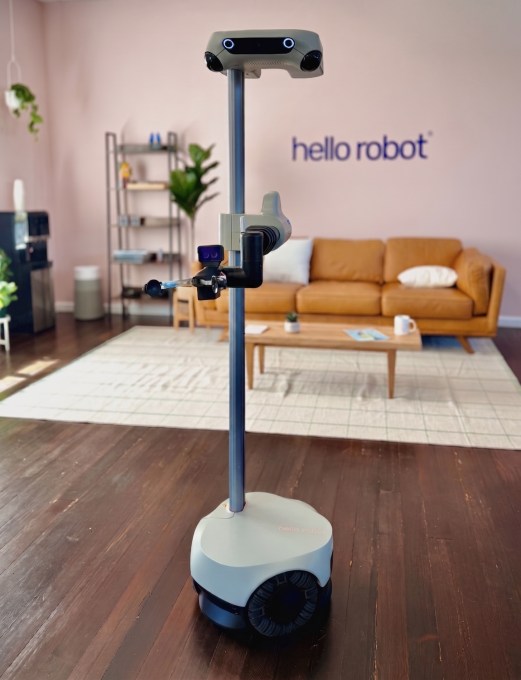
Hello Robot’s Stretch 4 is not a walking, talking, or even fully autonomous humanoid. It lacks the dexterity of a human hand and the balance of a human foot, but it has a specific purpose: to assist in real, lived environments. This approach is a stark contrast to the Valley’s obsession with robots that look and act like humans. Instead of chasing perfection, Stretch embraces limitation to achieve safety and utility.
Its design is rooted in practicality. The robot’s telescoping arm ends in pinchers, and it moves on wheels, making it stable and easy to control. The company’s CEO, Aaron Edsinger, has likened Stretch to Waymo, which prioritized safety in self-driving cars over flashy capabilities. Stretch is built to work in real homes—where spills, furniture, and unpredictable human behavior are all part of the job.
- Focuses on real-world deployment, not lab perfection
- Uses a voice-operated app for control
- Designed for people with mobility challenges
- Emphasizes safety over aesthetics
For users like Keith Platt, a quadriplegic who now lives with Stretch, the robot is not just a machine but a companion. Platt’s ability to complete daily tasks with Stretch’s help has improved his independence and quality of life. This is not the kind of innovation that makes headlines, but it is the kind that changes lives.
Hardware Is Hard
Despite the progress in artificial intelligence, the physical constraints of robotics remain a challenge. While software can be updated with ease, hardware requires careful engineering and testing. Robots that are too heavy or unbalanced risk falling, damaging objects, or injuring people.
One startup, the Bot Company, recently faced legal trouble after its robot caused damage in a rental home. The issue is not just technical—it’s also legal and ethical. Companies that deploy robots in homes must account for liability, safety, and user trust.
Mahi Shafiullah, a roboticist at UC Berkeley, notes that even cutting-edge hardware can fail in unexpected ways. For example, an industrial robot in his lab accidentally destroyed a plastic kitchen set meant to be manipulated with care. The lesson is clear: the physical world is not forgiving, and robots must be designed to survive in it.
Hello Robot’s approach—prioritizing safety and simplicity—may be the key to widespread adoption. Its robots are designed to work alongside humans, not replace them. That philosophy is reflected in the way Stretch is built and operated.
Homeward Bound
Stretch 4 costs $30,000, a price point that is high for a household robot but reasonable in the context of its capabilities and the value it provides. Hello Robot’s goal is not to mass-produce this robot immediately but to iterate and refine it based on real-world feedback. The company is currently manufacturing between 200 and 300 units, with the first batch already sold out.
Edsinger and his team are committed to keeping the robot accessible to researchers and hackers, with a design that can be shipped in a cardboard box. This emphasis on accessibility is critical for innovation—when more people can experiment with the hardware, the ecosystem of tools and applications around it can grow.
Stretch’s sensor suite and safe operation make it a compelling candidate for future home automation systems. It’s not just a tool for the disabled or the elderly; it’s a platform for researchers to explore new AI capabilities. As the data collected by Stretch improves, so too will the algorithms that drive it.
The future of robotics in the home may not be in the form of a perfectly human-like machine, but in a robot that can do what needs doing, safely and reliably. Hello Robot’s Stretch is not the next big thing in the eyes of the Valley, but it may be the most important.