The emergence of autonomous AI agents represents a fundamental divergence from the pure GPU compute paradigm that defined earlier generative AI cycles. As large language models move past simple prompt-response loops and begin complex planning, tool invocation, and continuous state management, the computational burden shifts structurally toward orchestration logic—a domain traditionally dominated by CPUs.
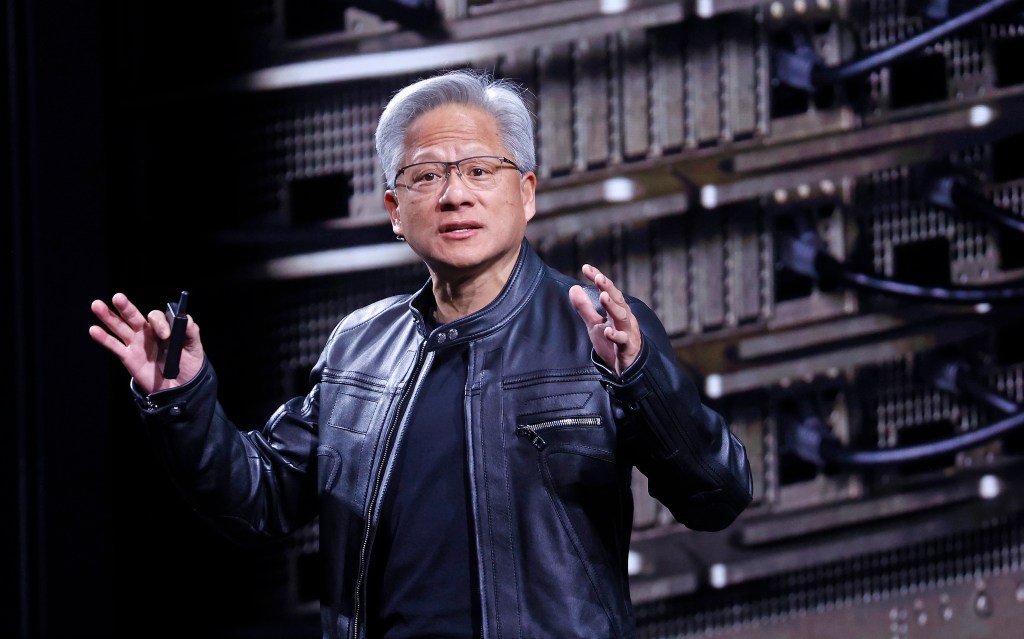
Jensen Huang’s assertion of a $200 billion market centered on a new CPU product signals Nvidia's aggressive effort to reposition itself as an end-to-end infrastructure provider for this next stage of intelligence. The industry consensus is clear: the future of AI compute requires a rebalanced, heterogeneous architecture where CPUs are not merely supporting players but core computational engines enabling agentic workflows.
Redefining Compute Through Agentic Workloads
The distinction between earlier LLM inference and true agent behavior is critical to understanding this market pivot. Chatbot-style generation primarily demands massive parallel matrix multiplication, which is the primary domain of specialized GPU cores. Conversely, an autonomous agent—the kind that breaks down a complex goal into sequential steps, calls external APIs, manages memory across multiple domains, and loops based on feedback—exposes a fundamentally different computational profile.
This new workload emphasizes orchestration, which is inherently CPU-intensive. To function effectively, the architecture must support:
- Sequential task execution for high-level planning.
- Interfacing with legacy systems via APIs or external databases (tool calling).
- Managing continuous state for ongoing missions through memory retention and context passing.
The expected shift in compute ratio, moving away from an 8:1 GPU-to-CPU configuration towards a more balanced 1:1 or even CPU-heavy setup for certain agentic tasks, validates the necessity of specialized central processing units. The industry is effectively moving from designing "AI boxes" to assembling complex, distributed computational fabrics.
The Hardware Battleground and the $200B Market
The competitive landscape is becoming a multi-vendor showdown, forcing players to acknowledge the growing relevance of the CPU. While Nvidia retains near-total dominance in raw AI accelerator silicon, the challenge lies in capturing the control plane—the software and hardware that directs the actual computation.
Huang’s vision for this $200 billion market relies on products like Vera, which is positioned as being purpose-built for agentic AI. This move attempts to bridge the historical gap between specialized GPU compute and the general-purpose CPU backbone. The sheer ambition of quantifying such a massive total addressable market (TAM) underscores the strategic necessity of owning the entire stack, from the logic gate up through the network fabric.
Key points shaping this hardware convergence include:
- Specialization over Generality: Vendors are moving beyond general server CPUs to create silicon optimized specifically for AI orchestration tasks, differentiating them from traditional Xeon or EPYC lines.
- Ecosystem Lock-in: By tightly coupling a new CPU with existing GPU accelerators like the Rubin architecture, Nvidia attempts to build an inescapable ecosystem advantage.
- The CSP Threat: The commitment from major cloud providers like AWS and Google to develop in-house silicon demonstrates that this battle is not just about merchant silicon; it's a race to own the foundational layer of infrastructure itself.
Networking as the Bottleneck Frontier
Even if the CPU/GPU balance achieves parity, the complexity of agentic workflows introduces massive data movement challenges. An agent’s memory state—the Key-Value cache—is not static; it compounds across every decision loop. This necessitates a network architecture capable of supporting high-bandwidth, symmetric, and persistent connectivity between disparate compute nodes.
The evolution demands that networking is treated as a first-order performance determinant rather than an afterthought. The ability for data to flow seamlessly—whether the state moves from the CPU’s local cache to the GPU's memory bank across different physical racks—will determine whether an agent stays coherent or suffers from crippling latency.
As Nvidia pivots to claim this new territory, the success of their strategy will depend on whether they can convince the world that the "brain" of the AI is as much about orchestration as it is about raw processing power. If Huang's prediction holds true, the next era of computing won't just be measured in TFLOPS, but in the ability to manage the complex, looping logic of autonomous intelligence.