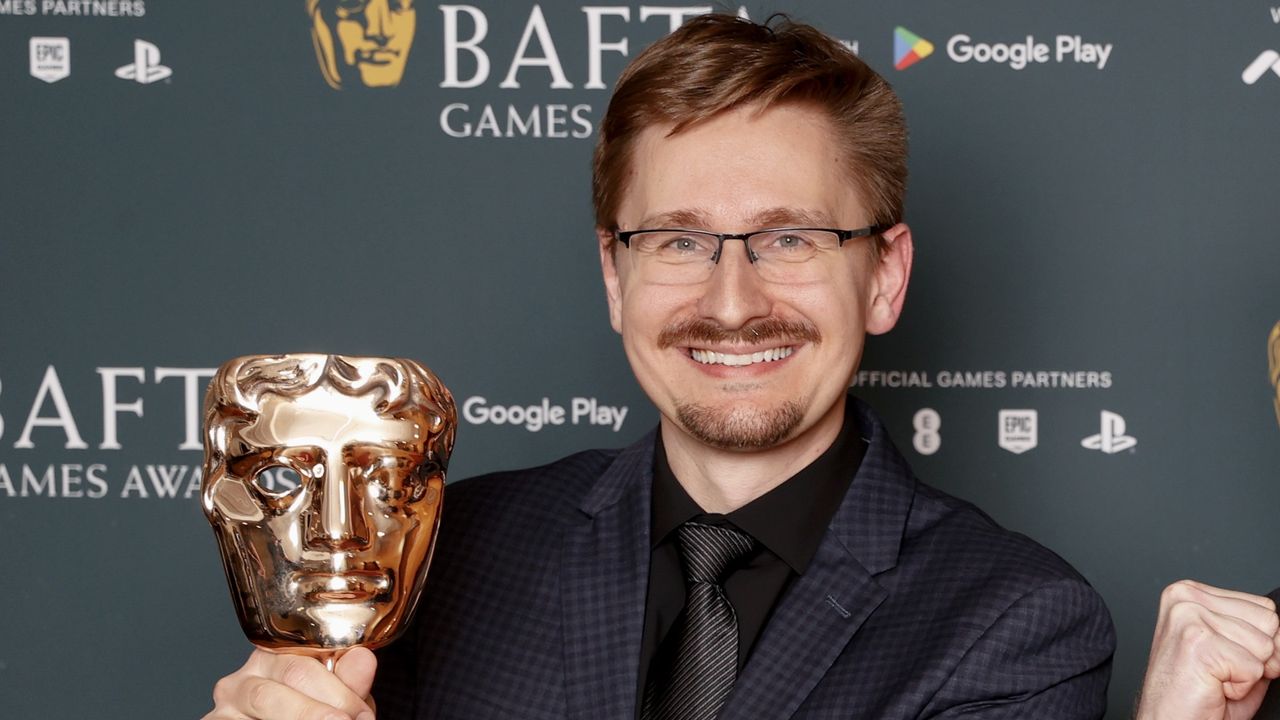
Prokop Jirsa didn't plan for any of this. There was no decade-long roadmap to becoming a lead designer or a director at Warhorse Studios.
"There was no 10-year plan to become the lead designer or director," says Jirsa, who now serves as the Kingdom Come: Deliverance 2 lead designer and one of two newly appointed creative directors at the studio. "Never. I just really like making games and playing games… When I joined the studio, I' thought that I would go back to a proper job sometime in the future. It never occurred to me that I would be here 12 years later."
It is perhaps a benefit to the studio that Jirsa isn't one for mapping out life trajectories. A developer with a rigid long-term plan might have avoided a studio that launched via a risky Kickstarter campaign for an achingly realistic RPG set in Czech history.
From Economics Student to Creative Director
Jirsa’s journey into game development began on a whim in 2014, during his final months at university. At the time, he was studying economics and business administration, far removed from the technical requirements of game design.
"I was going through the professions they needed," Jirsa recalls. "I would see 'Engine programmer': I don't know anything about it. 'Character artist': what the hell do I know about that?"
When he saw an opening for a general "Designer"—a role that, at the time, didn't distinguish between narrative, systems, or open-world specialists—he decided to apply. Warhorse took a chance on him, and Jirsa joined a studio that thrived on nurturing raw talent.
"Basically, there are no [game development] programs in the Czech Republic," Jirsa explains. "We mostly hire juniors and we train them up. Back then, and even now, we are used to people that join us and don't know much."
Navigating the Challenges of Warhorse Studios
Joining Warhorse in 2014 meant joining a studio on the brink of financial uncertainty. The company was only three years old and was searching for funding to bring their vision to life.
- The Kickstarter Strategy: Funding via Kickstarter was "plan D, or F, or G," according to Jirsa.
- Pitching Globally: Studio leaders traveled worldwide to convince investors of the potential of their historical RPG.
- The Lack of Publishers: Early attempts to find a publisher failed because the concept—a game where players literally have to learn how to read—was considered too "obtuse."
During those early months, Jirsa’s business degree became an unexpected asset. Instead of designing quests, he spent his time assisting with the Kickstarter campaign to ensure the studio's survival.
The gamble paid off. The initial goal of £300,000 was shattered, ultimately raising £1.1 million. While not enough to fund a full AAA production, the success proved there was massive demand for the franchise, eventually attracting the angel investors needed to complete Kingdom Come: Deliverance.
Embracing Friction in Game Design
As the studio moved from survival mode to development, Jirsa faced the monumental task of building a world. He admits that nearly everything about the first game's development was a challenge, ranging from limited staff and tight budgets to the sheer patience required for high-fidelity polishing.
However, the most defining trait of Warhorse's design philosophy is their refusal to smooth over the "difficult" parts of the experience. While many modern developers aim to remove all player friction to make games more accessible, Jirsa and his team lean into the struggle.
For the creators behind Kingdom Come: Deliverance 2, success isn't about making things easy; it's about maintaining the authenticity of a world where every victory is earned through hardship.