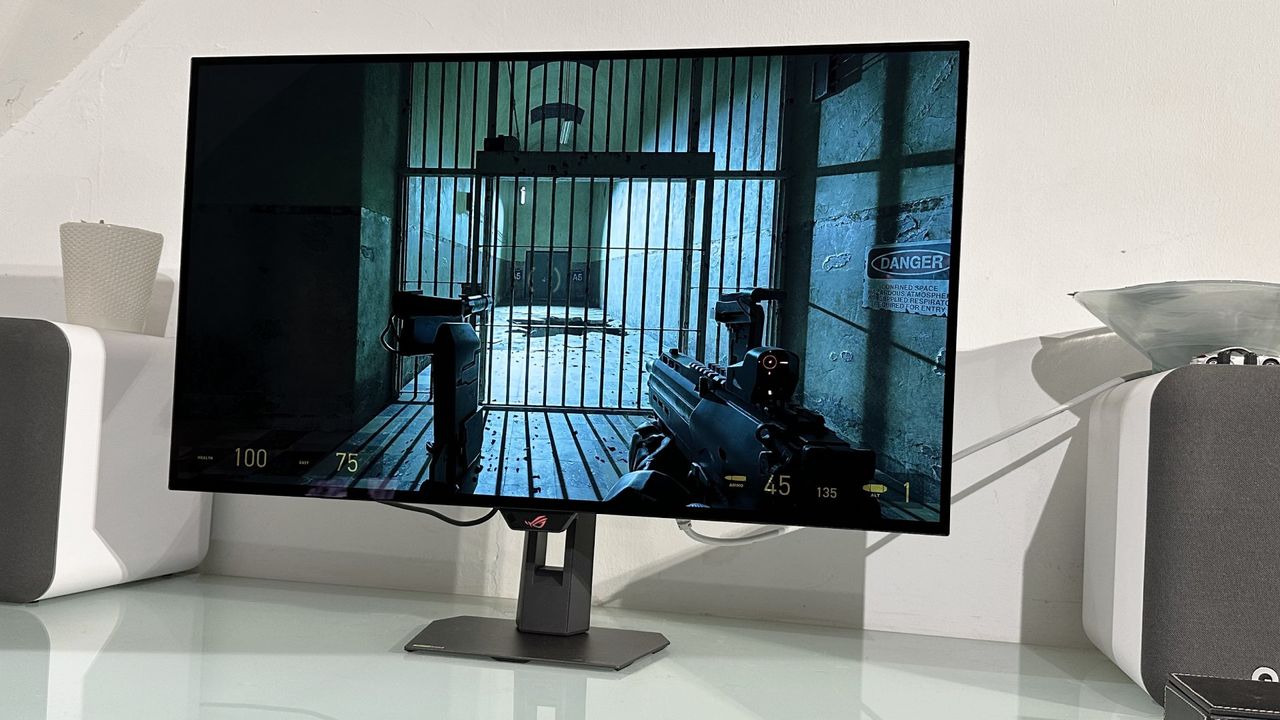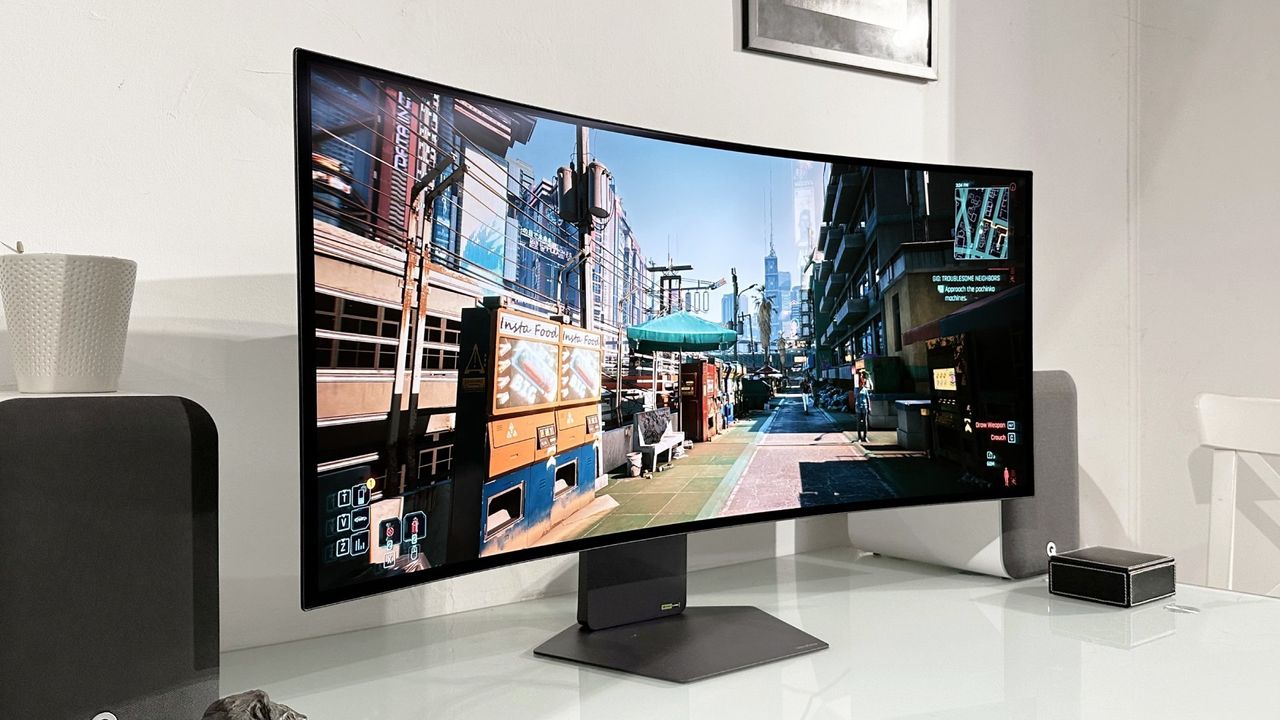
Is this the monitor cashed-up PC gamers have been waiting for? At last, a 39-inch ultrawide with decent pixel density thanks to its 5K2K resolution, plus the latest LG OLED panel knowhow? The new LG UltraGear Evo GX9 39GX950B certainly sounds pretty sweet, even if it also costs a pretty penny at $1,799 or £1,549.
The sordid matter of money aside, there's just one snag. The Ultragear 39GX950B does indeed offer LG's hot new Tandem OLED technology. But there's another otherwise almost identical 39-inch 5K2K panel from LG Display that has one notable advantage over this monitor, the inclusion of true RGB-stripe subpixel structure.
It turns out Alienware has announced a monitor using that LG panel, the Alienware AW3926QW, and, to be frank, it looms large over this new model from LG itself. However good it is, you'd really want to see how that Alienware shapes up before pulling the trigger.
LG UltraGear Evo GX9 39GX950B specsScreen size
39-inch
Resolution
5,120 x 2,160
Brightness
335 nits full screen, 1,500 nits peak HDR
Response time
0.03 ms
Refresh rate
165 Hz @ 5K2K, 330 Hz @ 1080p
HDR
DisplayHDR True Black 500
Features
LG Tandem OLED panel, G-Sync, 2x HDMI 2.1, DisplayPort 2.1, USB-C with 90 W PD, USB-A hub
Price
$1,799 | £1,549
Buy if...✅ You want a big-screen OLED with good pixel density: The 5K2K resolution on a 39-inch ultrawide panel gives the same pixel density as a 32-inch 4K monitor.
Don't buy if...❌ You want a reassuring three-year warranty: LG only covers this monitor for two years, which means you're on your on if it burns in after that.
Still, the LG Ultragear Evo 39GX950B does look epic on paper. We're talking 5,120 by 2,160 pixels across that 39-inch diagonal. To provide a little context and to define this panel in terms of pixel density and vertical screen size, this is essentially a 32-inch 4K 16:9 monitor taken out to 21:9 aspect and 39 inches.
For many fans of high-end gaming displays, the basic proposition here is just about perfect. The 143 DPI pixel density is enough for crisp fonts and lots of space for day-to-day computing and multitasking while also delivering oodles of in-game image detail.
At the same time, the ultrawide aspect and huge 39-inch panel size makes for epic immersion. Then add in the latest LG Tandem OLED panel tech and, well, you get the idea. This thing promises to be a bit special.
(Image credit: Future)Beyond the basic form factor, of course, there are plenty of other details to absorb. In terms of brightness, ever a key OLED metric, LG claims 335 nits full screen and 1,500 peak HDR in a small window. Those figures are as good as PC OLED monitors currently get.
Speaking of HDR, the 39GX950B has VESA DisplayHDR True Black 500 certification, which is a hallmark of the latest LG Tandem OLED panels. Response comes in at 0.03 ms, which is standard for pretty much all current OLED panels and miles faster than any LCD-based monitor.
As for refresh, at the 5K2K native the 39GX950B tops out at 165 Hz. However, it supports various dual-mode alternative resolutions, the fastest of which can achieve 330 Hz. That's fairly nippy by any sensible measure, though it's pretty hard to imagine anyone really serious about esports and online shooters going for a huge ultrawide like this.
The LG UltraGear Evo 39GX950B includes numerous dual-mode resolution options.FutureThere's also built-in AI upscaling, but it's all a bit underbaked.FutureHaving said that, the 39GX950B does offer the option of running at 1080p and 330 Hz in a 24.5-inch window, which pretty neatly mimics the preferred form factor for esports. The image quality is pretty clunky and pixellated, as it is in all of the dual modes. And I'm not totally convinced that many esports fans will actually want to play like that.
It certainly looks pretty odd to have a small 24.5-inch section of the huge panel active and rest fully blacked out. But there's no question it works and means this monitor is a thoroughly versatile gaming tool.
It certainly looks pretty odd to have a small 24.5-inch section of the huge panel active and rest fully blacked out.
If the downscaling support is comprehensive with this panel, so too is the upscaling. Obviously, some kind of upscaling is now pretty much standard with any remotely recent graphics card, in the form of Nvidia's DLSS, AMD's FSR or even Intel's XeSS. But LG has included its own "AI" upscaling functionality with the 39GX950B via an integrated image processor. But hold that thought, we'll come back to how effective it is and how it might compare with GPU scaling in a moment.
Rounding out the speeds and feeds, you get HDMI 2.1, DisplayPort 2.1 and USB-C connectivity, the latter with 90 W of power delivery for single-cable connectivity to a laptop, albeit a gaming laptop will typically need rather more than that.
FutureFutureFutureFutureLast and certainly not least on the specs, the panel has a matte anti-glare coating rather than glossy and a mercifully gentle 1500R curve. Most people know if they are glossy or matte fans, but suffice to say that the heavy majority of current OLED gaming monitors are glossy.
One further detail involves the warranty. Where most big monitor brands offer three-year cover, including burn-in, LG is only offering two years. That's disappointing on several levels. For starters, LG Display, the subsidiary of the sprawling LG empire that makes the actual OLED panel (as opposed to LG Electronics, which makes this monitor), says its new Tandem OLED panel tech is more durable than previous generations. So, why not back it with a three-year warranty?
Moreover, given the hefty asking price of around $1,799 or £1,549, the thought of being on your own when it comes to burn-in after just two years is pretty off putting. That alone makes this monitor tricky to recommend.
The matte anti-glare coating does slightly compromise contrast.FutureFutureBut let's park that caveat for a moment and consider this monitor's performance. What's it actually like? Well, it's definitely punchier than monitors based on LG's previous WOLED panel generations. Oddly, it's also a more consistent performer than the Asus ROG Strix XG32UQWMS I reviewed recently.
I say "odd" because that Asus uses essentially a 32-inch 4K version of the same LG Tandem OLED panel tech. But I found the brightness variability on the Asus to be awfully distracting if you disabled the uniform brightness feature in order to maximise performance.
The Ultragear 39GX950B does still suffer from that issue, and probably more than comparable OLED monitors based on Samsung QD-OLED tech. But not enough for it to be a major flaw. Overall, the full-screen brightness is pretty decent and this panel can actually be too bright if, for instance, you tend to run most applications in dark mode and then have a third of the screen lit up by a bright browser window.
Of course, that's a good problem to have. Turning brightness down is simple. There's not much you can do, on the other hand, if max brightness isn't good enough.
If you really want to split hairs, the latest Samsung QD-OLED panels still look a touch more vibrant.
So, as a desktop general computing panel running in SDR mode, this LG is pretty sweet. Fonts are sharp and crisp, there's loads of desktop space for multitasking, and the panel is plenty bright enough. If you really want to split hairs, I think the latest Samsung QD-OLED panels still look a touch more vibrant and saturated. But it's not a huge delta.
For HDR content, meanwhile, it's likewise mostly good news. LG's OSD menu is a bit baffling, but once you've got everything properly set up, the results can be spectacular, especially on a panel this size.
The UltraGear Evo 39GX950B is a big, beautiful beast.FutureAs ever with an OLED panel, it's at its best showing small bright details on a dark background. Neon lights in a nightclub scene, fireworks in the night sky, a large flame burning in the inky darkness, that kind of thing. Then the full impact of the 1,500 nit peak HDR brightness really hits home.
It's a touch less impressive for outdoor daytime video and game scenes, where the full-screen brightness limitations can leave it looking just a tiny bit underwhelming. To be clear, it's far better than earlier LG OLED panel generations in that regard. But, again, my preference for that kind of rendering remains Samsung QD-OLED.
That said, it's an open question just how good LG's new RGB-stripe panel as used by the aforementioned Alienware will be by comparison. In theory, and because it doesn't rely on an additional white subpixel to boost brightness, that RGB-stripe panel should have superior colour saturation and look more vibrant. Exactly how that pans out, well, we'll have to wait and see.
While we're talking HDR visuals, the SDR calibration in the best HDR mode is pretty wonky to the point where you'd never leave it in that mode, day-to-day. You can actually get decent SDR visuals in one of the other HDR modes. But then that compromises HDR performance. Long story short, you're going to have to switch monitor modes depending on the kind of content you are viewing, which is a bit of an annoyance.
You want pixels? The UltraGear Evo 39GX950B's got 11 million of 'em.FutureAs for the AI upscaling feature, it's awfully hit and miss. For instance, it doesn't work at all at 3,440 by 1,440, which you'd think would be the ideal alternative setting to 5,120 by 2,160 native in terms of knocking the res down to release some performance.
At other resolutions like 1080p, meanwhile, it only works at certain refresh rates. Once enabled, yes it does make things a bit crisper, but it's really not comparable to DLSS or FSR. In short, in its current form the built-in AI upscaling feels pretty underbaked.
Still, if you add panel speed to this monitor's other qualities, the overall experience is frankly epic. It's so huge and so super sharp and so immersive and just so awesome. And yet I can't help having a few reservations.
FutureIn some ways, it's the best gaming monitor I've ever seen.
First, I'd love to see the latest Samsung QD-OLED tech applied to a panel this size and resolution. I'd likewise like to see this monitor with a glossy coating. That could be fantastic in terms of heightening the sense of visual pop and contrast.
And, again, I'd really want to see that upcoming Alienware with its LG Tandem OLED RGB-stripe panel before pulling the trigger, especially as the Alienware looks like it could be as much as $600 cheaper.
Then there's the disappointing two-year warranty. It really is hard to look past that at this price point. All of which leaves me in a state of cognitive dissonance with this monitor. In some ways, it's the best gaming monitor I've ever seen. And yet it's ultimately impossible to issue a strong buy recommendation. At the very least, anyone considering the LG UltraGear Evo GX9 39GX950B really has to wait and see how that cheaper RGB-stirpe Alienware turns out.