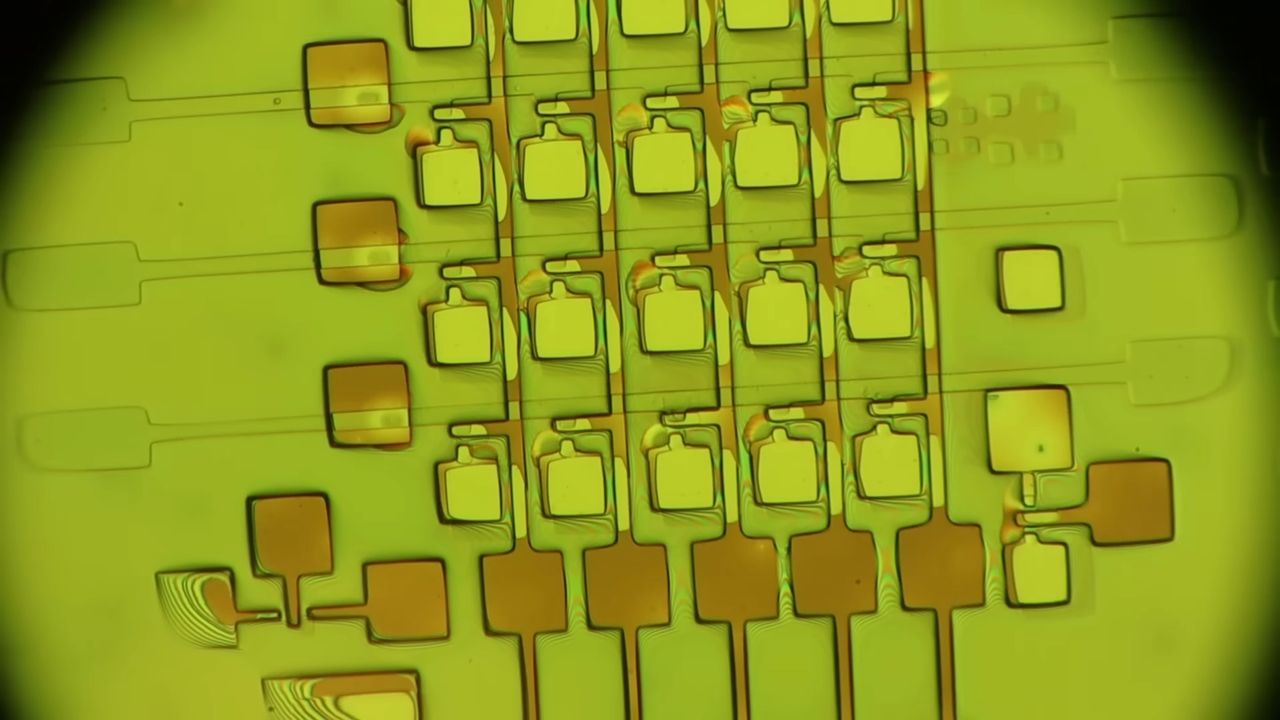
We've previously reported on the adventures of Dr. Semiconductor, a YouTuber who managed to build a working cleanroom in their backyard shed. As if that achievement wasn't impressive enough, the good doctor is now using said cleanroom to make their own DRAM cells.
Yes, the RAMpocalypse has come for us all, but Dr. Semiconductor appears to be leading the way in terms of DIY solutions. As you would imagine, manufacturing your own memory is far from easy.
The complex process of manufacturing DRAM cells
Starting with pre-made silicon wafers, Dr. Semiconductor cut them down into workable sizes with the help of a diamond scribe (via Hackaday). The individual pieces were then cleaned in an acetone and isopropyl alcohol solution to remove unwanted surface particles.
The fabrication process involves several intense technical stages:
- Thermal Oxidation: Chips were heated to 1,100 °C in a furnace to grow 3,300 angstroms of glass on the surface as a mask (a process that also turns the chips green).
- Photoresist Application: The chips were coated with an adhesion layer and baked before a photosensitive film, roughly 1 micron in thickness, was applied for UV etching.
- Etching: A UV mask pattern was shrunk via microscope magnification stages, allowing transistor patterns to be dry-etched onto the chips using specialized software.
- Chemical Stripping: The photoresist mask was stripped with dimethyl sulfoxide, leaving an etched oxide pattern behind.
To complete the transistors, the source and drain were created by adding phosphorus into the silicon via a homemade method involving a custom solution from another YouTuber. Finally, the gates were created through even more layers of cleaning and material removal.
Testing functionality and future plans
The end result of this intensive process is a complete 5x4 array of DRAM cells, featuring all the transistors, capacitors, and connections needed to function. While testing was conducted in a "dog-friendly" environment outside the shed, the results are impressive.
The cells are functional, although there is a notable hurdle: the capacitors bleed off charge at a faster rate than expected. This means these homebrewed chips would need to be recharged at a higher frequency than conventional hardware. Despite this limitation, it is quite possibly the first working example of DRAM cells built entirely at home.
So, what's next for the project? Dr. Semiconductor plans to stitch a larger number of these cells together to create a much larger array for use with a PC. There are even hints that Doom might serve as the ultimate test platform, adding this achievement to the legendary pantheon of unlikely electronics that id Software's classic can be forced to run upon.
Godspeed, and good luck. I wonder what else can be cooked up in that garden shed cleanroom? Mine is simply full of spiders, which is much less fun.