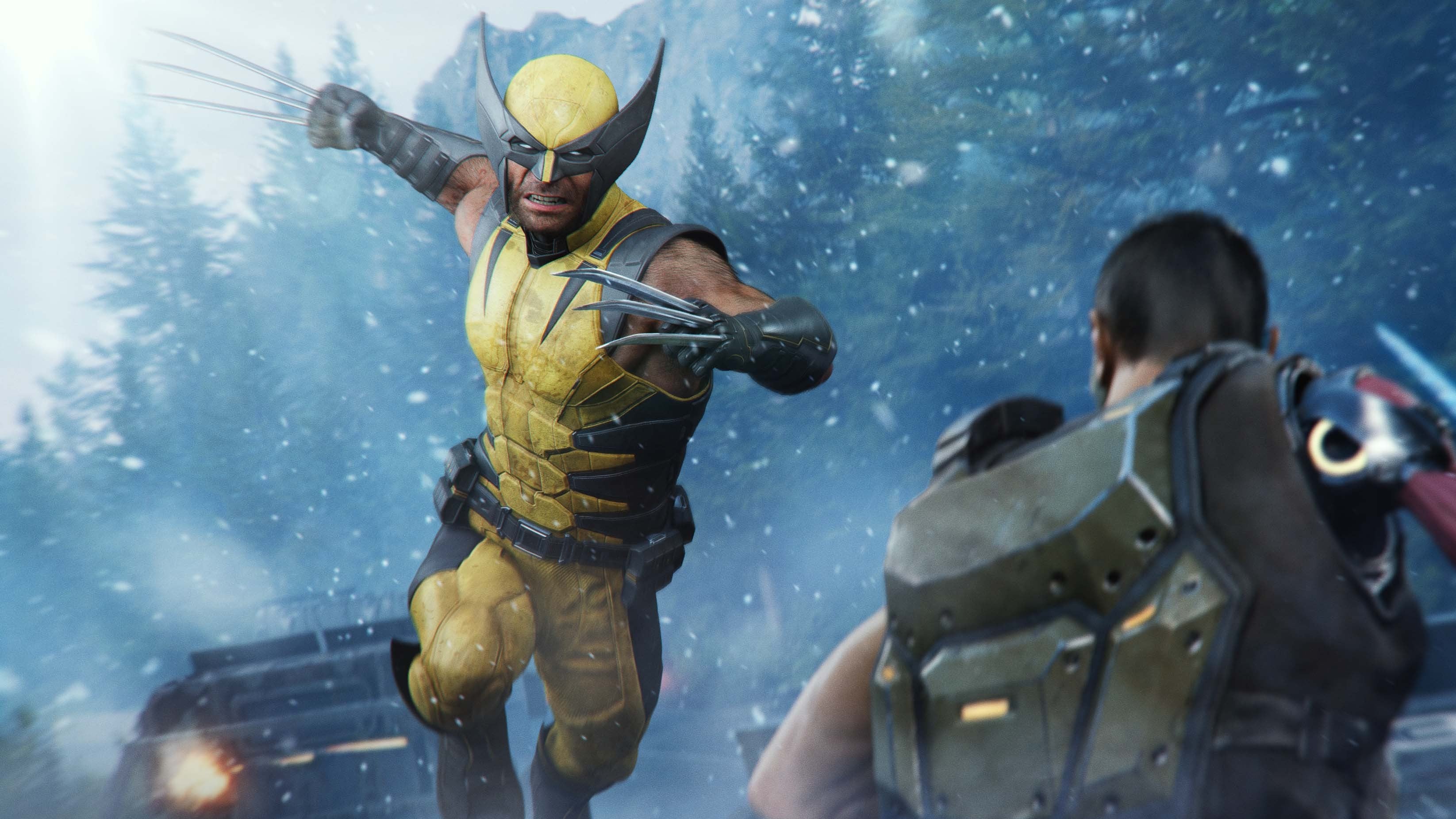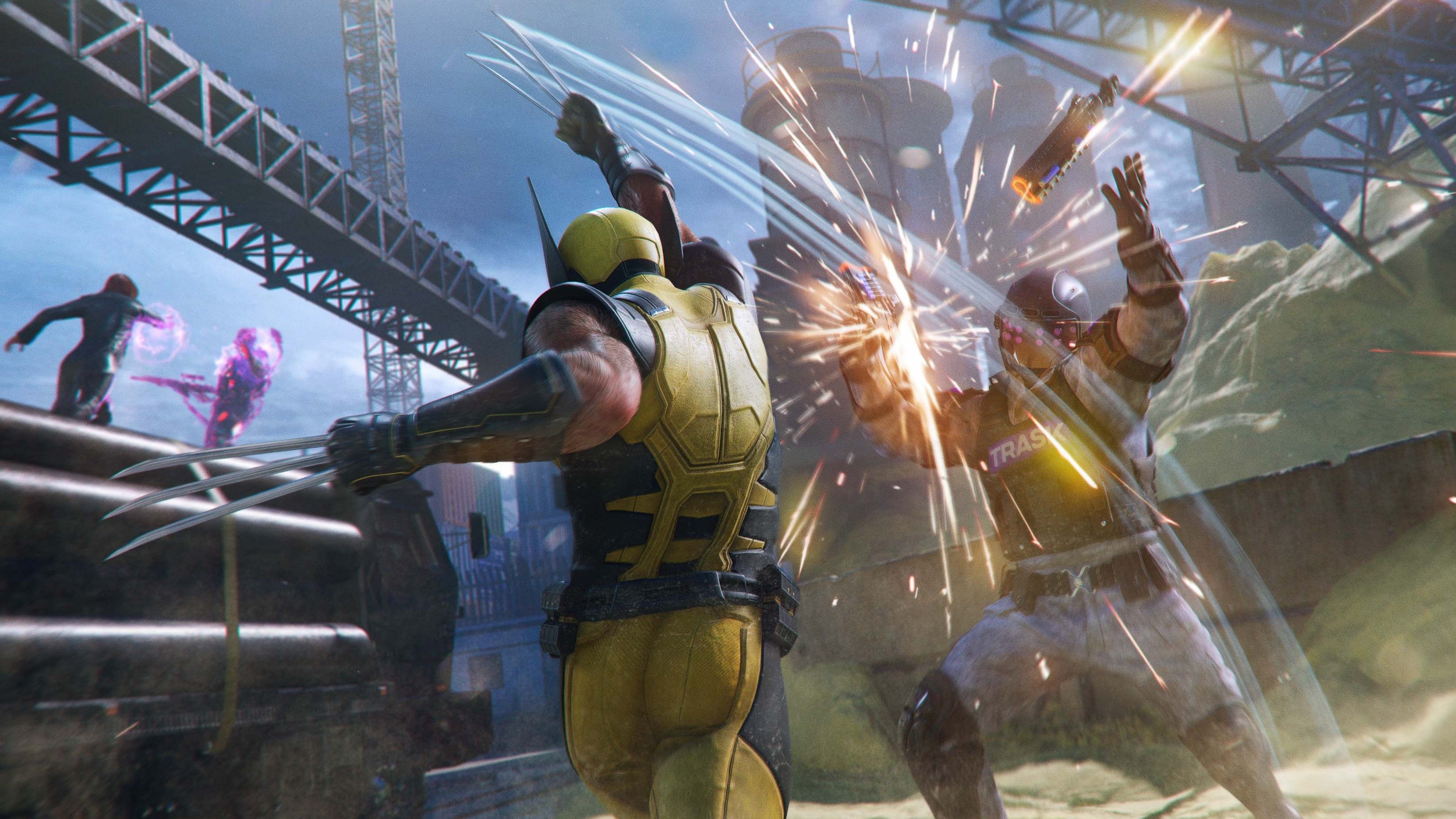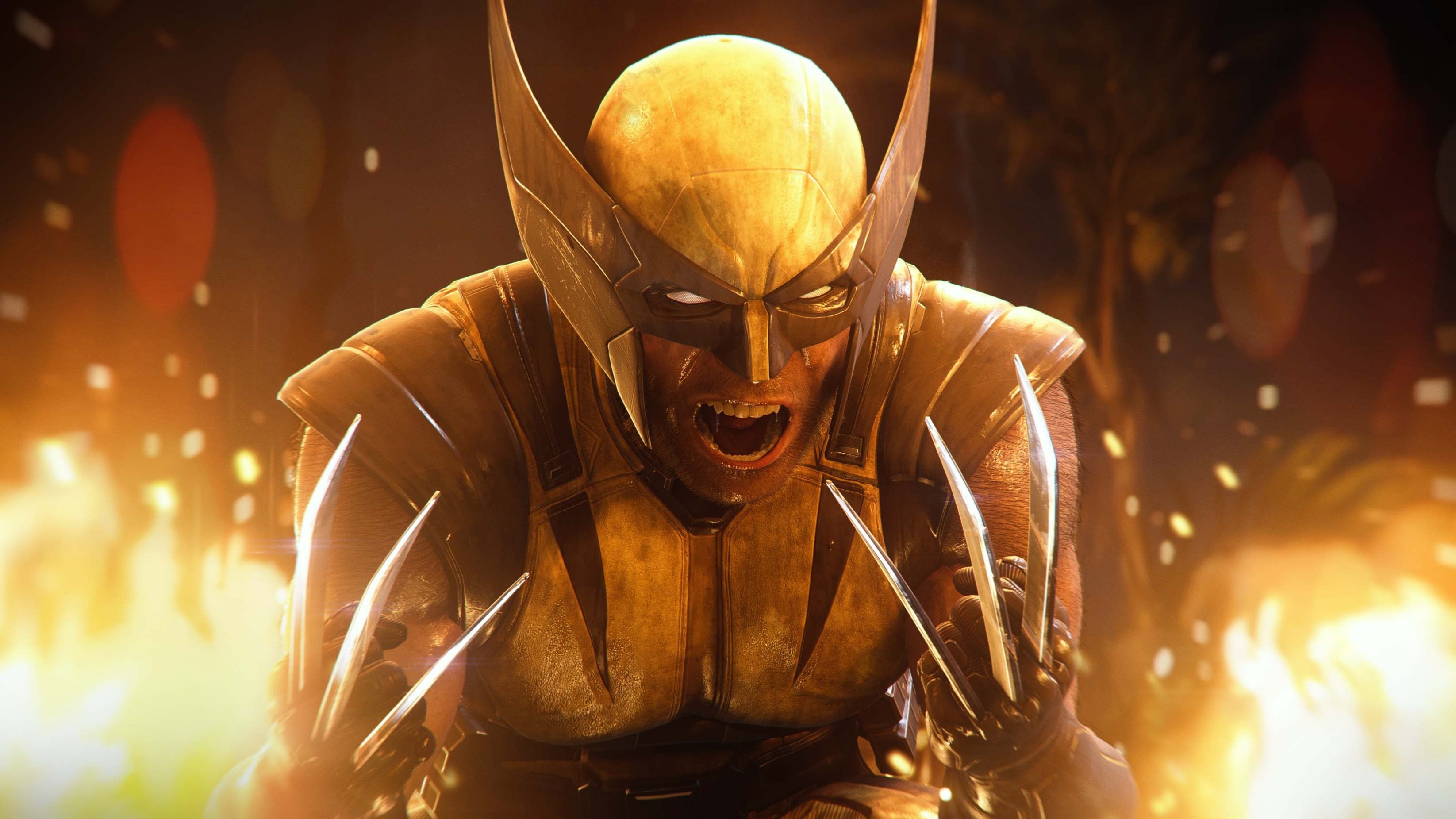
You’ve no doubt seen the Marvel’s Wolverine gameplay footage fresh from Sony’s State of Play showcase and have questions. I did too! As a big Wolverine fan, I wanted to know more about how the game will actually play once it comes out exclusively on PlayStation 5 later this year, from the extent of the violence to co-op finishers with Jean Grey. How does Wolverine’s Rage meter work? Is that actually real-time healing? And what is the size and scope of the game itself?
After a pre-screening of the trailer ahead of State of Play, I got the chance to chat with creative director Marcus Smith and game director Mike Daly to find out everything I could about Marvel’s Wolverine in the space of 30 minutes. And yes, I asked if you could give the middle claw.
Here's everything announced at State of Play June 2026 if you need a catch up on what PlayStation has in store.
IGN: The level of gore and blood is extreme, which as a Wolverine fan is fantastic. But was there ever any question over the violence, because we have seen family friendly versions of Wolverine before with a different audience in mind. It would be great to get some insight into the decision to say, we’re going to go for it, this is an M for Mature game.
Mike Daly: From the inception of the project, we knew that the number one most important thing was to bring the Wolverine fantasy to life. Not just that, but make it the ultimate Wolverine fantasy. And when you look at the aspects of the character and all the stories he's been through in his history, it was clear that violence was a key part of that. So that was never really in question, and it was kind of baked into how we made decisions from the very beginning. So we knew that we were going to have to bring that out in gameplay, put it in your hands as a player, make it a part of the story.
But at the same time, Insomniac Games, we want to have a grounded world with believable things that happen. So we didn't want to go over the top. We really wanted to hit the bullseye on what is the best representation of Wolverine, what delivers fan expectations, and what's going to keep the claw combat action satisfying over the whole course of the playthrough.
So those are the things we calibrated against. You can see the results for yourself because we've put it in the trailer. The way I would describe it is that we were unapologetically violent. We knew it would have to accomplish that in order to accomplish our ultimate mission. And because of that, the gameplay retains satisfaction.
Now all that being said, we know that it's not for everyone. And because we knew this was going to be a big part of the game from the beginning, we also implemented an accessibility feature to turn off gore. It's clearly integrated into the game in a lot of different ways, and so it's a nuanced feature that is very selective about what we show, what we censor, turning off blood and things like that, just in order to make it more palatable to people who don't really want to have that part of the experience.
Marcus Smith: I would just add one more thing that was a deciding factor in this, which is the relentlessness of the character himself. It's such a true, core element of Logan that what makes him so heroic is that he feels everything along the way and he keeps going. And so we couldn't show that without showing damage, without showing that violence and everything on him as well. So it wasn't just he’s going to inflict a lot of damage because he's got these razor sharp, unbreakable claws. Obviously that's true, but it's also part of the core essence of the character we're trying to show.
IGN: We’ve seen dismemberment in cutscenes, but is there dismemberment in the actual gameplay combat when you're in control, when you're actually pushing buttons, doing combos? Can you cut off someone's arm, their leg? Can you chop off someone's head? I appreciate I sound like a maniac asking this question, but I want to know!
Mike Daly: I mean, you're spot on. We wanted to deliver it in gameplay as well as in cinematics and be consistent in that way. So to the point of not going over the top, it's not like limbs are cartoonishly flying everywhere, but when you do an especially brutal move against an enemy that you've broken down their defenses on, some of the times you can chop off their limbs or do even more violent things to them. So that is part of Logan's combat moveset.
Marcus Smith: The trick for us with the violence was, it doesn't come off gratuitous in the sense that Logan enjoys it, right? It's really an expediency. He's just very efficient, and that might happen during the efficiency of his combat.
IGN: Also in the combat we see what looks like a rage system. There are some meters that you can build up and then you can do something that makes Wolverine go feral. It would be great to get a breakdown of how that works and what you have to do to build that up.
Mike Daly: Yeah, for sure. We knew we needed to represent Logan's rage in combat as a major element of the character. The way that works, the parts of it you see in the gameplay trailer, is when you're engaged in combat, all the moves that you do build up a little bit of rage. Getting kills gives you chunks of rage. And there are some special moves you can do, like the particularly brutal ones, like barraging an enemy who's already opened up, that can build it up even further. So there are ways to build up your rage, and it sort of represents the battle momentum between the enemies and Wolverine.
It comes into play in a few major ways where, as you get towards the middle of the meter, your combos become more powerful. And so, you have an incentive to play more aggressively, because in addition to doing damage faster, the rage starts to decay a little bit. If you work through that and build it up towards the top of the meter, then... you saw him go into this aggressive, really feral tier of rage where he can get kills really quick. He's able to do moves called Critical Strikes, where he just impales enemies with real brute force to take them out quickly. But at that level, his rage also drains very quickly. So there's a strategic aspect of choosing your targets, not worrying about defense, and being as aggressive as possible in order to sustain it and get as many enemies as you can before it runs out.
Now rage is also tied to another essential sort of Logan element of combat, which is his healing factor. When all of Logan's body energy is dedicated to fighting in combat, his healing factor is relatively slow, passively. And our Logan, if he takes enough damage, his healing factor is overloaded, his heart can stop, and that ends his healing. He will die. But if you have enough rage, the adrenaline surge can jumpstart your healing factor and let you do a Healing Surge to get back into battle.
So that's another element that changes the dynamic of combat depending on how much rage you have. At one end of the spectrum, you don't have enough rage to jumpstart your heart and so you're vulnerable. You need to be strategic, you need to be defensive, you need to focus on survival and rage build-up. And then at the opposite end of the spectrum, you need to be super aggressive. You need to focus on doing damage as quick as you can and focusing on the targets that you can kill quickly.
IGN: You say that the way that Wolverine dies in the game is his heart will stop. Fans have debated this for years: how do you actually kill Wolverine? Can he be killed? Even if you chop his head off, can he just grow back? Did you have to think about all of these nitty gritty Wolverine-type things that comic book fans have talked about for years?
Marcus Smith: If you split him down the middle, can you get two Wolverines?
IGN: What a great question!
Mike Daly: But yeah, the serious answer to your question is like, yeah, we think about that! Everybody knows this character to some degree, so early on in development, these questions came up all the time. How can we accurately represent this character when some people see him as truly, literally immortal? And everybody has kind of a different take. I think we have the benefit that his healing factor has taken many different forms over the many different media that he's encountered. And so we had a little bit of leeway to find the best fit for this video game that still was true to the character. And this is the one that we ended up on because basically it makes the game fun, while still giving you a chance to witness this insane regeneration factor up close.
IGN: We see in the footage that Wolverine suffers actual damage to his body as you're playing the game, as you're in combat. To what extent is this real-time damage he suffers? And does that factor into gameplay in any way? Is that a visual cue that you use as well as the meters that you have to manage, or simply a graphical effect?
Mike Daly: It was really important to us that you saw the damage, that you felt the damage, that you could tell Wolverine was in pain and he was hurting for all these things that were happening to him. The damage on his body reflects what his health is currently at. So you can sort of see it heal in real-time as he does his Healing Surges or his Last Stand, or he’ll heal rapidly once you complete a combat and he can focus all his energy on regeneration. And I can say a lot of work was put into building Logan's body in a way that can take lots of different types of damage all over and at a level of fidelity that holds up to our close, visceral camera.
IGN: There's another bit in the gameplay footage where he takes a real beating from a big enemy and you have this sequence where you have to hammer the Square button to heal. That looked different to me than the normal pace of combat where you're managing his health as you're playing as you've been describing. Is that a scripted moment in the game where you will have these sections where you just have to pass through it, or is it more dynamic than that? How exactly does that work?
Mike Daly: The way that works is, you've got your health bar, once it gets drained out, if you've got enough rage left, then Logan's down but he's not out. It's during those moments that you use that button mash sequence to convert your latent adrenaline back into health. So you get a second chance. You can come back, but you're all out of rage so you do not get another one. And how well you do at that sequence determines how much health you come out of the moment with. This can happen lots of different ways, basically just however the enemy takes you down.
IGN: It would be great to talk about the style of gameplay that's on offer and the size and scope of the game. This is obviously very different to Spider-Man. This isn't an explore an open world type of game. The footage I've seen, you have a decent size play space and there's an element of where do I go and how do I do this? And then it expands from there and moves into another section where it's a convoy chase. Is that typical of the entire game experience, or is that a one-off type gameplay experience just for that mission?
Mike Daly: So again, going back to the beginning when we asked ourselves, how do we make the best Wolverine game possible that represents that character? We thought about, Logan's a character who basically travels the world, has traveled the world many times over. He's pulled by a search for his past. He's pushed by a sense of duty. And to that end, we decided that a globe-hopping adventure was the right take for this game. Logan is not a character that's anchored in a particular place and spends a lot of time on it.
So what you can expect out of the game is that we've created a comic book-style pacing, dense story, that's like a rollercoaster and it grips you from beginning to end. And generally speaking, you're driven through all of these missions by important events and plot points that are happening. So in that sense, what you saw in the gameplay trailer was kind of representative. Logan's got a lead, he's got a direction, but he has agency in how he decides to approach it. The areas have different paths you could take. Stealth is optional; you could do it or you could not do it, you could jump straight into combat. And you can poke your nose around the nooks and crannies of the world to find things here and there, and some optional content and collectibles along the way.
We sought to have a large amount of variety in the feel of the different environments that you go to. And so that changes the pacing and the shape of how you navigate space and how you explore. And that leads to different flavors of gameplay as well, where some are more about observation and traversal, some are more about finding characters to interact with, and a lot of them are about stalking enemies and taking them out.
IGN: There's a moment in the footage where Wolverine can see the area that he's about to enter into, see enemies moving about, and then leaps into action. But that isn't necessarily a big sandbox area where there's lots of different things going on and you can make lots of different choices about how you're going about it. Would you say that's a fair assessment?
Mike Daly: Yeah. I can say we did not set out to make an open world game or a sandbox game. What we really wanted was high octane, high intrigue, linear single-player adventure, and the missions reflect that in their structure.
IGN: At one point in the gameplay Jean Grey turns up, which is very exciting. You fight alongside her, and there are co-op combat elements. I noticed what looked like co-op finishers where you can set enemies up for each other. How does that work exactly? Is this a major element in the game? Will we see this with lots of different characters, or is Jean Grey a one-off?
Mike Daly: When Logan meets up with Jean Grey in the trailer that you saw, they have a common enemy, they naturally work together, and they kind of have to feel this out. Jean Grey is sort of her own hero. She can hold her own and she operates autonomously. So she'll defend herself, she'll fight enemies, she'll take them out. And when the two of you are close to each other, you'll work together to take out enemies. One of the elements of this that you saw is that Jean can open enemies up to Logan so that it's on the player to listen to Jean, pay attention to her, and see these opportunities for quicker kills. So there is an interactive element to that. They will work together more later on in the game, and Jean can use her telepathy to help Logan in stealth segments as well to give him an edge by dimming enemy perceptions.
There are also other allies you fight alongside. We revealed Sabretooth at the end here. In this game, Logan and Sabretooth are actually on a team together, but the way they ally is not really anything like the way you ally with Jean Gray. Logan and Sabretooth have a very competitive dynamic between them. Whereas Jean Gray might give you an opportunity to get a kill, with Sabretooth fighting alongside you, it's more like, you think you've got a kill and he rushes in to steal it from you, and their combat banter brings out that dynamic and makes the whole fight more fun.
IGN: Wolverine and Sabretooth fighting together! Who'd have thought it? Okay, that all sounds very cool. The footage we saw there starts with Wolverine stealthing, or at least doing a couple of stealth kills. But could you then go on from that and stealth kill your way through the entire combat experience in that section? Or are you eventually forced into straight-up combat? Can you stealth kill your way through the game in these sections?
Mike Daly: There are a lot of scenarios in the game where it is not possible to stealth your way all the way through. But generally speaking, when the enemies are unaware of you, there are ways you can get through the whole thing with stealth. Now that being said, being a super stealthy character through and through isn't necessarily our priority for Wolverine. He uses stealth when it's the most efficient way to get the job done rather than it being important that he doesn't get caught, because he doesn't really fear combat. So the choice of stealth or combat is always in the hands of the player. In all those scenarios, he can always jump into combat whenever he wants. Not just that, but in a way there's kind of a natural encouragement towards it, because when you get stealth kills, it is a great way to pre-build your rage meter in a way that doesn't decay. And so there's a growing incentive to go ahead and make a big splash into combat because you have so much of that momentum behind you already. So we leave the choice to the player to how they want to get through the combat setup. And usually the ideal route is striking some balance of a little bit of stealth and then finding the right moment to go all out and take out the rest.
IGN: So get a few stealth kills, build up that rage, and then explode into combat in proper Wolverine style. One of the things that you have done in your games before is have sections where you play as other characters. Are you Wolverine the whole way through, or are there surprise sequences where you switch things up and you control and play as other characters, as you have done in your Spider-Man games?
Mike Daly: This game is all about Wolverine and you play Wolverine the whole way through. We wanted to keep the focus on him throughout the whole story.
IGN: We know that this Wolverine game exists in the same earth as your Spider-Man games. Does that manifest itself in any way in the game or is that just an incidental aside?
Marcus Smith: It's correct that it does take place in the 1048 Marvel Universe, which is the Insomniac video game universe. It happens in the same world, but we don't have any crossover. Spider-Man will not be making an appearance in Wolverine.
IGN: Story wise, what is Wolverine trying to achieve here? What is he setting out to do?
Marcus Smith: It's a totally original story. In the beginning, Logan is a member of Team X, but has been gone for a few years and we don't know why. And he comes back and is now on a mission to help mutants around the world. From there, we start tipping into spoilers that I can't get into, but suffice it to say, it's an M-rated game where we want to tell a more emotionally deep storyline. There will be twists and turns, and what he wants in the beginning might not always stay true. And by winning he loses and by losing he wins, and all of those things that you could expect from a Wolverine storyline.
IGN: So that’s why he’s trying to help Leech in the gameplay footage. I assume he’s part of the Morlocks. There’s a moment in the game where Wolverine does a jump and he uses his claws to steady himself as he lands. Is that a thing that just happens, or are you more in control of when the claws come out?
Mike Daly: Things like that are employed at the discretion of our animators generally, where they want to have the most Wolverine emotions and that means utilizing the claws in basically cool, contextual ways. And there are plenty of those flourishes throughout the game. That being said, we know it is fun to have control over Wolverine’s claws. So although you really need them out all the time while you're fighting, if you're outside of combat, you can actually manually pop claws with the triggers and just sort of flick them out, take a look, put them back in. So it's under your control and you get a little haptic feedback. It's pretty cool.
IGN: That is cool! This is going to sound like a massively immature question, but I have to ask: if you can do that, can you pull a middle claw just for the fun of it?
Marcus Smith: Not enough triggers for that!
IGN: Maybe a swipe on the pad to keep one of them up!
Marcus Smith: Honestly, we can't wait for everybody to actually get their hands on it because it feels so much better when you're playing it than even looking at videos and stuff. Can’t wait!
Marvel’s Wolverine is due out exclusively on PS5 on September 15, 2026.
Wesley is Director, News at IGN. Find him on Twitter at @wyp100. You can reach Wesley at [email protected] or confidentially at [email protected].