Meta’s data centers consumed more than 18,000 gigawatt-hours of electricity in 2024, a figure roughly equivalent to the annual energy requirements of 1.7 million American homes. As the demand for massive compute power to drive artificial intelligence continues its exponential climb, the infrastructure supporting these models faces a critical bottleneck: the availability of consistent, carbon-free energy. To combat this, Meta inks deal for solar power at night, beamed from space, entering into a groundbreaking agreement with Overview Energy to bridge the gap between terrestrial limitations and orbital potential.
How Meta Inks Deal for Solar Power at Night, Beamed from Space
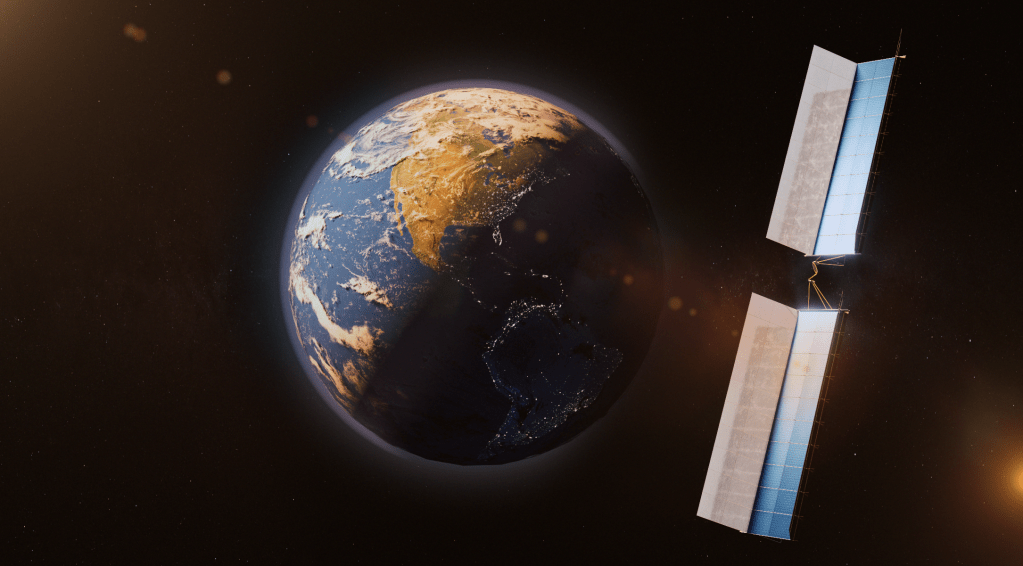
The fundamental challenge with traditional solar power is its intermittency; when the sun goes down, production stops, leaving data centers reliant on expensive battery storage or carbon-heavy fossil fuels. The Virginia-based startup Overview Energy proposes a radical departure from this cycle. Their plan involves developing a fleet of spacecraft designed to capture abundant solar radiation in orbit and convert that energy into near-infrared light.
This concentrated beam is then directed toward specialized solar farms on Earth, which are equipped to convert the infrared light back into usable electricity. Unlike previous theoretical models for space-based solar power that relied on high-energy lasers or microwave beams—technologies often plagued by safety concerns—Overview Energy’s approach focuses on a wider, lower-intensity beam.
According to CEO Marc Berte, the technology is designed so that the beam can be observed without causing harm to those in its path. This focus on safety could significantly ease the path toward regulatory approval. Because the news that Meta inks deal for solar power at night, beamed from space addresses both energy stability and safety, it has captured the attention of the entire tech sector.
Redefining Renewable Infrastructure
Meta’s involvement in this project is not merely speculative; the company has signed a capacity reservation agreement to receive up to 1 gigawatt of power from Overview's future constellation. This deal introduces a new metric for energy contracts: megawatt photons, which measures the specific amount of light required to generate a megawatt of electricity on the ground.
If successful, this technology could significantly increase the return on investment for existing terrestrial solar farms by effectively extending their operational hours into the night. As Meta inks deal for solar power at night, beamed from space, the industry is looking at a way to maximize existing green infrastructure.
The Overview Energy Roadmap
The scale of the proposed deployment is immense, requiring a coordinated effort across both the aerospace and energy sectors. Key milestones include:
- January 2028: The scheduled launch of the first satellite into low Earth orbit to demonstrate power transmission from space.
- 2030: The commencement of satellite launches intended to fulfill Meta’s primary power commitments.
- The Constellation Goal: A long-term vision involving 1,000 spacecraft positioned in geosynchronous orbit to provide continuous coverage.
- Geographic Reach: An initial deployment footprint spanning from the West Coast of the United States across to Western Europe.
The Path to 2030 and Beyond
The success of this initiative hinges on the ability to maintain a fleet of satellites that can remain fixed above specific points on Earth for more than a decade. Achieving such orbital stability while managing the logistics of a thousand-satellite constellation represents one of the most complex engineering challenges in modern aerospace.
However, the economic incentive is clear: the ability to deliver power wherever and whenever it is most valuable allows energy providers to enter a globalized energy market. If Overview Energy can prove that sunlight can be harvested in orbit and delivered safely to the ground, the implications for the AI revolution are profound.
We are looking at a potential future where the energy constraints of large language models are not limited by the rotation of the planet. While the 2028 test flight remains years away, the industry is already beginning to bet on a future where the sun never sets on the data center.