A New Era for Immersive Sims: Why Godzone 6 is Blue Manchu’s Most Choice-Driven Game
Jonathan Chey is a man who understands player agency. As the co-founder of Irrational Games alongside Rob Fermier and Ken Levine, he helped shape the DNA of the immersive sim genre with classics like System Shock 2 and BioShock, as well as the original Thief series. These games were predicated on a simple but powerful premise: players should decide where to go and how to overcome challenges, without hand-holding.
Now, Chey is leading his long-running indie studio, Blue Manchu, into uncharted territory with a new title: Godzone 6. According to Chey, this upcoming roguelike is the most choice-driven game the studio has ever created.
"It's quite a statement from a man who's worked on System Shock 2, BioShock, and two entries in the Thief series," but from the little seen of Godzone 6, the claim holds water. This isn't just another entry in the void; it's a deep dive into a weird, procedural, and highly reactive sci-fi world.
From Void Bastards to Godzone 6: Evolving the Formula
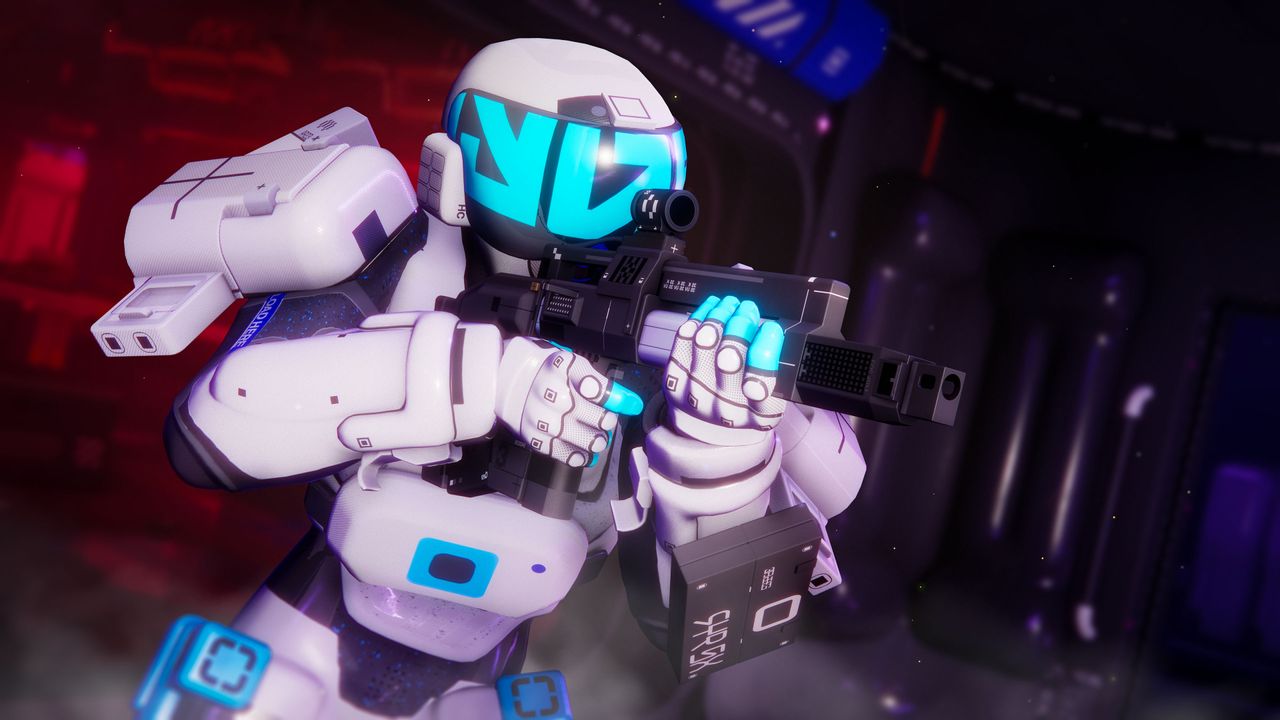
Blue Manchu has built a reputation for first-person roguelikes that channel the spirit of classic Looking Glass Studios. Their biggest hit, Void Bastards, was often described as System Shock sprinkled with the gritty aesthetic of 2000 AD. More recently, Wild Bastards shifted the tone to a space cowboy setting with XCOM-esque strategy elements.
While Wild Bastards was critically acclaimed, it was not the direct sequel fans expected. It sold half as well as its predecessor, and the shift in genre caused some friction with the audience.
"Some people, I think, were disappointed because they played Void Bastards, enjoyed it and wanted more," Chey explains. "We gave this game another name with Bastards in the title. And it was another roguelike first-person shooter, and it had a strategy map. So they, I think very naturally and rightly, thought it was going to scratch the same itch."
The issue was that Wild Bastards moved many mechanics to a turn-based strategy map, making the first-person segments more action-focused and less about the granular interaction that defines the immersive sim.
"It pushed that stuff up to the turn-based strategy map," Chey notes. "Overall, I think it was just as deep a game, if not deeper. But it struck some people as dumbed down. Or just more superficial and less interesting, for people who like that genre of immersive first-person games and don't get very many of them."
That feedback loop led directly to Godzone 6. Blue Manchu wanted to return to the roots of the genre while leveraging the roguelike structure to offer unprecedented variety.
The Mutant Possibility Space
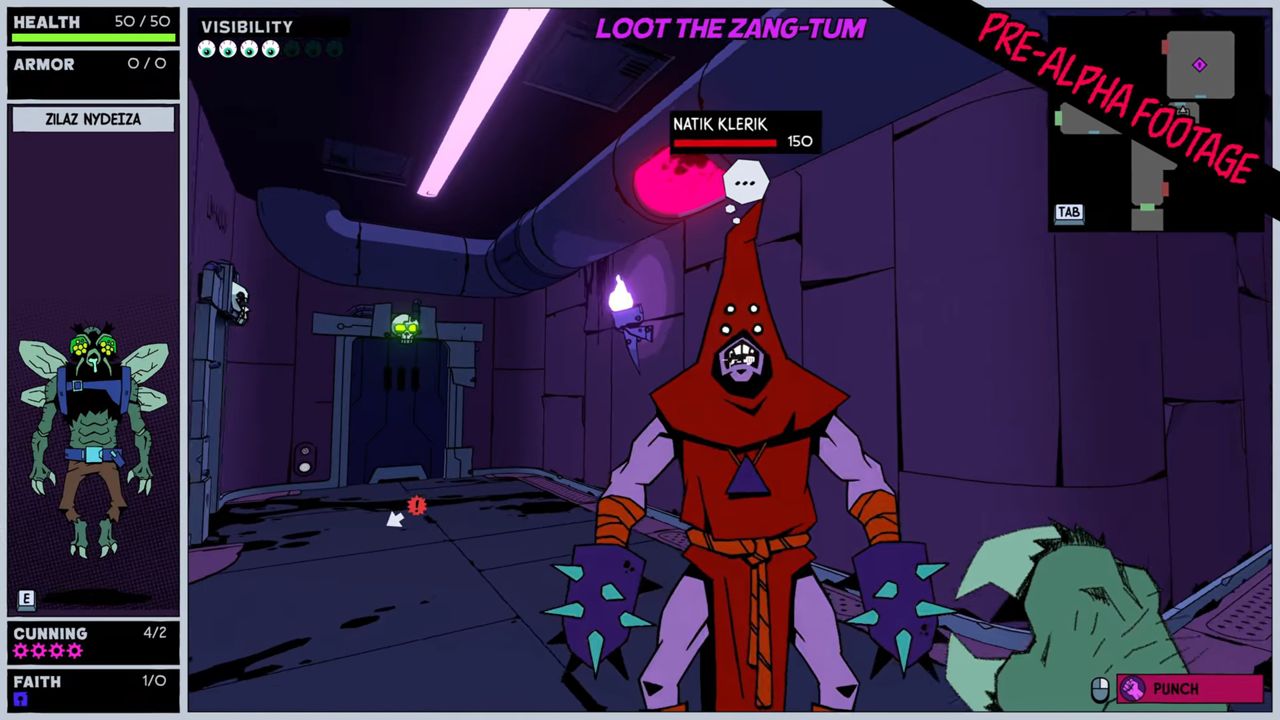
In Godzone 6, the core loop begins with character creation. At the start of each run, you build the most disgusting and unusual mutant you can imagine. You then steer this mutant through small, atmospheric, procedurally generated levels filled with granular details.
Chey emphasizes that the goal is to break the standard "build-a-gun" meta common in roguelike shooters.
"People have made games like this—roguelike shooters where you get lots of different upgrades, and you can build different kinds of guns and stuff, and that's really great," Chey says. "But we wanted to have more variety than that. So it's not just, what kind of gun am I going to build, but am I I going to build a gun at all?"
The game offers a diverse array of playstyles that go beyond traditional combat:
- Hackers: Players can bypass threats entirely by interacting with the environment digitally.
- Stealth Characters: Utilizing shadows and silence to avoid confrontation.
- Spellcasters: Using arcane abilities to manipulate the world.
- Tiny Runners: Characters small enough to crawl through vents and spaces inaccessible to others.
- Giant or Flying Units: Overpowering enemies or navigating the map from above.
This variety is enforced by the roguelike mechanics. Inspired by deckbuilders like Slay the Spire, the game refuses to let players rely on a single, overpowered strategy.
"You build these characters who have an enormous amount of variability through mutations, but you don't have complete control over that," Chey explains. "Every time through, you might only be offered some mutations and not others. You have to figure out how to use what you've got."
Navigating the Unknown
This lack of control forces players to adapt. A run might require relying on organic abilities, such as spitting venom or flapping wings to reach high platforms, rather than finding a high-tech weapon.
Chey highlights the risk-reward dynamic of character development, particularly regarding intelligence.
"Growing your intellect is a dangerous path," Chey warns. "Because if you don't find any of these relics, you wasted your spend on intellect. But on the other hand, if you don't start becoming more intelligent early in the game, you might end up in a position where you find some really cool thing and you're not smart enough to figure out how to use it."
The game’s setting—a mysterious, "crazy sci-fi dungeon"—adds a layer of thematic depth to these mechanics. All mutants in Godzone 6 serve at the pleasure of gods that are actually computer systems beyond the comprehension of the inhabitants.
"Thematically, it's a game about people living in a world that they don't understand, but not necessarily even understanding that they don't understand it," Chey says. "This game is not a critique of religion, but it becomes apparent that religion isn't necessarily going to provide very reliable answers about how this world functions to the people who live in it."
A Linguistic Twist
One experimental feature of Godzone 6 that has sparked debate within Blue Manchu is the language system. Opponents speak a kind of pidgin English, adding another layer of abstraction and challenge to communication and combat. This design choice reinforces the theme of isolation and misunderstanding in a world where technology has become indistinguishable from magic.
By combining the depth of an immersive sim with the unpredictable nature of a roguelike, Godzone 6 aims to create a "huge possibility space." Chey hopes this allows players to experience a wider range of narratives and playstyles than traditional games allow.
"The idea is that the immersive sim creates this huge possibility space, and then the randomised formula lets you navigate through that in interesting ways," Chey says. "So that you get to experience all of it, rather than just playing spell-casting characters every time and never seeing the rest of the possibility space."
For fans of deep, reactive gameplay, Godzone 6 promises to be Blue Manchu’s most ambitious and choice-rich project yet.