You only have to take a mere glance at the lowest prices around for gaming SSDs to realise that someone is making a small fortune during the RAMpocalypse. It is, of course, the companies that make the NAND flash memory chips, and the latest research suggests that, altogether, they accrued $46 billion in Q1 2026 revenues, more than three times what they did this time last year.
That's according to the latest report on the NAND flash industry's finances by Counterpoint Research, and given what we all know about the RAMpocalypse, the figures are entirely unsurprising, as is the reason for all that money pouring in. Yes, that's right: it's the demand for enterprise-grade SSDs to go in AI data centers.
That kind of solid state drive now accounts for 40% of the total NAND flash market, and Counterpoint says that it's forecast to pass 60% by the end of the year. Given that every single desktop and laptop PC, as well as phones, watches, and tablets, use SSDs as the primary storage device, that growth is likely to squeeze prices even higher.
Every week or so, I cast an increasingly nervous glance at the health status of the four WD Black SN850X SSDs in my main PC, hoping that I won't have to replace them any time soon. That's because any equivalent replacement will set me back well over $300 apiece, but probably not for much longer, it would seem.
Such is the demand for NAND flash that the relatively small players in the industry have significantly gained market share, with China's YMTC being the biggest winner: 8% in Q1 2025, now 13% and on par with SanDisk and Micron.
They're all making so much money that the combined revenues for Q1 2026 is actually bigger than what the industry earned across the entirety of 2023.
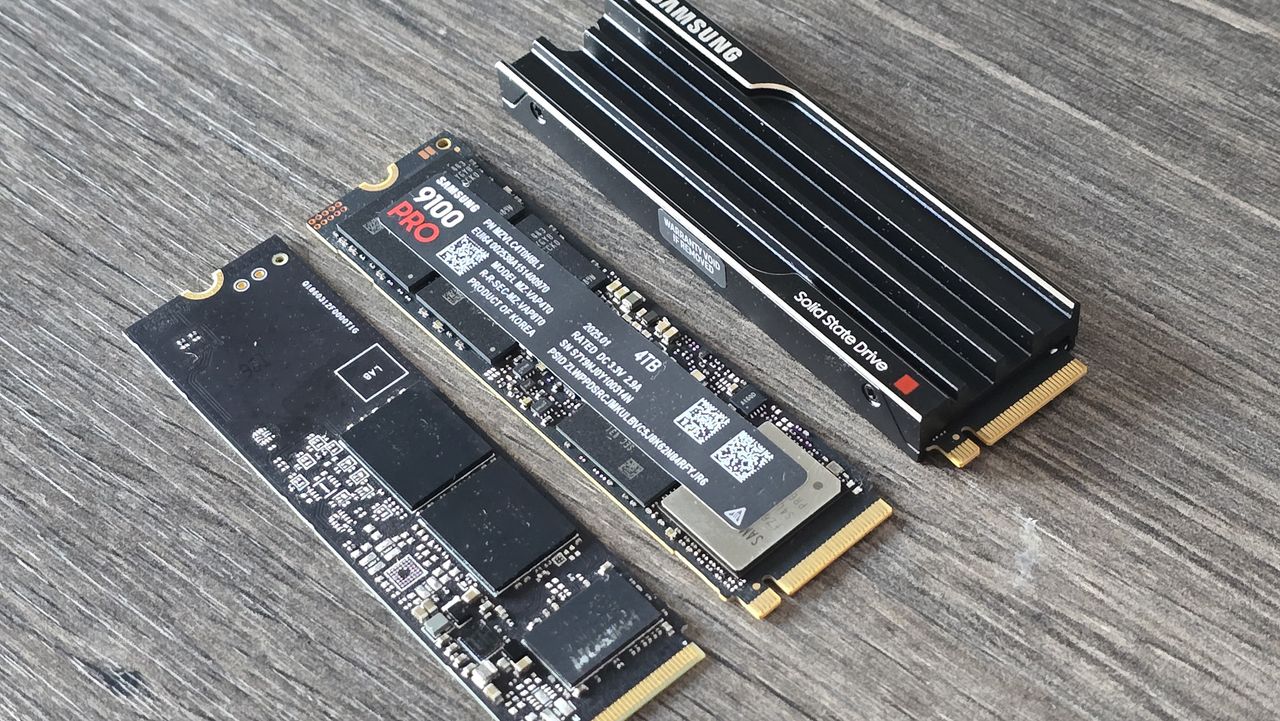
This 1 TB drive cost $100 for nearly two years. Now it's over $230. (Image credit: Future)With no sign of AI demand slowing down, plus the fact that memory makers won't be able to ramp up production until well into next year or later, gaming SSD prices are clearly set to continue rising. Which raises a simple question: Just how far can the prices climb before the PC industry collapses under the strain?
We've all stared in shock at the likes of the Steam Deck rocketing in price (now $949 for the 1 TB model) because of the dearth of affordable memory and storage chips, and some gaming PC builders have only managed to stay relevant by using older processors, single sticks of memory, and stocks of ancient and crusty old SSDs.
Sure, the ultra-priced Steam Deck still sold out immediately upon a stock refresh, but I wonder if that was down to a lot of gamers assuming that 'it will only get worse, so buy one now while it's still vaguely affordable'. Either that, or they're just going to scalp them on eBay to fund a 1 TB SSD purchase next year. Anyway, if you'll excuse me, I'm off to look up how best to extend the lifespan of my SSDs, and no, I won't be using any AI search engine to do that.