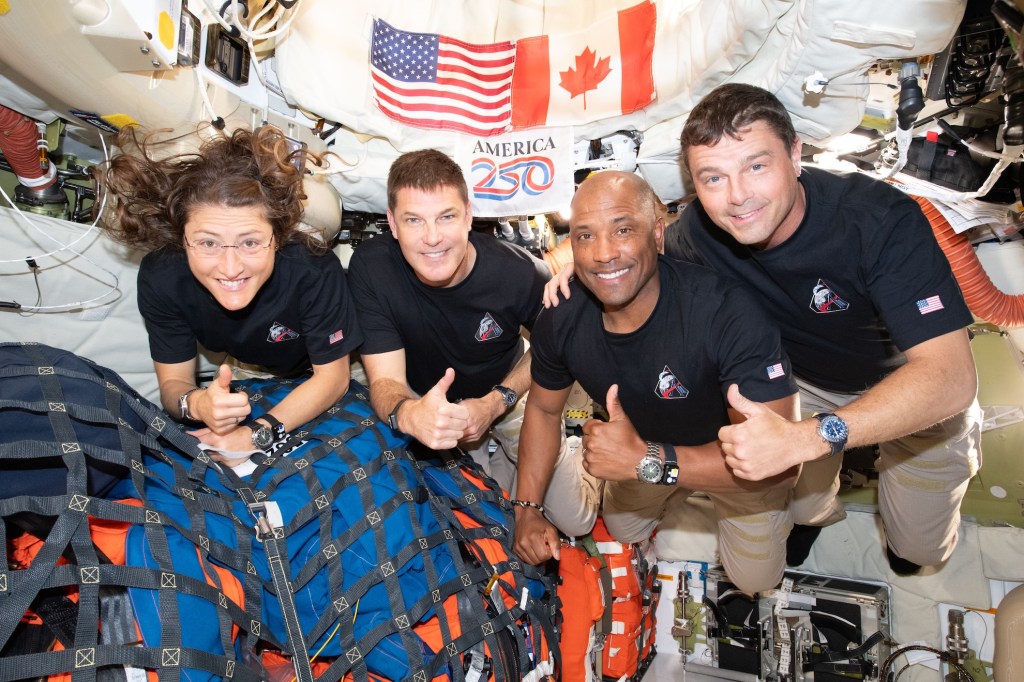
The NASA Artemis II splashes down in Pacific Ocean, marking a historic milestone for deep-space exploration. This successful return of the Orion spacecraft officially ends a half-century hiatus from crewed lunar orbit. After ten days navigating the deep space environment, the mission concluded with a precision landing, signaling that human capability beyond Low Earth Orbit (LEO) has been functionally restored.
Details of the NASA Artemis II Splashdown in the Pacific Ocean
At 5:07 p.m. Pacific Time, the spacecraft Integrity entered the waters off the coast of San Diego, California. This event marked the culmination of a high-stakes orbital test flight. NASA officials characterized the recovery as "perfect," reporting that the crew was in "green" condition.
The four-person crew included Commander Reid Wiseman, Pilot Victor Glover, and Mission Specialists Christina Koch and Jeremy Hansen. Their healthy status indicates that the spacecraft's life support systems maintained structural and environmental integrity throughout the intense reentry phase.
The Artemis II mission involved navigating extreme thermal and radiation gradients found at the edge of Earth’s magnetosphere. The crew—comprised of three Americans and one Canadian—faced the unforating reality of deep-space flight. The success of the Space Launch System (SLS) and Orion architecture provides the essential data required to authorize future, more complex lunar landings.
Scientific Breakthroughs and Lunar Discoveries
The technical achievements of this mission extend far beyond a successful landing; it served as an essential reconnaissance flight for the upcoming Artemis III descent. Traveling an estimated 252,760 miles from Earth, the crew reached distances no human has traversed since the conclusion of the Apollo era.
During the flight, the crew utilized advanced imaging payloads to document the lunar landscape and identify previously unmapped features. Key highlights include:
- New Crater Identification: The crew documented numerous unknown craters to provide updated topographical data for future landing sites.
- Lunar Far Side Imaging: High-resolution photography captured unprecedented views of the Moon's far side, aiding research into lunar crustal composition.
- Solar Observation: The crew witnessed a total solar eclipse from a unique vantage point, offering rare data on solar wind interactions.
- Personal Legacy: In a profound moment of connection, one newly discovered crater was named in honor of Carroll Wiseman, the wife of Commander Reid Wiseman.
Establishing a Permanent Lunar Presence
The implications of this mission transcend the immediate success of the flight. As NASA Administrator Jared Isaacman noted following the splashdown, the mission represents a fundamental shift in space exploration. This new era blends traditional government agency expertise with the burgeoning capabilities of commercial partners.
The successful testing of the Orion capsule and its ability to sustain life during long-duration transit is the prerequisite for all future lunar habitation plans. The rhetoric surrounding the Artemis II mission suggests that the era of "flags and footprints" is being replaced by a period of sustained presence.
With the hardware proven, the focus now shifts toward the construction of a Lunar Gateway and permanent surface bases. The Artemis II mission has demonstrated that the logistical and biological hurdles of deep-space travel are surmountable through advanced propulsion and life-support technologies. The infrastructure for a permanent human presence in the solar system has officially been validated.