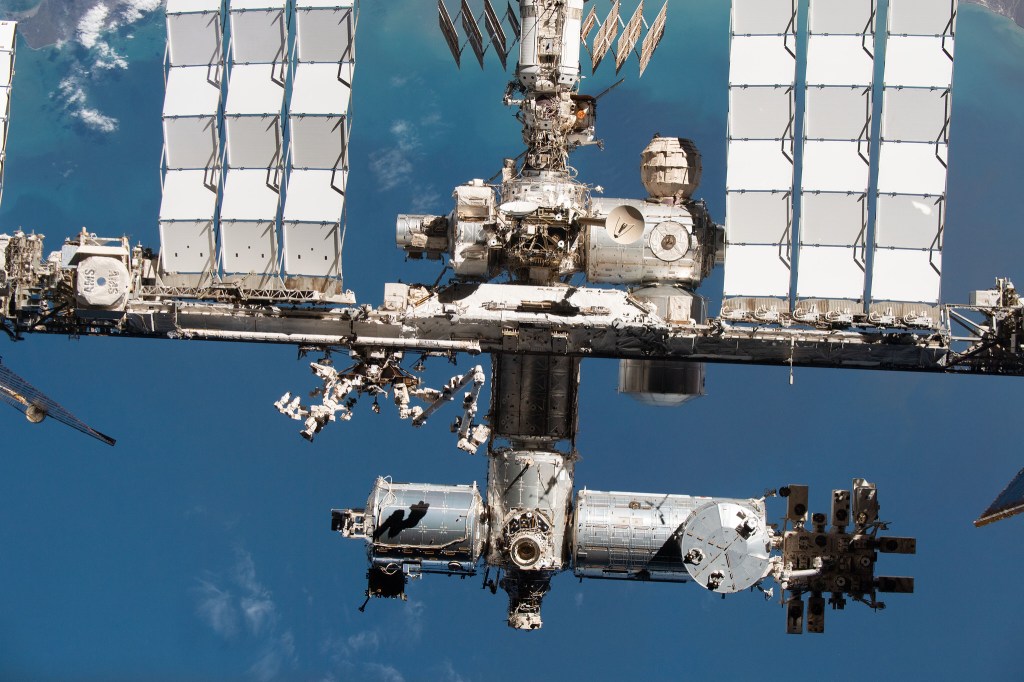
The International Space Station (ISS) faced a rare but necessary safety measure on Friday when its American crew temporarily relocated to a SpaceX Crew Dragon capsule due to persistent leaks in a Russian service module.
A Contingency Plan in Action
The incident highlights the delicate balance of international cooperation aboard the ISS, where astronauts from multiple nations must rely on each other’s infrastructure and expertise to maintain operations. NASA's decision to move its astronauts into the Dragon spacecraft was a calculated risk, emphasizing the importance of redundancy in spaceflight safety protocols. The Russian service module, which has been under scrutiny for years, has repeatedly shown signs of deterioration, raising questions about the long-term viability of the ISS as a collaborative platform.
The Risks of Aging Infrastructure
The leaks in the Russian service module are not a new issue. Since the module’s installation, concerns about its structural integrity have been raised, with NASA closely monitoring its condition. The latest incident forced a reevaluation of the station’s safety margins, particularly as the ISS enters its final operational years. While the temporary sheltering of astronauts did not cause major disruptions, it underscored the fragility of a system designed to operate for decades but now showing signs of wear.
- The service module has been a recurring source of concern for NASA engineers.
- The ISS currently hosts 10 crew members from three different space agencies.
- SpaceX’s Crew Dragon has proven itself not only as a reliable transport system but now as a lifeboat in emergency scenarios.
- Roscosmos paused its repair efforts after initial attempts to assess the damage further.
A Shift in Space Strategy
This event occurs at a pivotal moment in NASA’s space exploration strategy. Under Administrator Jared Isaacman, the agency is accelerating its plans to transition from the ISS to a new, commercially developed space station. The current incident may serve as a catalyst for that shift, highlighting the risks of relying on aging infrastructure and the need for more resilient, privately developed alternatives.
The incident also raises questions about the interdependence of spacefaring nations. The ISS has long been a symbol of international collaboration, but as technical challenges mount and political tensions evolve, the station’s future as a unified effort is increasingly uncertain. The temporary sheltering of the American crew in a SpaceX capsule signals a growing reliance on commercial spaceflight solutions for critical operations.
As NASA and its partners work to ensure the continued safety of the ISS, the episode with the leaking service module and the use of SpaceX’s Dragon as a safe haven underscore the need for more robust, redundant systems in space. The future of human presence beyond Earth may increasingly depend on private sector innovation, and this event is a reminder that the transition to commercial space platforms is not just a matter of ambition—it’s a necessity for safety and sustainability.