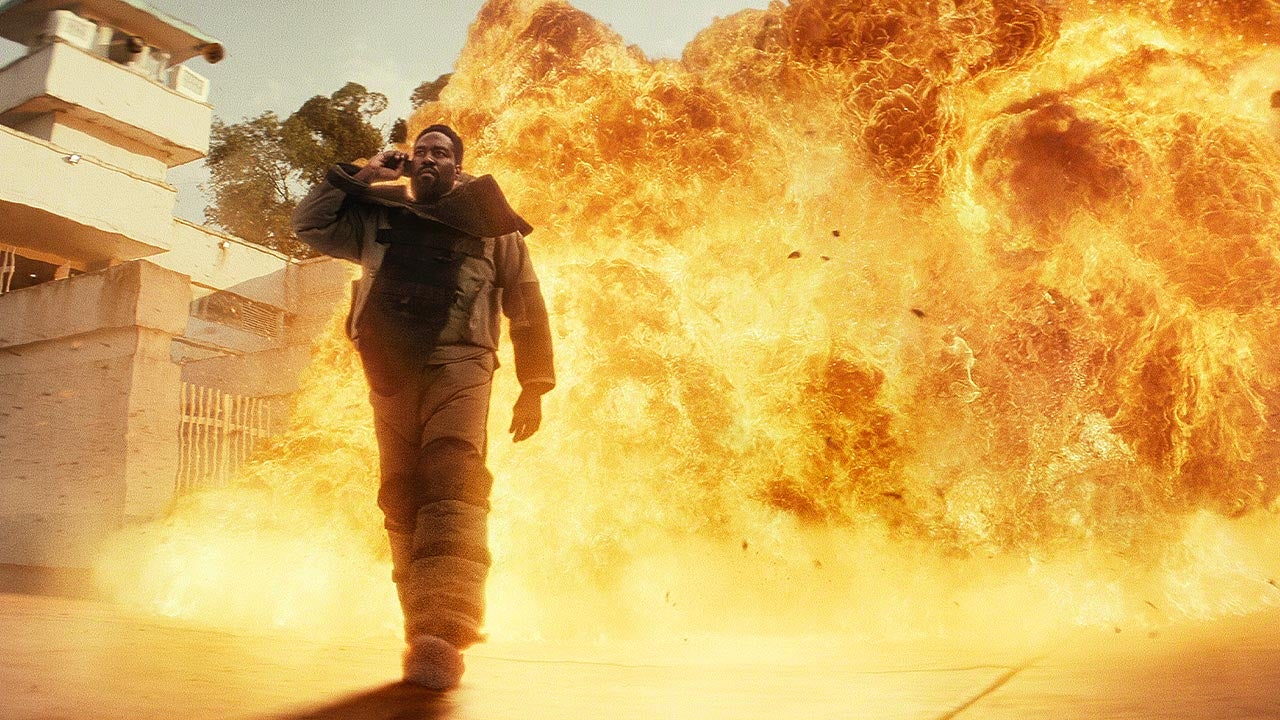
All seven episodes of the new series are now available to stream. This Netflix's Man on Fire: Season 1 Review finds a competently executed but often predictable action series elevated by the simmering lead performance of the always-compelling Yahya Abdul-Mateen II. The production features several brutal hand-to-hand combat brawls and thrilling action set-pieces, including an early airplane chase sequence directed by Creed II director Steven Caple Jr.
A Fresh Take on a Classic Legacy
Many viewers will be familiar with the title thanks to the 2004 film of the same name directed by Tony Scott and starring Denzel Washington. That version was actually the second adaptation of A. J. Quinnell’s 1980 novel, following a 1987 movie starring Scott Glenn and Joe Pesci.
While the new series bears similarities to the 2004 film, showrunner-writer Kyle Killen has introduced enough alterations to the story, characters, and setting to distinguish it from past versions. The core remains the same: the relationship between bodyguard John Creasy—a man struggling with PTSD, alcoholism, and his CIA black ops history—and the person he is tasked to protect.
New Characters and High Stakes
In the Washington film, Creasy bonded with a young, wide-eyed Pita Ramos; for this series, the protectee has been aged up to teenager Poe Rayburn (played by Billie Boullet). The character avoids being overly obnoxious despite the heavy circumstances.
The plot thickens after Poe’s family is killed in a terrorist bombing in Brazil. Creasy must use his specialized skills to shield Poe from nefarious forces involved in a web of political corruption that links back to the United States. While the plot can be easy to predict, the show keeps viewers invested through several key elements:
- Brutal combat: High-intensity hand-to-hand brawls and action sequences.
- New Allies: A community of favela residents in Rio who provide a safe haven.
- Grit and Warmth: Alice Braga’s performance as the driver, Valeria.
- Moral Ambiguity: The exploration of Creasy's murky morality and his "any means necessary" approach to justice.
The Verdict on Netflix's Man on Fire
As a story, it can be difficult to tell which characters are trustworthy, making the wait for Creasy to catch up somewhat trying. However, the show excels when focusing on character depth. A standout moment includes Episode 4’s intense panic room sequence involving a villain and his young son, highlighting Creasy's use of a blasting cap device.
The series also invites comparison to the themes explored in previous iterations. To provide context, here is IGN's review of the 2004 film:
“(A) bold, brash, unapologetically edgy examination of decaying social standards both broad and intimate, told through the eyes of a character who is, himself, struggling against spiritual decay. Unfortunately, as brave as this film is, it ends up being its own worst enemy …Man on Fire is well on the way to becoming a truly important movie. Rampant with religious symbolism, and fueled by an irresponsible but undeniably appealing vigilante subtext that champions little people over untrustworthy establishments, audiences will be hard-pressed to find another film this year which pushes any of the same hot buttons. Which makes its shortcomings all the more frustrating, and its inconsistent presentation all the more tragic.” – 8/10, Glen Oliver
Ultimately, Abdul-Mateen II excels at showing the wounded vulnerability lurking beneath Creasy's physical confidence. It is this lingering humanity that keeps the audience on his side, even during his most vicious moments.