Nvidia Announces the RTX Spark, Its First SoC for Regular People
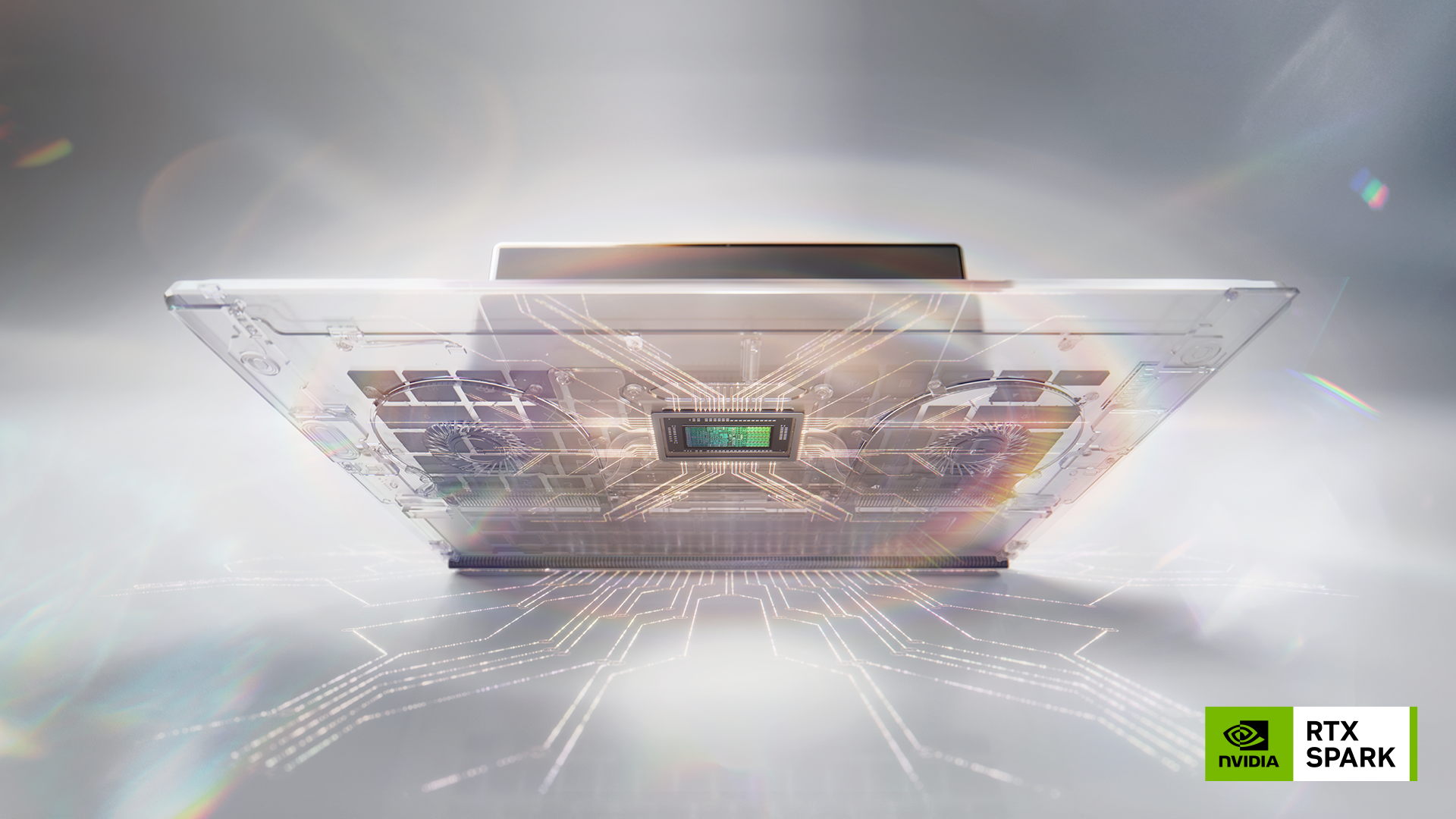
At Computex 2026, Nvidia made a major announcement with the introduction of the RTX Spark, a new system-on-a-chip (SoC) designed for a new era of computing. This chip is meant to power a ‘new generation’ of PCs that are built for Agentic AI — a concept where the system can perform tasks with minimal user input. The RTX Spark is expected to be featured in laptops from nearly every mainstream manufacturer, marking a significant shift in how personal computers are designed and used.
The RTX Spark is similar to the DGX Spark, which was first unveiled at CES 2025. However, while the DGX Spark is tailored for high-performance computing and data centers, the RTX Spark is aimed at the consumer market. The chip features a 20-core ARM CPU, paired with a Blackwell GPU that includes 6,144 CUDA cores and up to 128GB of VRAM shared between both components. Nvidia claims the RTX Spark can deliver up to 1 petaflop of AI compute power, which is a massive leap for consumer-grade hardware. It also promises gaming capabilities at 1440p resolution with up to 100 fps, though that might not be the main focus of the chip.
The Vision for Agentic Computing
During a press conference in Taipei, Nvidia CEO Jensen Huang outlined his vision for the future of computing with the RTX Spark. He emphasized how, for the past 40 years, users have interacted with computers by launching apps, clicking, and typing. With RTX Spark and Microsoft Windows, the idea is that users will simply ask their computers to perform tasks — and the PC will do the work. This shift towards Agentic AI is already being hinted at by Microsoft, which has been developing tools that allow for more natural language interactions with software. However, it’s unclear how well this will translate into everyday use for most consumers.
The integration of ARM architecture with high-end Blackwell GPU is a bold move. While ARM processors are known for their efficiency and power-saving features, they have traditionally struggled with PC gaming due to compatibility issues with x86-based software. Even the Copilot+ laptops from 2024 faced challenges running many games on Qualcomm’s chips, as they were optimized for x86 platforms. It remains to be seen if Nvidia can overcome these hurdles, but even if they do, the RTX Spark is likely more suited for creative and AI workloads rather than gaming.
What to Expect in the Market
While Nvidia and its partners have not yet announced prices for RTX Spark-powered laptops and mini PCs, it’s safe to assume that they will be on the higher end, especially with the inclusion of 128GB of VRAM. According to The Verge, Nvidia is also planning to release less expensive versions with just 16GB of RAM, but the timeline for these is still unclear. Regardless, the RTX Spark-powered systems are expected to hit store shelves in Fall 2026, giving consumers a chance to explore this new computing era sooner than expected.