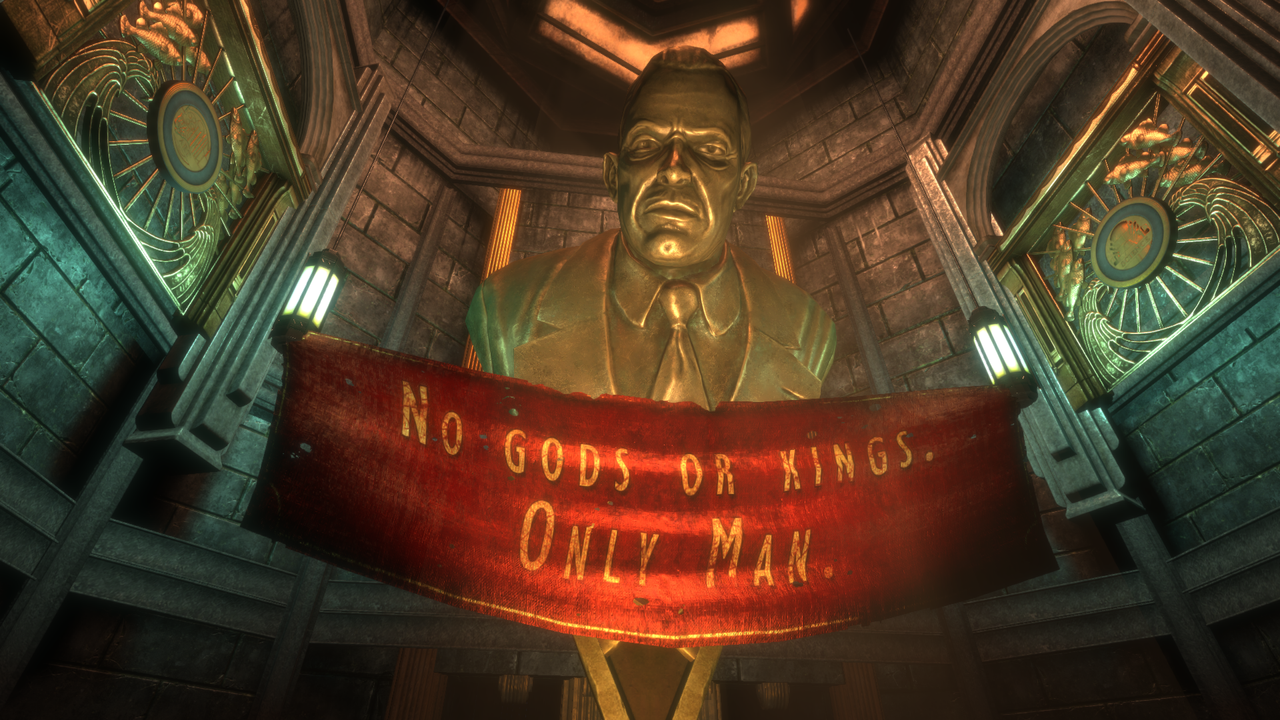
Jonathan Chey, the co-founder of Irrational Games and a veteran developer with credits stretching back to the original Thief, has found himself reflecting on his most iconic work: BioShock. While his studio, Blue Manchu, continues to push the boundaries of the immersive sim genre, Chey is grappling with a fundamental design flaw he identified in one of BioShock’s most celebrated mechanics.
Specifically, he is questioning the utility of the plasmid system, the psychic power set that defined the original game’s identity.
The Problem with Power Variety
BioShock offered players a vast arsenal of psychic abilities, ranging from telekinesis to pyrokinesis. The core loop involved collecting these plasmids and deciding whether to specialize in one powerful ability or diversify across a suite of skills.
"For BioShock obviously provides lots of different ways to play, and one of the things that always struck me was we had this plasmid system," Chey explained. "It's essentially a psychic powers magic system where you can shoot fire or bees or whatever. And when you progressed through the game, you would collect different plasmids, and you could either build one up to be very powerful, or you could get a whole suite of different things."
Despite the game’s depth, Chey argues that the system ultimately failed to encourage sustained variety. Players quickly identified a "meta" strategy and stuck to it, rendering the rest of the options obsolete.
"I always sat there and thought, 'I don't care about how many different plasmids I have, because there's always one that I like using, and I just don't use the other ones,'" Chey admitted. "It's a 15-20 hour game. Once I've got to the end, and discovered that I just used electro shock all the time, and I never used any of the other ones after I tried them out, I'm kind of like, 'What was the point of all the [other powers]?' I'm not going to replay the whole game."
This phenomenon is not unique to BioShock. Veteran players of immersive sims often find themselves trapped in a comfort zone, relying on a small set of proven strategies rather than exploring the full possibility space.
Redefining the Immersive Sim with Roguelike Mechanics
Chey’s new project, Godzone 6, is a direct response to this problem. By blending the immersive sim genre with elements of roguelikes and deckbuilders, Blue Manchu aims to force player engagement with diverse mechanics across multiple playthroughs.
"I think the roguelike formula really helps with that, because it compresses the replay cycle," Chey said. "But the other thing I think is necessary to solve that problem, if you want people to explore different parts of this possibility space, is to randomise what they're getting and to give them choice about what they're going to do—but constrained choice."
The design philosophy mirrors games like Slay the Spire, where players are given a palette of options but don't always receive the tools they want. This forces adaptation rather than allowing players to ignore alternative strategies.
Godzone 6 expands the definition of what a character can be, moving beyond traditional gun-based builds:
- Physical Diversity: Players can transform into a snakeman that slithers into tight spaces, a giant, or a flying character.
- Role Flexibility: Options include hackers, stealth specialists, magic spellcasters, or agents running computer programs.
- Constrained Choice: Randomized rewards ensure that players cannot rely on a single "best" build, compelling them to experiment with new abilities every run.
Why Forced Variety Matters
The contrast between traditional immersive sims and modern roguelike deckbuilders highlights a critical design difference. In games like Dishonored 2, players often stick to tested powers out of habit. Even in highly experimental titles, if the tools are consistent, players will inevitably find the most efficient path and ignore the rest.
In contrast, titles like Slay the Spire eliminate the comfort zone entirely. Players cannot plan a perfect strategy because the available cards change every run. This necessity to adapt on the fly ensures that every ability gets a chance to shine.
"I'm constantly experimenting. I have no choice!" one observer noted regarding Slay the Spire. "I'm also adapting those strategies on the fly all the time as I encounter new cards and trickier opponents. And ultimately I have to play the hands I'm dealt."
This approach aligns perfectly with the spirit of immersive sims, where experimentation is key to the fun. By removing the option to ignore less popular abilities, Godzone 6 ensures that the full breadth of its design is experienced, rather than just the most powerful subset.
While Godzone 6 currently lacks a release date, its design philosophy suggests a fresh take on a beloved genre. By addressing the very issues Chey identified in BioShock, Blue Manchu is attempting to create an experience where every power feels relevant, and every playthrough offers a new challenge.