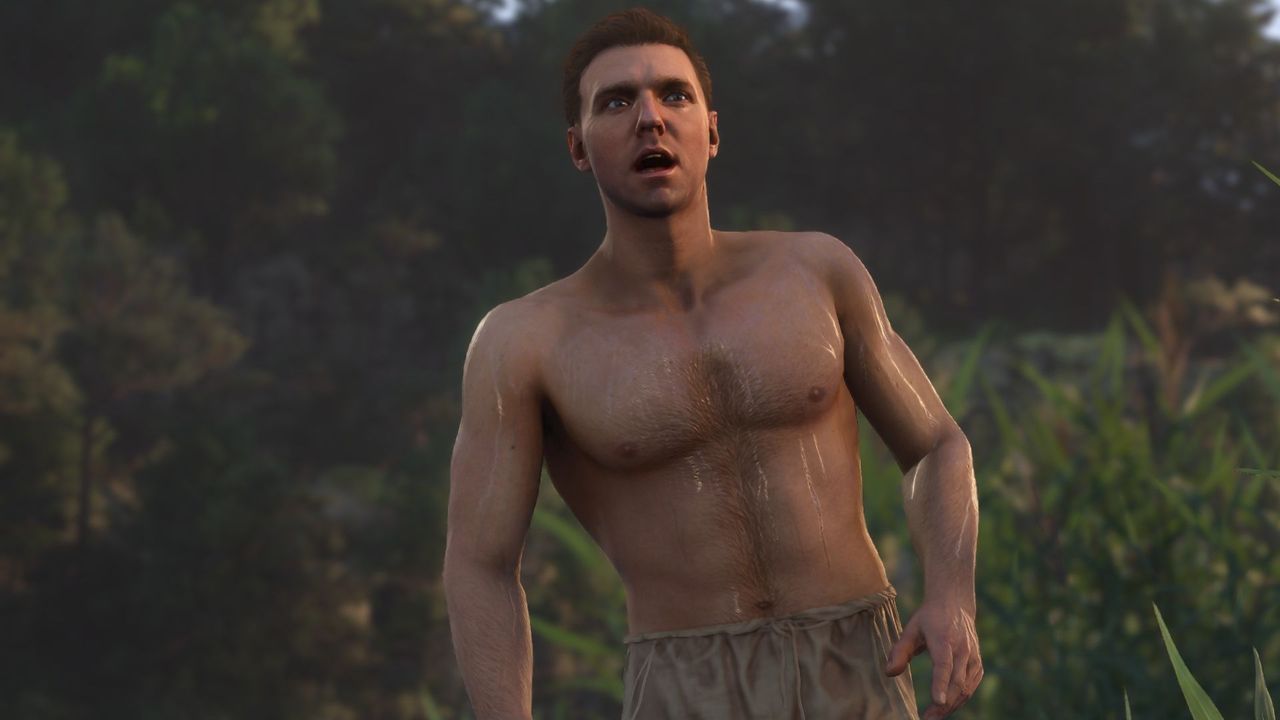
If you have ever wondered why your character’s footwear vanishes in Kingdom Come Deliverance 2, the answer might just trace back to a single PC Gamer article. When Warhorse Studios lead designer Prokop Jirsa recently sat down with journalist Joshua Wolens to discuss the studio’s philosophy on difficulty and simulation, a peculiar player report from the original game surfaced. It turns out that the famous shoes stolen incident was not a glitch, but a happy accident that directly influenced the sequel’s design.
The Accidental Boot Quest That Changed Everything
During early playtesting of the first Kingdom Come: Deliverance, players exploring Talmberg noticed Henry’s boots disappearing after a sleep cycle. With no actual theft mechanic in place, the footwear simply despawned. Yet, one determined player believed an NPC had taken them and spent hours searching through the clothing of every guard and citizen in the castle. This confusion led to Chris Livingston’s widely read PC Gamer piece, Kingdom Come Deliverance stole my boots, and I'm on a violent mission to get them back.
Livingston’s journey began with a simple piece of advice: remove muddy footwear before hitting the hay. Hoping to satisfy the game’s deep simulation, he complied. When the boots vanished, he embarked on what became known as the Epic Boots Quest. The story resonated with players and developers alike, proving that the studio’s ambitious design philosophy was finally clicking.
How a PC Gamer Story Inspired a New Kingdom Come Deliverance 2 Mechanic
Jirsa was quick to acknowledge the cultural impact of that article. "We knew that our systems-driven world works because one of you guys thought that somebody has stolen Henry's shoes while he was in Talmberg," he explained. "And we had no system like that in there. The boots just despawned. But he was really searching around the castle, 'Who actually stole the boots?' And he was looking at the clothing of the NPCs."
The developers were thrilled by this unintended narrative emergence. They had deliberately layered complex, interconnected mechanics to create a living medieval world. When players start treating systemic chaos as intentional storytelling, the studio knows they are on the right track. "This is what we aimed for," Jirsa noted. "They deliberately layered in so many complex systems that you suddenly believe that the world is real and anything can happen in the game."
The Power of Systems-Driven Design
This philosophy extends far beyond missing footwear. Players frequently encountered unscripted clashes between rival factions, assuming Warhorse had crafted bespoke narrative events. In reality, these were organic outcomes of overlapping simulation rules.
These systemic triumphs validated the studio's commitment to deep, albeit time-consuming, development cycles. The team realized that intricate, bug-resistant mechanics deliver immense player value, even when they require years of polishing. Jirsa reflected on how these stories reinforced their core design philosophy:
- Players mistake emergent faction clashes for scripted cutscenes
- Unintended bugs spark legendary community stories
- Systems-driven worlds reward curiosity and experimentation
- Complex simulations create memorable, personal gameplay moments
From Accident to Intentional Feature
The legacy of that original PC Gamer article did not fade into development lore. Jirsa specifically pushed to implement a real theft system for the sequel. In Kingdom Come Deliverance 2, NPCs will now actively pilfer your shoes and caps if you pass out drunk, complete with the new owners strutting around in your gear. "I still remember that PC Gamer article," Jirsa said. "And for that reason specifically I pushed for KCD 2 that we actually had that system. So now in KCD 2 the NPCs—if you, for example, pass out drunk—they will steal your shoes. They will steal your cap, and they will start wearing that. So that was you guys."
This evolution from accidental bug to celebrated feature perfectly encapsulates the studio's design ethos. It also mirrors the kind of organic chaos Joshua Wolens experienced during his own 90% review of the sequel. As he noted, "I once got chased out of a fortress because I'd absent-mindedly equipped a stolen ring and walked past the schmuck I took it from." What began as a missing footwear mystery has become a cornerstone of the Kingdom Come Deliverance 2 experience, proving that sometimes the best game design happens when players stop following the script and start living in the world.