Forza Horizon 6 PC performance analysis: Heavy on your CPU, with uninspiring ray tracing, but at least it all runs very nicely
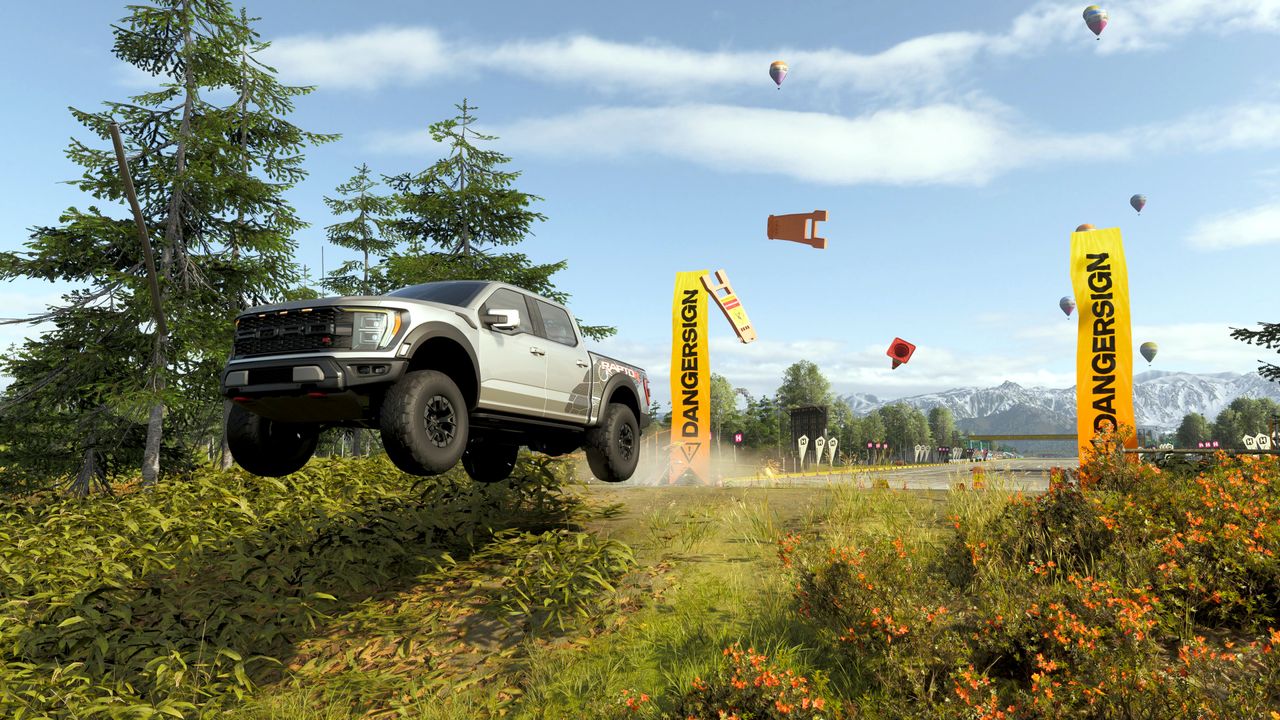
It has been five years since Xbox Game Studios launched the wildly successful Forza Horizon 5, and now the franchise returns with Forza Horizon 6. Set against the vibrant backdrop of Tokyo, Japan, this latest entry invites players to burn rubber, smash through fences, and cause four-wheeled mayhem in one of the world’s most iconic cities.
Despite the change in geography, the core philosophy remains unchanged. The Forza Horizon series has always defined the arcade driving genre, and number six makes no attempt to pivot toward simulation. If you enjoyed the previous installment, you will find plenty of familiar comfort here. The game looks stunning, runs well on a broad spectrum of hardware, and delivers the chaotic fun fans expect.
However, the headline feature for this release is the introduction of ray tracing across the entire game world. While the visual upgrade is significant, our deep dive into the PC performance reveals a surprising truth: this engine is incredibly demanding on processors. Below, we break down exactly how Forza Horizon 6 performs on everything from handhelds to high-end desktops.
The Test Bench: Hardware and Methodology
To accurately assess the PC performance, we established a rigorous testing environment that mirrors the hardware tiers outlined by Xbox Game Studios. We moved beyond just the recommended specs to test the full scalability of the game, from the latest handhelds to enthusiast-grade desktops.
Test PC Specifications:
- Handheld: Asus ROG Ally (15 W power mode)
- Recommended Spec Clone: Ryzen 5 5600X (65 W), 16 GB DDR4-3200, GeForce RTX 3060 Ti
- Extreme Spec Clone: Ryzen 7 7700X (105 W), 32 GB DDR5-6000, Radeon RX 7900 XT
- Modern Mainstream: Core Ultra 5 245K (125 W), 32 GB DDR5-6000, GeForce RTX 5060
- Enthusiast Top-End: Ryzen 9 9950X3D (170 W), 32 GB DDR5-6000, GeForce RTX 5090
All tests were conducted on an Acer Nitro XV282K KV monitor running Windows 11 25H2. Drivers were kept current with Adrenalin Edition 26.5.1 for AMD and GeForce Game Ready 596.36 for NVIDIA.
Recommended Specs: CPU Usage Takes Center Stage
We began our analysis with a direct clone of Microsoft’s Recommended specs configuration: a Ryzen 5 5600X paired with an RTX 3060 Ti. The goal was to see if this mid-range build could handle the game at 1440p with High settings and TAA upscaling.
Forza Horizon 6 includes a built-in benchmark that simulates a wet race through Tokyo. This environment is particularly taxing because it maximizes reflective surfaces on wet roads and building facades, forcing the engine to calculate complex lighting interactions.
The results were largely in line with Microsoft’s claims. The overall frame rate remained stable, and the 1% low frame rate stayed comfortably above 60 fps. However, the most striking observation was the CPU utilization.
While the GPU workload was manageable, the CPU was working overtime. Usage typically bounced between 70% and 80%, with occasional spikes into the high 90s. This indicates that even at recommended settings, the game is heavily dependent on processor speed and core count. In-game, the performance was solid, though we did notice some noticeable pop-in with reflections on distant buildings.
Extreme Specs and the Upscaling Landscape
Moving up to the Extreme spec tier, we tested a Ryzen 7 7700X paired with an RX 7900 XT. This configuration targets 4K resolution using the Extreme graphics preset and FSR 3.1 Quality upscaling.
Xbox Game Studios has skipped any "mid-range" recommendations, jumping straight from Recommended to Extreme. This suggests that to truly leverage the visual fidelity of Forza Horizon 6, you need a powerful pairing.
Upscaling Features and Frame Generation
One of the most notable omissions in Forza Horizon 6 is FSR frame generation. Despite the game supporting both FSR 3.1 and the newer FSR 4 (for RX 9000-series cards), as well as Intel XeSS, frame generation is entirely absent.
- FSR 3/4 Quality: The implementations are solid, with no noticeable glitches or visual oddities.
- XeSS: Performs comparably to FSR.
- DLSS: Available for NVIDIA cards, offering a seamless experience.
- Frame Generation: Not supported for any upscaling method.
While the game does not strictly need frame generation to look good, its absence limits the maximum frame rate potential for AMD and Intel GPU users who are pushing for higher refresh rates.
The CPU Bottleneck: Why Your PC Might Sound Like a Jet
The most significant finding from our performance analysis is the CPU bottleneck. Even with the Extreme spec CPU (Ryzen 7 7700X), utilization was not trivial.
- Idle/Light Traffic: CPU usage hovers around 30%.
- Complex Scenery/Night/Wet Roads: Usage jumps to 45–50%.
Using Microsoft’s PIX on Windows tool, we tracked the workload distribution and found that the game generates a massive number of threads, hitting every core frequently. This explains why the Ryzen 7 7700X consistently pulled over 140 W of power during our tests—right at the top of its thermal and power limit.
Gamers should expect their cooling systems to work harder than usual. The CPU utilization is far higher than typical arcade racers, meaning that a fast processor is just as critical as a fast GPU for a smooth experience.
Conclusion: A Visually Stunning but Demanding Entry
Forza Horizon 6 delivers on its promise of a gorgeous, chaotic arcade racing experience. The integration of ray tracing adds a layer of visual fidelity that makes Tokyo shine, even if the implementation can feel slightly uninspired in certain lighting scenarios.
For PC players, the takeaway is clear:
- GPU Matters, but So Does the CPU: You need a strong processor to handle the thread workload.
- Upscaling is Essential: At 4K, FSR or DLSS is nearly mandatory for high frame rates.
- No Frame Gen: Be prepared to rely on raw power if you want the highest possible frame rates.
If you have a modern PC that meets the recommended specs, you are in good shape. If you are building a new rig specifically for this game, prioritize a high-core-count CPU to avoid stuttering in dense urban environments.