Why Pragmata is the Cult Classic You Didn't Know You Needed
When Led Zeppelin's "Black Dog" kicks in, do you wince or start banging your head while applying an extreme stank face? If you find yourself nodding along with that rhythm, then a deep dive into Pragmata will likely pay off handsomely. This title is a fascinating paradox: it serves as a faithful homage to the linear third-person shooters of the Xbox 360 era while simultaneously delivering one of the most engaging adventures I have experienced in years. Much like Capcom's recent left-field experiments, this game feels like a cult classic on the rise, and honestly, I am jonesing for more of its unique brand of storytelling.
A Dadcore Tale on a Collapsing Moonbase
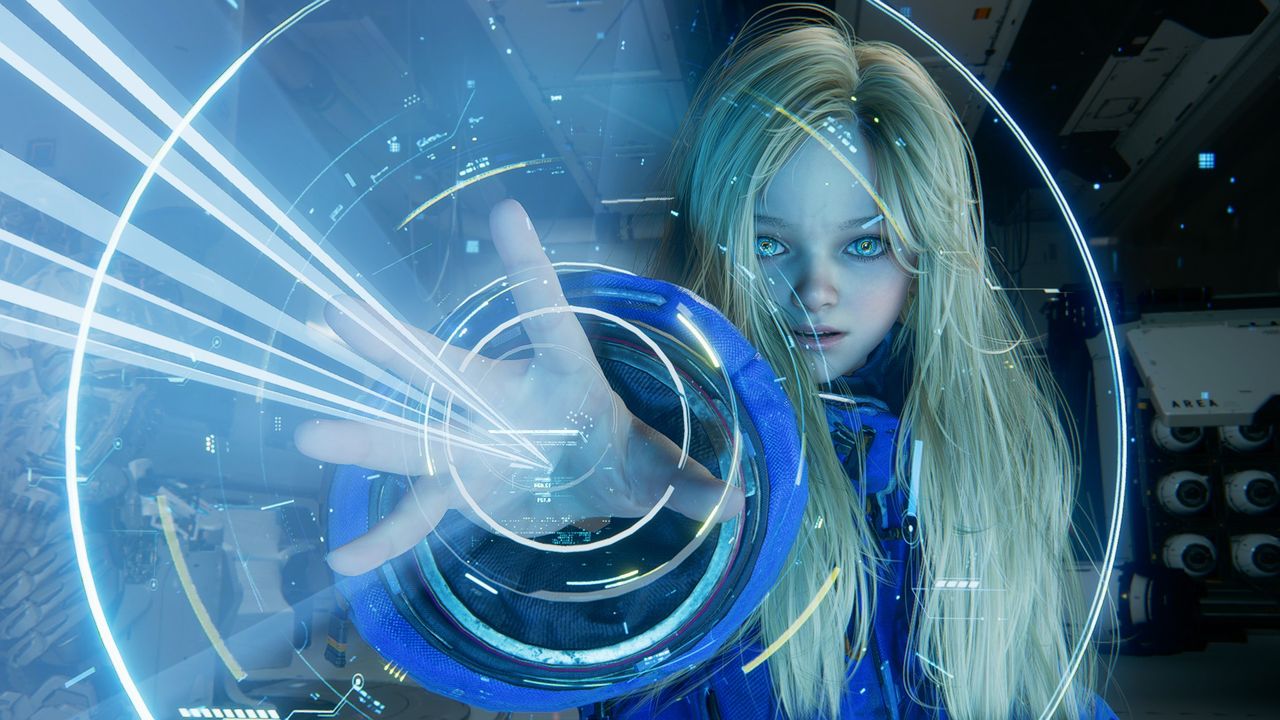
Set against the backdrop of a hostile lunar base, Pragmata weaves rapid-fire puzzles into a narrative driven by two distinct protagonists. You control Hugh, an astronaut stranded as his moonbase crumbles around him alongside a horde of hostile robots, and Diana, a mysterious childlike android who has no memory of her creation. The dynamic between them is the heart of the experience: Hugh is eager to teach Diana about Earth and the complexity of the human spirit, while she simply wants to understand concepts like birthdays, sunsets, and the beauty of the ocean.
Despite Hugh being somewhat "vanilla" in his personality—often reacting with simple exclamations like "What the heck?" or "Hell yeah!"—their bond is undeniably infectious. The game doesn't always show humanity's greatness; instead, Hugh bluntly tells Diana about it, yet their shared enthusiasm and homesickness carry the emotional weight. While the villain IDUS, a malicious station computer, lacks the charisma of legendary antagonists like GLaDOS or SHODAN, the presentation elevates the rudimentary plot through arresting music and visuals that scream "NASApunk."
The Visuals Speak Louder Than the Dialogue
Visually, Pragmata feels like a more successful execution of the "NASApunk" aesthetic that other titles have proposed. It juxtaposes the gleaming spires associated with space exploration against ugly spikes of 3D-printed filament and a touch of mecha flair. The game critiques reckless technological advancement by showing an AI-poisoned future where Delphi Corporation attempts to recreate Earth organically, only to produce abortive house-of-cards facsimiles.
The variety in stage design is impressive, though often melancholic:
- An overgrown terrarium populated by holographic animals that lack true life.
- A desolate crater ruled by an automated driller worm that has gone awry.
- An AI-slop imitation of New York City, complete with motionless taxi cabs melting into the sidewalk and a walking, talking iPad in a hat that you will likely hate.
In these environments, the machine-made tributes to Earth feel soulless, yet Diana remains the counter-argument. As an artificial being herself, she nurtures her own budding humanity, proving that the instinct to connect is something no amount of code can truly replicate.
Hacking and Shooting: The Ace Up the Sleeve
While the story provides pathos, the shooting mechanics are the true headliner of Pragmata. The weapons deliver satisfying snaps and roars, but they would not carry the game alone without the novel hacking system that sits atop the core action. This mechanic is where Pragmata truly shines as a winner in the crowded shooter market.
Hugh's 3D-printed guns are underpowered on their own, forcing you to rely on Diana's unique abilities. The gameplay loop involves aiming at an enemy and then navigating a small tile maze using face buttons or holding down a side mouse button to hack them from afar. This exposes their gooey weak spots, allowing for strategic takedowns that feel both tactical and fluid.
Key features of the combat system include:
- Remote Hacking: Diana can take control of heat-seeking bombs, flying them back into the drones that fired them.
- Beam Attacks: In "hackerman mode," characters like Diana can shoot beams of light from their hands, adding a magical element to the sci-fi setting.
- Tactical Depth: The combination of shooting and puzzle-solving creates a "walking and chewing gum" rhythm that never feels repetitive.
Why You Need to Play This Adventure Now
Between fights, the game offers rest stops in an upgradeable shelter where you can restock, upgrade gear, and gaze at digital clouds through huge LCD screens. Diana will often run off to color in a reconstructed facsimile of a child's play area or cajole Hugh into playing hide-and-seek. These fleeting breaks are where the narrative punches above its weight, leaving players feeling mournful yet inspired by the AI-poisoned future we might be handing our children.
Pragmata is available now on Windows 11 for $60 / £50. Running on an NVIDIA GeForce RTX 3060 Ti and Intel Core i7-12700F, the experience on PC is robust, though Steam Deck performance remains unknown as of this review date. With no multiplayer component, it stands alone as a single-player masterpiece that balances mindless shooting with genuine emotional resonance.
Final Verdict on the Lunar Base Survival
If you are looking for a game that respects your intelligence while delivering high-octane action, Pragmata is the answer. It manages to be familiar yet fresh, honoring the past while critiquing our present technological trajectory. The story may not go in surprising directions, and the villain might lack one-liners, but the journey with Hugh and Diana is worth every second.
This is a game that makes you appreciate the real thing—whether it's the ocean, human connection, or simply the act of being alive in a chaotic universe. It speaks to the current moment where science and ethically empty technocrats share space travel. By the time you reach the end, you will yearn to see this duo make it home safe, leaving you with a lingering sense of hope amidst the stank face of a digital apocalypse.