Gamers ‘Raid’ EA Headquarters in Push to Block Saudi Acquisition
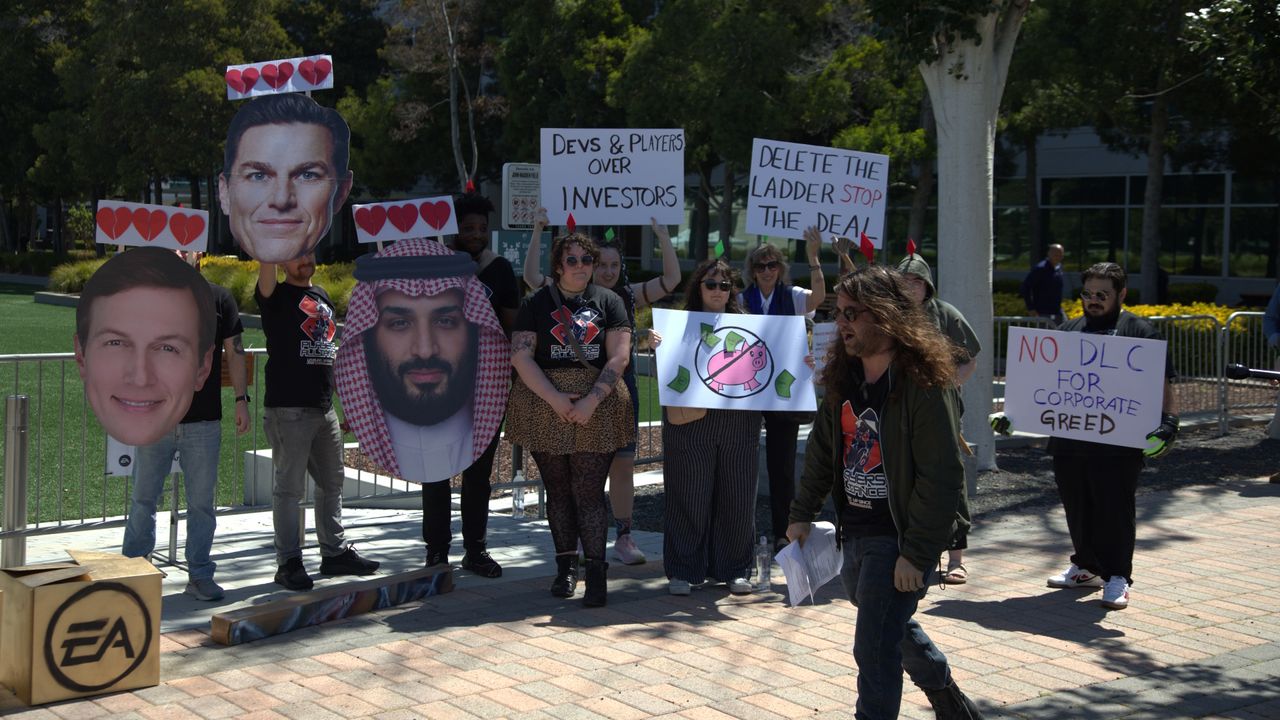
A coordinated group of demonstrators recently staged a metaphorical “raid” on Electronic Arts (EA) headquarters, targeting the company’s controversial Saudi Arabia-led acquisition. The protest unfolded at the EA campus, specifically in front of the iconic Madden Field, as participants attempted to deliver a petition signed by over 70,000 people to company leadership.
While the demonstration proceeded with visible enthusiasm, the delivery of the petition hit a snag. EA had erected barricades around the field and posted signs indicating the area was closed for a “private function.” The group, known as Players Alliance, stated they had received no prior communication from EA regarding the event and interpreted the barriers as a deliberate move to prevent protesters from accessing the core of the campus.
The Mechanics of the Protest
Despite the physical barriers, approximately a dozen protesters managed to gather directly in front of the barricades. The group remained focused and vocal, framing their actions as a necessary stand against corporate practices they view as exploitative.
Zefrine, a Twitch streamer and member of Players Alliance HQ, issued a statement clarifying the group’s motivation:
"Gamers raided EA’s HQ because we’re no longer willing to sit back while private equity firms and corporate executives turn gaming into another industry built on ripping off consumers."
Zefrine argued that the barricades were erected specifically because EA is afraid of the growing public pressure against this buyout while regulators are still deciding whether to approve the deal. The group emphasized that over 70,000 gamers stand with them to fight back against corporate greed and hold these corporations to account.
Bypassing Security to Deliver the Message
Although security guards refused to grant the protesters direct access to the building to hand over the petition, they did agree to take it. A representative for Players Alliance was told by security that he would "give it to the right people."
Undeterred by the physical blockade, the group ensured the petition reached key decision-makers through other channels:
- They emailed the petition directly to EA CEO Andrew Wilson.
- They submitted the petition to the US Committee on Foreign Investment in the United States (CFIUS), the body responsible for reviewing the national security implications of the deal.
Why the Acquisition Sparks Outrage
The controversy surrounding EA’s buyout extends beyond standard concerns about media concentration. Several critical factors have galvanized the gaming community and policymakers:
- Massive Debt Burden: The leveraged buyout, described as the biggest in private equity history, will leave EA with $20 billion in debt. This financial strain raises fears of future layoffs, studio closures, and game cancellations as the company seeks to cut costs.
- Censorship Concerns: There are significant worries that Saudi-led ownership could impose content restrictions on games. While EA stated shortly after the announcement that it would continue to be guided by its "cultural values," the vagueness of those values has fueled suspicion.
- National Security Risks: US lawmakers and game developers have expressed profound concern about foreign influence. While many are calling for greater scrutiny rather than a complete halt to the deal, the parallels to the Microsoft-Activision acquisition suggest that such concerns often have limited practical impact.
Political Connections Complicate Oversight
Despite the valid concerns raised by protesters and regulators, the deal faces a steep political headwind. The acquisition is heavily tied to high-level political figures in the United States:
- Crown Prince Mohammed bin Salman, the de facto ruler of Saudi Arabia, is a close associate of US President Donald Trump.
- Jared Kushner, Trump’s son-in-law, is set to benefit from the deal through his firm, Affinity Partners. The Public Investment Fund (PIF) invested $2 billion into Affinity Partners not long after Kushner left his role as a senior advisor during the first Trump administration.
This political nexus mirrors previous instances of potential influence, such as the 2025 events surrounding Netflix’s planned acquisition of Warner Bros. Discovery, which was ultimately influenced by Kushner’s Affinity Partners. As the regulatory process continues, the intersection of gaming, private equity, and geopolitics remains a focal point for critics who believe the current system favors corporate interests over consumer protection.