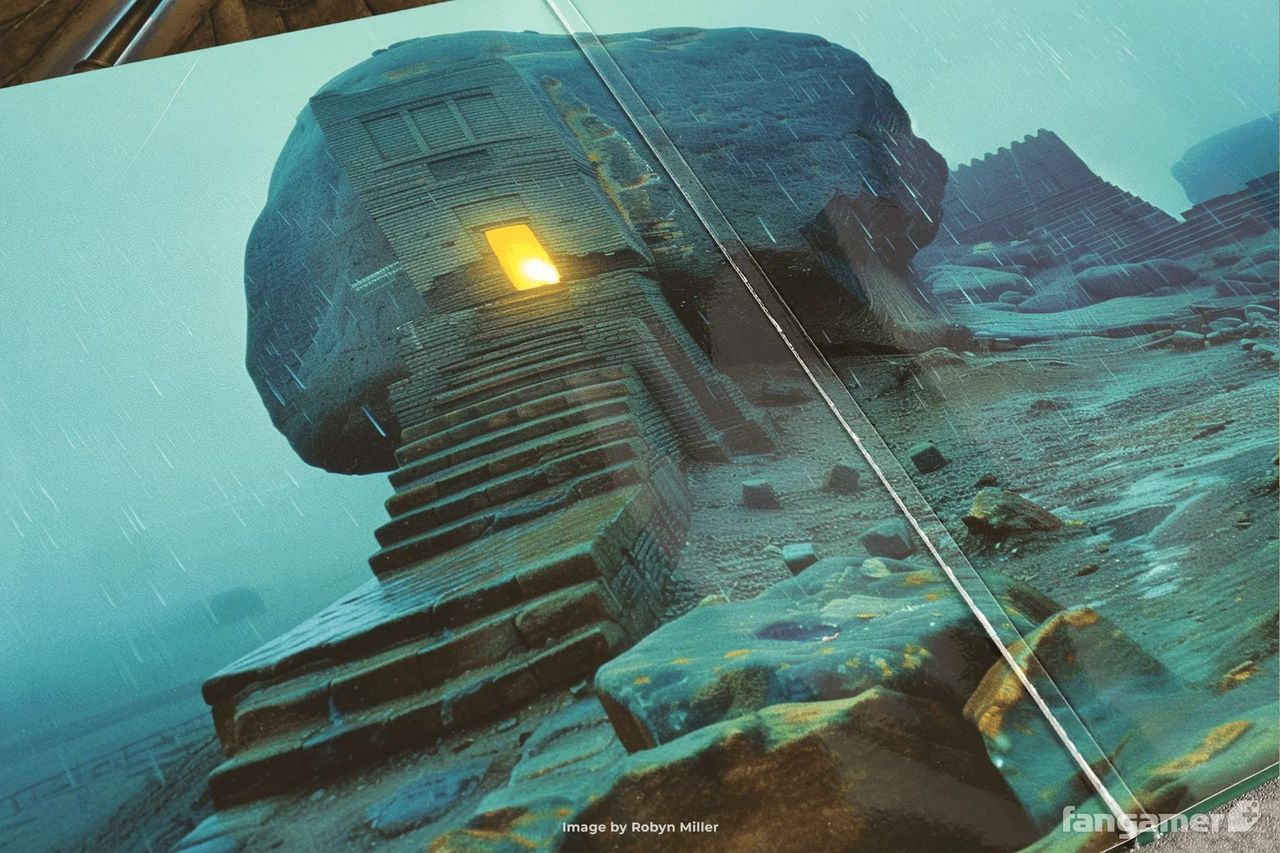
Fangamer has long been a destination for premium gaming merchandise, known for unique tie-ins like the Stardew Valley boxed edition complete with a farm-ownership deed and a plushie of the psychic squid from Into the Breach. However, their latest release, a vinyl edition of the soundtrack for the Myst sequel Riven, has ignited a debate. The controversy stems from the gatefold art depicting the mysterious Age 234, which bears the hallmarks of generative AI art. The Riven co-creator defends his use of AI art by outlining a traditional workflow enhanced by digital iteration, aiming to clarify that the tools were used to refine his vision rather than replace it.
Robyn Miller Details His Iterative Workflow with AI Tools
Following reports from Time Extension, Robyn Miller, the co-creator of both Myst and Riven, confirmed that AI tools were indeed part of the artwork's creation. However, Miller emphasized that the project did not begin with a prompt. He explained that the process started with traditional pencil sketches of the concept.
Miller described a rigorous iterative workflow involving dozens of adjustments. He utilized the tools to refine specific elements, noting that once a concept is established, reaching a final image involves constant tweaking. This included shifting portions of the image, altering the angle, changing the film grain, adjusting the time of day, modifying the weather, and even changing the lens and camera ISO. Miller characterized this method as a cycle of "two steps forward, one step back," resulting in a highly controlled final output rather than a random generation.
Addressing the 'AI Slop' Debate and Industry Impact
The Riven co-creator also took a firm stance against the growing sentiment that AI-generated content is inherently low quality or "slop." Miller argued that the problem lies in the intent of the artist, not the tool itself.
"The tools do not make the art. The artist makes the art," Miller wrote. He pointed out that any artist can produce slop by using a brush without thinking, and that the internet is already overwhelmed by 2D and 3D slop created without care or original intent. He asserted that as an early adopter of technology throughout his career, he views these tools as extensions of the artistic process rather than replacements for it.
Miller's defense of his methodology highlights several key points regarding the intersection of traditional art and new technology:
- Tools do not make the art; the artist's intent and effort do.
- Traditional art can also result in slop if created without thinking or care.
- The internet is saturated with low-effort 2D and 3D slop unrelated to AI.
- Designing without intent or copying styles leads to poor results, regardless of the medium used.
Fangamer's Response and Refund Policy
In response to the reports, Fangamer clarified their stance on AI-generated content. The company stated that while their internal policy prohibits art created by generative AI in their products, this rule had not been explicitly addressed with outside artists for projects that began before the widespread adoption of image generation tools.
Fangamer noted that their role in this specific release was limited to layout and production, meaning they were unaware of the specific tools Miller used for the gatefold illustration. For customers who are unhappy with the product due to these concerns, the company is offering no-questions-asked cancellations or returns through customer service.
Looking ahead, Fangamer is updating its artist and partnership agreements to proactively address AI usage. This change aims to ensure transparency and alignment with their internal policies for all future collaborations, preventing similar misunderstandings as the industry continues to evolve.