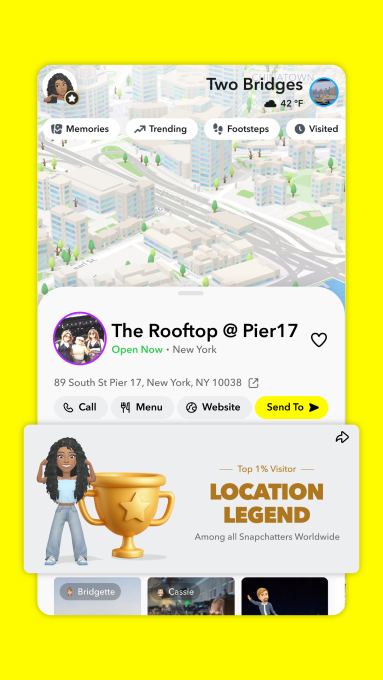
A finger swipes across the vibrant, heat-mapped interface of Snap Map, pausing over a familiar local cafe to reveal a shimmering new distinction. Snap Map’s new ‘Place Loyalty’ badges serve as a digital trophy and a public record of physical habits. This feature is no longer just about seeing where friends are; it is about proving how often one returns to the same coordinates.
The implementation of these badges represents a calculated move toward gamified social interaction. By rewarding users for their physical routines, Snap is attempting to bridge the gap between digital engagement and real-world movement.
How the Place Loyalty Badge Hierarchy Works
The system tracks user movement over a rolling one-year period, evaluating frequency against the broader user base. If a user falls within certain thresholds of visit frequency, they earn a specific rank that can be displayed on the map. The hierarchy is structured to reward the most dedicated visitors:
- Gold Badge: Reserved for the elite top 1% of frequent visitors to a location.
- Silver Badge: Awarded to those residing within the top 10% of visitors.
- Bronze Badge: Granted to users who fall within the top 25% of regular visitors.
The Evolution of Snapchat’s Digital Footprint
The introduction of Snap Map’s new ‘Place Loyalty’ badges does not exist in a vacuum. It is the latest iteration in a series of features designed to turn Snap Map into a comprehensive discovery and lifestyle tool.
In 2025, the company introduced Footsteps, a feature that allowed users to track global exploration and travel history. This was followed by Promoted Places, which provided a direct advertising conduit for businesses to showcase their various locations to local audiences.
This trend suggests that Snap Inc. is moving toward viewing the map as a social ledger of personal identity rather than a mere utility. By anchoring digital status to physical presence, the platform creates new forms of social currency. This strategy leverages the existing momentum of the platform, which recently announced that Snap Map has surpassed 400 million monthly active users.
Privacy Controls and Brand Utility
While the feature introduces new ways to interact, it also brings the conversation regarding location privacy back to the forefront. Snapchat has explicitly stated that these badges are only visible if the user actively chooses to share their ranking with their social circle.
Furthermore, the rankings remain private by default; users must opt into the public display of their loyalty status. This layer of control is essential as the platform moves closer to tracking highly granular personal habits.
For the corporate sector, the utility of this feature is even more pronounced. For brands and large-scale chains, Snapchat aggregates visits across all locations, providing a macro view of brand loyalty. This allows for a more sophisticated approach to localized marketing, where businesses can leverage the visibility of "loyal" users to drive further engagement through the Promoted Places ecosystem.
The Competitive Landscape
The battle for map-based dominance is intensifying as competitors attempt to replicate this level of environmental awareness. Meta has already moved into this space with its own version of an Instagram Map, attempting to capture the same interest in local discovery and real-time activity.
While it remains unclear how the user engagement metrics compare between the two giants, the "map war" is clearly driving innovation in how we perceive our digital presence within physical spaces. As social media continues to pivot toward utility-driven features, the ability to broadcast one's lifestyle via badges may become an industry standard.