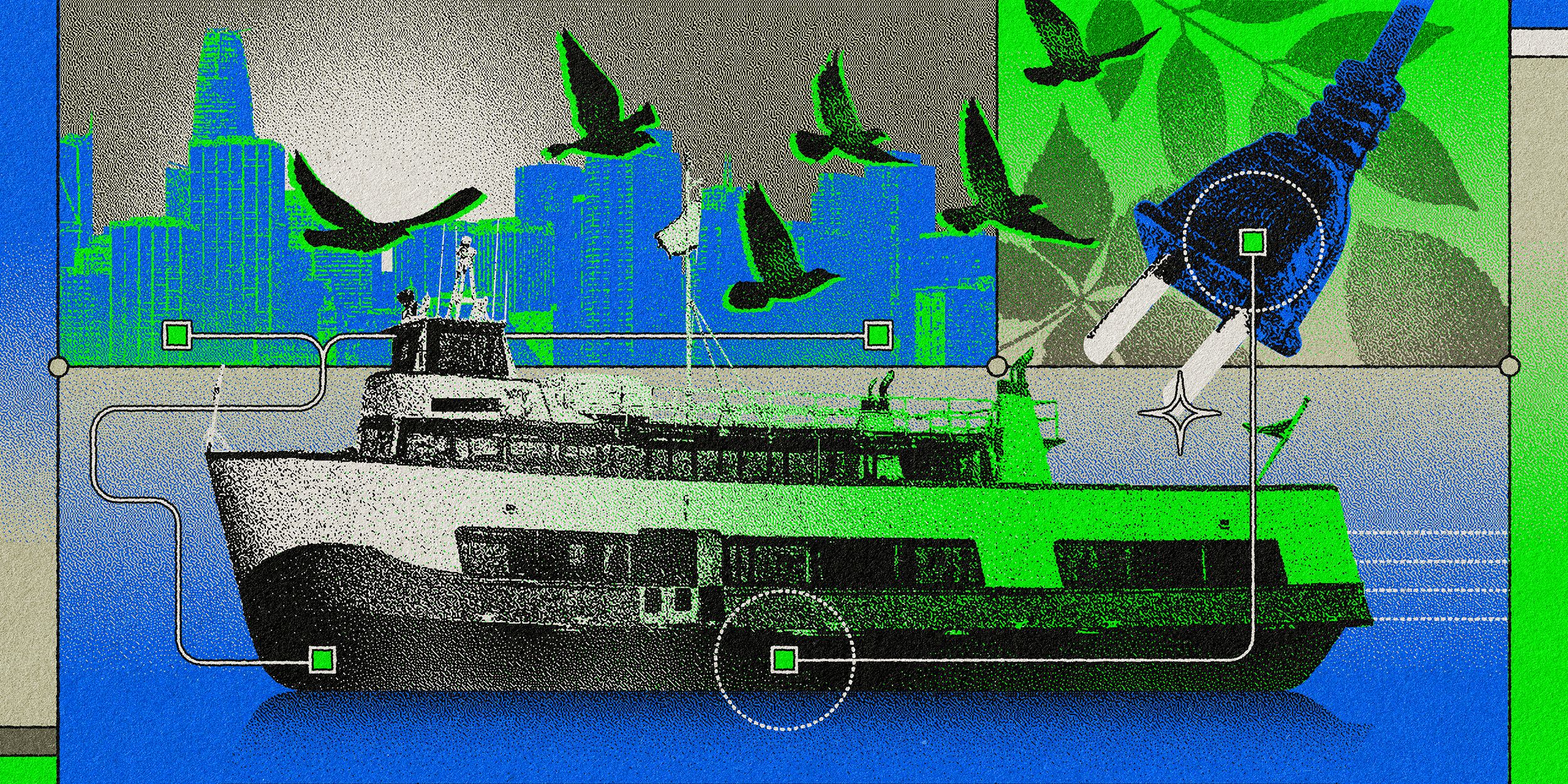
So Long, ‘Ferrynoia.’ Green Maritime Technology Is Here
A ferry glides silently across New York Harbor, its electric motor humming faintly as it carries passengers toward Governors Island. The absence of diesel fumes and the smoothness of the ride signal a shift in maritime transport—one that promises cleaner air, fewer emissions, and a new era of sustainable travel. From San Francisco to Stockholm, green maritime technology is no longer a distant dream but a tangible, operational reality. The age of “ferrynoia,” a term blending “ferry” and “fear,” is slowly fading as cities embrace cleaner, more efficient water transport solutions.
The Hybrid Ferry That Could Redefine Urban Transit
The Harbor Charger, New York State’s first hybrid-electric public ferry, is already making waves. Designed to replace a nearly 70-year-old vessel that burned through 420 gallons of fuel daily, it can carry 1,200 passengers and 30 vehicles while slashing annual carbon emissions by at least 600 tons. Its 22 lithium-ion battery packs, supplied by Siemens Energy, power a 10-minute one-way trip to Governors Island, a destination known for its art installations and open spaces. The ferry’s hybrid design allows for a smooth transition from battery to diesel backup, easing concerns about reliability and infrastructure readiness.
Key features of the Harbor Charger include:
- Operates on battery power for up to 90 minutes.
- Expected to cut emissions by 600 tons annually.
- Designed with a digital console instead of a traditional ship wheel.
A Global Shift Toward Zero-Emission Water Transport
The Harbor Charger is just one example of a global movement toward electrification in maritime transport. In San Francisco, a new battery-powered ferry is set to launch in early 2027, offering an eight-minute ride to Treasure Island with no diesel engines in sight. Backed by a $55 million federal grant, the project is part of a broader initiative to electrify the city’s entire ferry fleet by 2035. Meanwhile, in Denmark, the e-ferry Ellen has set a world record for the longest single-charged trip between islands, traveling 22 nautical miles on wind-generated power and saving 2,250 tons of carbon dioxide annually.
Beyond battery power, hydrofoil technology is redefining how watercraft move. In Stockholm, the P-12 by Candela uses computer-controlled underwater wings to lift its carbon-fiber hull above the water, reducing drag and cutting energy use by 80 percent. This innovation not only increases speed but also allows the vessel to operate in no-wake zones, making it a viable option for urban waterways. Candela has even tested the technology in Washington, DC, where officials are considering its use for ferry services across the Potomac and Anacostia rivers.
The Road Ahead for Maritime Decarbonization
Despite these advances, the transition to green maritime technology is not without its challenges. The term ferrynoia, a mix of “ferry” and “fear,” highlights the anxiety among some island residents who worry about the reliability of electric systems. Battery failures or software glitches could disrupt essential services like medical transport or school commutes. However, as infrastructure improves and battery technology evolves, these concerns are gradually being addressed.
For the Trust for Governors Island, the Harbor Charger is both a practical step and a vision of the future. While it currently operates in hybrid mode, the ferry’s design includes enough battery storage to eventually support full electrification. “We made a choice to start with hybrid technology,” says Clare Newman, president and CEO of the trust, “but we felt strongly that we needed to make the investment to build the boat with enough battery storage to go fully electric one day.”
The broader trend suggests that the era of ferrynoia is coming to an end. With each new deployment of green technology, cities are proving that electrification can be both sustainable and efficient. As more hybrid and battery-powered ferries enter service, and as hydrogen and wind-powered vessels continue to evolve, the future of maritime transport looks less like a relic of the past and more like a blueprint for a cleaner, smarter world.