Sony’s AI Strategy: Augmentation or Automation?
In its latest earnings call, Sony outlined a corporate strategy for the future of the brand that inevitably centered on the growing role of artificial intelligence. As expected when executives address investors, the narrative focused heavily on how AI can drive efficiency and innovation. Sony CEO Hiroki Totoki stated that "AI will make it easier to take on more innovative and ambitious projects," positioning the technology as a catalyst for creative expansion rather than a disruptive threat.
However, the specifics of Sony’s approach reveal a complex balance between leveraging new tools and preserving human artistry.
The 'Mockingbird' Tool and Performance Capture
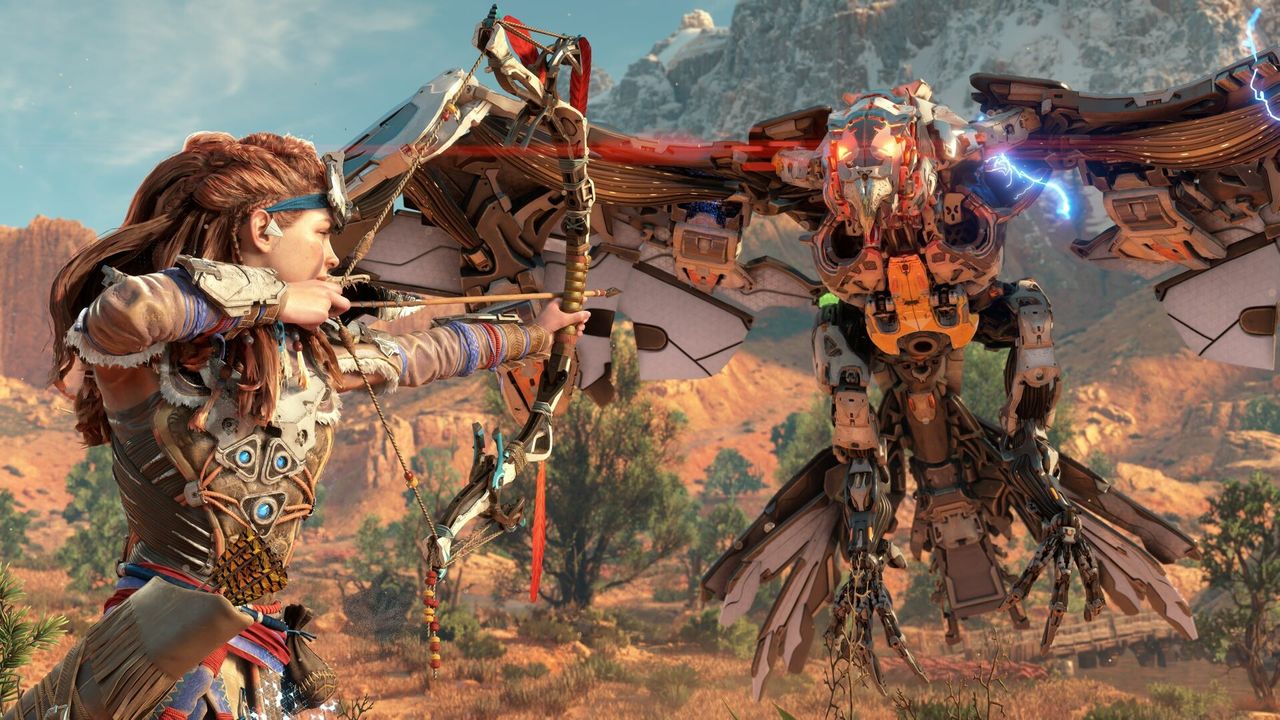
Sony detailed its in-house tool, 'Mockingbird', which animates 3D facial models based on performance capture data. The company confirmed that this tool was already utilized in Horizon Zero Dawn Remastered.
Totoki emphasized that the goal is not to displace the human element:
"Importantly, we are not replacing human performers, but rather optimising how we process the data from these live captures."
This process involves using AI models to animate hair, a traditionally labor-intensive task. Sony argues that by automating these high-effort steps, teams can reinvest their time into building richer worlds and more engaging gameplay.
Dynamic NPCs and the Slippery Slope
Beyond technical optimization, Sony is exploring prototypes of NPCs with their own personalities. The aim is to create a living, dynamic world for players to explore. Totoki reiterated that as AI capabilities evolve, the role of creators remains unchanged:
"AI is meant to augment their capabilities, not to replace them."
On the surface, this sounds reassuring. Yet, one must question the long-term implications. Creating NPCs that feel like fine-tuned human beings with distinct personalities is fundamentally a job for creative designers and writers. Worlds filled with unique, memorable NPCs have existed for decades before generative AI entered the conversation.
There is a valid concern that further committing to AI-driven NPC behavior is, in fact, a step toward replacing human workers down the line.
The Formulaic Future of Big-Budget Gaming
Sony pitches AI as a grand tool for delivering gaming experiences like never before—offering more immersion, more adventures, and fresh ways for players to enjoy their favorite characters. It is easy to see why big-budget developers are drawn to generative AI as a productivity tool designed to cut corners in development.
While former Sony Interactive Entertainment head Shuhei Yoshida has suggested that companies should invest in smaller, experimental projects, the current vision for generative AI seems to favor scale and efficiency over experimentation.
This raises critical questions about the nature of creative innovation:
- How many games have found greatness in the "corners" of development through unstructured play?
- How often have developers discovered new mechanics through glitches or repetition?
- How many artists have found new styles through boredom and manual experimentation?
A Cautious Perspective
Sony’s output has long been criticized for being somewhat formulaic. There is a cautious pessimism that further committing to automated tools may not help the company break out of that creative rut. Instead of fostering the kind of accidental brilliance that comes from human iteration, AI may simply accelerate the production of safe, standardized content.
Only time will tell if this gambit pays off. As financial earnings continue to roll in, the gaming community will be watching to see if Sony’s AI integration truly augments creativity or merely streamlines it into oblivion.