Sony Files Patent Application For Controller With Buttons That Harden Around Your Finger
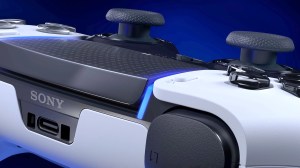
As we inch closer to the next generation of PlayStation consoles, Sony is experimenting with innovative controller features that could elevate the gaming experience. A recent patent application reveals that the company is exploring buttons that can harden or soften based on in-game actions, potentially offering a new level of immersion for players.
The patent, filed in November 2024 with the World Intellectual Property Organization (WIPO), was published earlier this year and highlights multiple methods for altering button properties. One approach involves using a magneto-viscoelastic elastomer that changes the force needed to press a button depending on the surrounding magnetic fields. Another idea uses fluid-filled membranes, though this might not be the most durable option for a gaming controller.
How the Controller Buttons Might Work
One of the more intriguing designs described in the patent involves a button that initially feels soft under a player's finger but then hardens around it. This could be useful in scenarios where a character is stuck or requires more force to move, providing tactile feedback that mirrors the in-game situation. While this might sound unusual, it reflects the kind of innovation that led to the DualSense controller’s adaptive triggers, which simulate actions like pulling a bowstring or feeling the tension of a web swing in Spider-Man 2.
What This Means for the Future of PlayStation Controllers
With a new PlayStation console expected to launch between 2028 and 2029, this patent gives a glimpse into what could be included in the next iteration of the DualSense. However, it's important to remember that patent filings do not guarantee that the ideas will be implemented in future products. Many patents remain unused or are developed in completely different ways.
Sony's continued exploration of controller technology shows its commitment to pushing the boundaries of gaming immersion. While the harden-around-your-finger button idea may seem experimental, it could lead to more intuitive and responsive control schemes in the future.