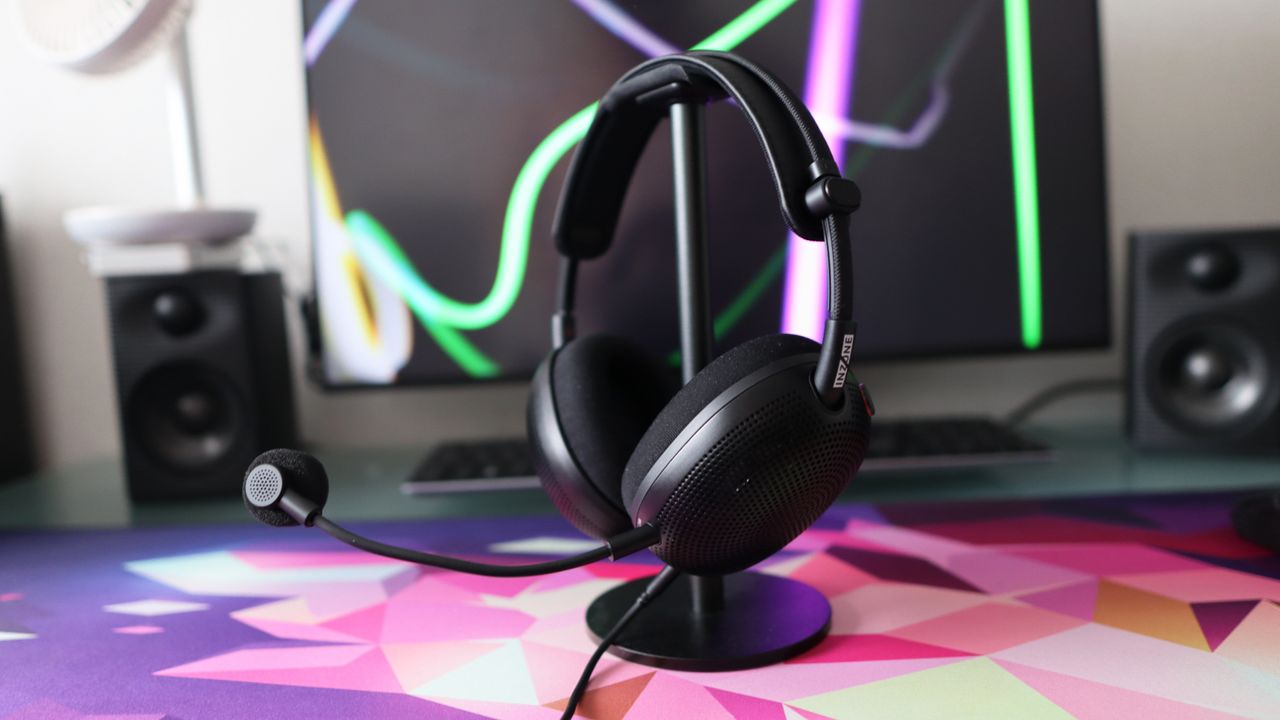
Sony Inzone H6 Air Review: A Lightweight Champion in Open-Back Gaming Headsets
2026 seems to be the year of the open-back gaming headset. After years of minimal innovation in this niche sector, we're seeing a resurgence with models like the Sony Inzone H6 Air. This lightweight, breathable headset is making waves for its affordability and comfort, offering a compelling alternative to pricier options like the Asus ROG Kithara. Priced at $200/£180, it’s a significant step down from the $300/£285 tag of the Kithara, even if it still falls into the higher price bracket for a wired headset.
Design and Comfort: Light, Clean, and Practical
The first thing I noticed about the Inzone H6 Air was how light it is. Weighing in at 199 grams, it feels almost weightless on the head, making it ideal for long gaming sessions. The absence of a more avant-garde design, unlike the Kithara, means it’s less likely to draw odd glances during Zoom calls or casual use outside of gaming. However, the suspension-style headband design, while comfortable, results in a lighter clamping force, which might be a concern for users who prefer a tighter fit.
The Inzone H6 Air adjusts similarly to the Inzone H9 II, requiring you to pinch a hinge and adjust each side independently. This method is functional but could be a bit of a hurdle for some. Still, with a little adjustment, the fit can be optimized for comfort.
Features and Connectivity: Simple, but Effective
Sony has made a significant improvement by including on-board controls on the Inzone H6 Air. These include a mic mute button and a volume wheel, which are a welcome addition compared to the Kithara’s lack of physical controls. Connectivity is handled via a 3.5 mm jack, but Sony also bundles a USB-C DAC and audio box, allowing for USB-C compatibility with PlayStation and Windows devices.
This compatibility opens up access to Sony's Inzone Hub software, which offers a range of customizable settings. While there’s no active noise cancellation (as expected from an open-back headset), the software still provides a wealth of settings, including EQ presets for different games, a 10-band EQ for custom adjustments, and spatial audio settings. These options are a bit more basic than those found on the Inzone H9 II, but they’re sufficient for most users.
Sound Quality: Rich, Immersive, and Balanced
The sound quality of the Inzone H6 Air is where it truly shines. Unlike the Asus ROG Kithara, which uses planar magnetic drivers, the Inzone H6 Air employs 40 mm dynamic drivers derived from Sony's MDR-MV1 studio monitoring headphones. These drivers are typically tuned for a flat frequency response, ideal for audio engineers. However, Sony has made slight adjustments to make them more suitable for gamers, resulting in a rich and immersive sound profile.
The open-back design enhances the sense of width and space, creating a more immersive experience compared to traditional closed-back headsets. This, however, comes at the cost of audio seepage, which might be an issue in shared spaces.
The bass response is particularly noteworthy, with a tight low-end that extends down to 10 Hz. This is felt more than heard, providing a strong punch in tracks like "Invisible Man" by Marillion and "Luminol" by Steven Wilson, which feature deep, resonant bass grooves.
The midrange and treble are well-balanced, ensuring clarity and detail in both music and gaming audio. Whether you're diving into a first-person shooter or enjoying a cinematic experience, the Inzone H6 Air delivers a rich and engaging sound that's hard to ignore.