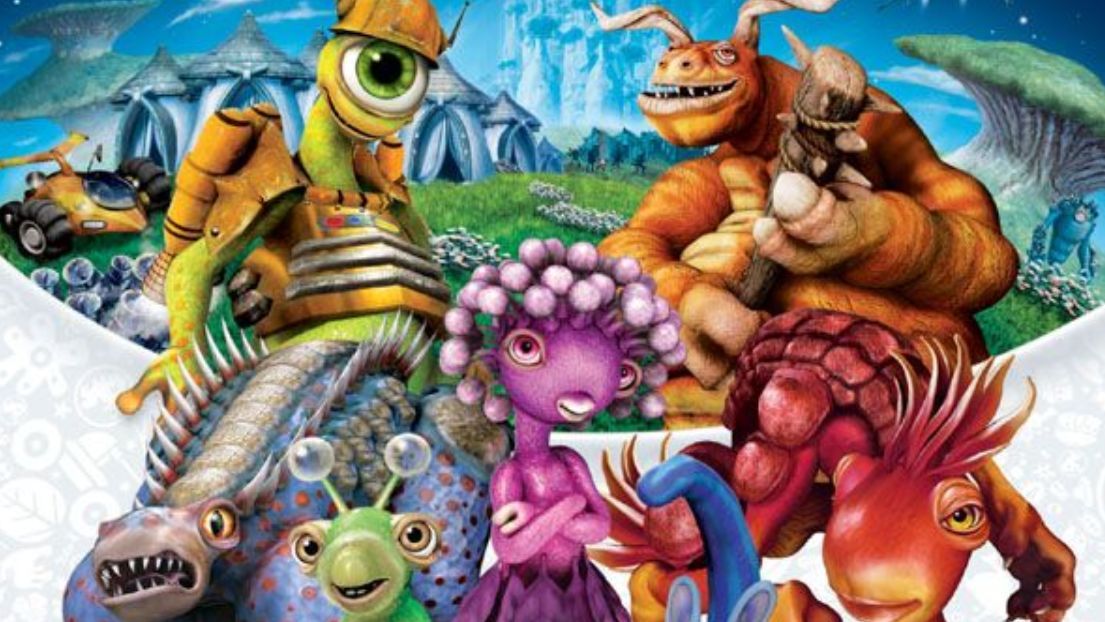
Spore's Ambitious Vision vs. What Actually Made It to the Shelf
Spore, the game that many consider the greatest that never was, was once a vision of unparalleled ambition. The initial pitch, as recalled by many involved in its development, was a simulation that would take players through the entire history of life—starting from a single-celled organism and evolving into a spacefaring alien of their own design. This idea, however, was not exactly what was delivered in the final product. Instead, Spore became more of a sci-fi minigame collection, complete with an impressive character creation system but lacking the depth and complexity that fans had hoped for.
"Will [Wright] said from the jump that this was going to be a lot of little minigames. Just nobody listened," gameplay designer Jenna Chalmers told Design Room. "Everybody knew him for these really rich, robust simulations, and wanted all the depth and the richness … people heard what they wanted to hear." The disparity between the initial vision and the final product can be traced back to the now-infamous GDC 2005 presentation where Wright unveiled the game under the title "The Future of Content."
The GDC 2005 Talk and the Promises Made
In that talk, Wright showcased a version of Spore with a less cuddly art style and features that never made it into the final release, such as an aquatic stage between the single-cell and land-dwelling stages. He also introduced concepts like "procedural verbs" and discussed how societies might develop different reasoning styles—logical or emotional. While some of these ideas found their way into the final game, many fans filled in the gaps with expectations that weren't met.
Wright himself admitted that the preview may have been too much. "We were definitely overrepresenting what it eventually became there," he said in an interview with Design Room. Art director Ocean Quigley recalled the talk's reception: "One of the journalists who covered [the GDC talk] said, 'This is either the most amazing game design of all time, or an act of bold chicanery.' It was B. It was an act of bold chicanery."
Lead gameplay designer Alex Hutchinson also reflected on the impact of the previews: "The preview built a fantasy in people's minds that was unachievable." Despite the lofty expectations, the game still managed to find an audience and is often praised for its ambition and variety.
The Development Process and Publisher Support
Contrary to what many might assume, the development of Spore was not hampered by publisher interference or a rushed timeline. According to Wright and other developers, EA gave Maxis a long leash creatively and a nine-year development timeline. However, there were moments of tension between Wright and EA executive Don Mattrick regarding certain design decisions.
"We never felt pressure," said developer Chris Hecker. "EA's got lots of problems, but this was not one of them." Quigley noted that maintaining a strong relationship with EA required providing "compelling bits and pieces" to share frequently, likening it to the story of Scheherazade. Despite the long development time and significant resources, there was a lack of urgency that sometimes led to self-indulgence rather than focused development.
Legacy and Impact
Despite the challenges and unmet expectations, Spore remains a significant title in the gaming industry. Its sheer variety and procedural animation are still impressive, even if the gameplay is described as "a slog" by some critics. The game's unique approach has inspired other developers, such as those behind the roguelike Everything Is Crab. Spore's legacy is one of both ambition and caution, a reminder that the gap between vision and execution can be wide, but the journey itself can still be influential.