The Paradox of Spotify’s AI Expansion
Spotify is undergoing a radical transformation that threatens the very foundation of its identity as a cultural hub. In a strategic pivot unveiled during its recent investor day, the streaming giant is moving away from its role as a curator of human artistry toward becoming a generator of synthetic audio content. This shift marks a jarring transition from precision discovery to a chaotic ecosystem of synthetic media, where the boundary between human creativity and algorithmic automation is rapidly dissolving.
The core contradiction of this strategy is stark: in its quest to offer "more of everything," Spotify is rendering the essential utility of its app—finding high-quality, human-made content—increasingly difficult. By flooding the platform with AI-generated music, audiobooks, and personalized briefings, the company is trading the depth of its cultural moat for the breadth of generic utility. The result is an application that feels less like a destination for listening and more like a factory floor where the value of the original creator is diluted by the volume of the machine.
The Flood of Synthetic Audio
Until recently, Spotify’s identity was anchored in its fierce but respectful relationship with human creators. Today, that dynamic is inverting. The platform is no longer just a pipe for existing content; it is becoming a primary source of generated media.
Music and the UMG Deal
Spotify has signed a pivotal deal with Universal Music Group (UMG) that permits fans to create AI covers and remixes of existing songs. While this agreement ensures compensation for original artists, it serves as a gateway for an influx of derivative content. This move risks cluttering search results and recommendation engines with AI-generated tracks that can be produced in seconds, potentially flooding charts with synthetic variations of popular hits.
Audiobook Automation
The shift is not isolated to music. Through a partnership with ElevenLabs, Spotify is introducing AI narration tools for audiobooks. This allows authors to bypass human voice actors entirely, accelerating production speeds but risking the standardization of the auditory landscape. Despite technological advancements, these synthetic voices often retain an uncanny, unnatural quality that lacks the emotional nuance of human performance.
The implications for emerging human artists are particularly concerning. As the catalog becomes saturated with synthetic content, the discoverability of new, human-created work diminishes. The algorithm, previously a guide to new favorites, now competes with an endless stream of content generated to fit narrow prompts.
Key aspects of this synthetic flood include:
- AI Music Generation: The UMG deal enables AI covers, creating a deluge of synthetic variations of popular tracks.
- Audiobook Automation: Collaboration with ElevenLabs reduces the role of human performers in favor of scalable AI narration.
- Labeling Standards: Spotify has adopted the DDEX industry standard to label AI-generated tracks, yet visibility in search results remains a critical battleground.
Personalization Turns Inward
Perhaps more unsettling than the flood of synthetic media is the inward turn of Spotify’s AI features. The company is moving beyond passive consumption to active, albeit synthetic, creation. This strategy aims to transform Spotify from a cultural hub into a private administrative assistant, leveraging agentic AI to complete tasks on the user’s behalf.
The Rise of the Personal Podcast
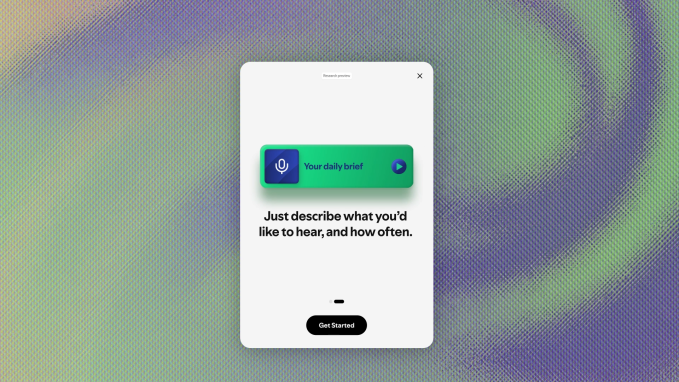
The introduction of personal podcasts allows users to generate audio summaries of their calendars, emails, and notes directly within the app. A recent experimental desktop app connects to email, notes, and calendar data to generate these personalized audio briefings. This tool doesn’t just answer questions; it autonomously organizes information, marking a significant departure from the traditional media consumption model.
By allowing users to build their own podcasts through simple prompts, Spotify is encouraging a shift from listening to others to listening to oneself. This raises a fundamental question about the role of a media platform: is Spotify aiming to deepen engagement by becoming indispensable to daily life, or is it diluting its core value proposition? The risk is that users will spend more time managing their synthetic personal assistants than discovering new music, making the navigation of human-created content more complex.
The Dilution of Discovery
Spotify’s answer to navigating this new, AI-saturated ecosystem is more AI. The company is introducing natural-language discovery for audiobooks and podcasts, allowing users to ask conversational questions about episodes and themes. This mirrors Google’s shift toward conversational search, aiming to keep users within the app rather than sending them to external chatbots like ChatGPT or Gemini.
However, this approach exacerbates the core problem. As the platform prioritizes AI-generated content and personalized utility, the serendipity of discovery suffers. The algorithm is no longer just recommending songs; it is generating them. The friction between the platform’s identity as a curator of human culture and its current direction as a generator of synthetic media creates a confusing and fragmented user experience.
The long-term risk is that Spotify loses the trust of its core user base. If the app becomes a cluttered space where emerging human artists are hard to find and the audio landscape is dominated by AI, listeners may follow trends seen in other social media platforms: a mass exodus to competitors that prioritize curation over creation. Spotify’s bet on "more of everything" may ultimately result in less of what mattered most: the unique, unrepeatable voice of the human creator.