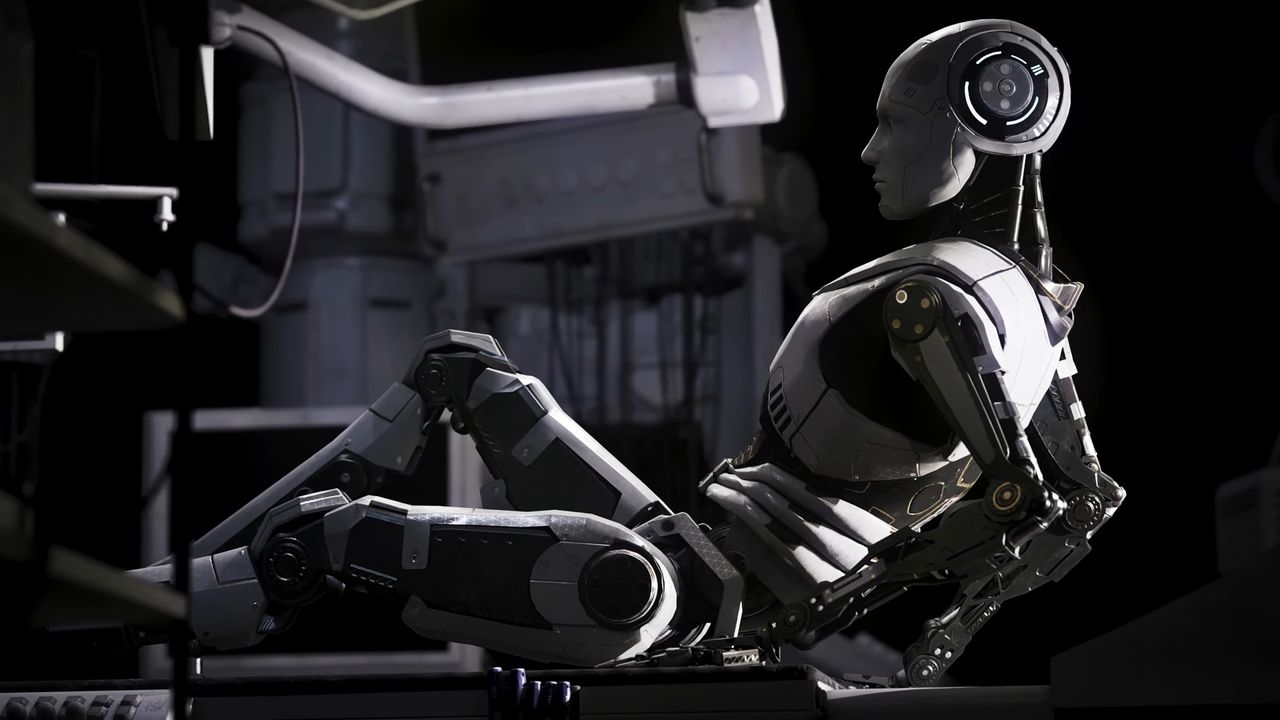
The Talos Principle 3 has been officially confirmed as the third and final chapter of one of the most unexpected and intellectually stimulating video game series of the last decade. Much like the leap from the first installment to its predecessor, this new entry promises a familiar slate of philosophical puzzles wrapped in a profoundly different narrative experience.
While the initial teaser reveals little about the specific mechanics, it clearly signals a conclusion. "Every story has a beginning, a middle, and an end. Birth, life, death," the narrator intones in the announcement. "But we are not stories."
This cryptic messaging, paired with opening shots of the boundless cosmos, suggests a deep connection to the lore established in previous titles. For those who haven't played the earlier games, it is highly recommended to experience them first to fully appreciate the context without spoilers.
The Anomaly: A World Where Physics Fails
The teaser hints at a significant plot point introduced in the ending of The Talos Principle 2: the discovery of an anomaly located billions of light-years from Earth. This phenomenon defies Athena’s otherwise complete and infallible "theory of everything."
The cutscene for that previous conclusion featured an image of distant stars that is nearly identical to the one seen in today’s announcement, confirming that this mystery will be central to the final chapter.
According to the official announcement, the protagonist awakens in a strange, contradictory environment:
- Crumbling temples and abandoned science outposts.
- The Anomaly, described as the only place in the universe where the laws of physics do not function as they should.
- Fragmented memories, with the protagonist aware they arrived for a specific, albeit forgotten, reason.
Humanity’s Resurrection and the Return of Elohim
The narrative scope of The Talos Principle 3 is vast, spanning more than 12 worlds as players explore "the remains of the world that humanity once built." Lead writer Jonas Kyratzes explains that the series remains character-driven, focusing on the life of the protagonist to illustrate broader historical moments.
"It's about your life, the character that you play," Kyratzes said. "And so you will see many different places based on that." He noted that while the first game focused on the rebirth of humanity and the second on a turning point in their history, this final chapter explores what came after, seen through the eyes of a new character.
Crucially, the iconic voice of Elohim will return. Jonas Kyratzes emphasized the emotional importance of this character's presence:
"It was very important to us emotionally, because the fact that he's there, that after that ending there is still hope for him—that what he was afraid of, which was a world without purpose, is still something where he can thrive."
Elohim serves as a consistent thread through the series, with his presence hinting at a lingering existence beyond the algorithmic origins explored in the Isle of the Blessed DLC.
Playing Before Launch
While The Talos Principle 3 can be enjoyed as a standalone experience, writer Verena Kyratzes compares it to watching Star Trek: The Next Generation without having seen the original series. The shows exist independently, but prior knowledge enhances the emotional weight.
" You will always get a little bit more if you played the previous games," she said.
This is particularly relevant for the opening of The Talos Principle 2, which was laden with callbacks to the original game. The moment Elohim welcomes you to his garden carries a specific resonance that new players might miss. The Talos Principle 3 continues this tradition, rewarding long-time fans with deeper lore and character continuity.
Release Details
A specific release date has not yet been announced, but the game is described as "coming soon." It is currently available for wishlist on Steam for those eager to witness the epic grand finale to humanity's digital rebirth.