The AI Smut Peddlers Have Come for Warhammer 40,000: A Grimdark Betrayal
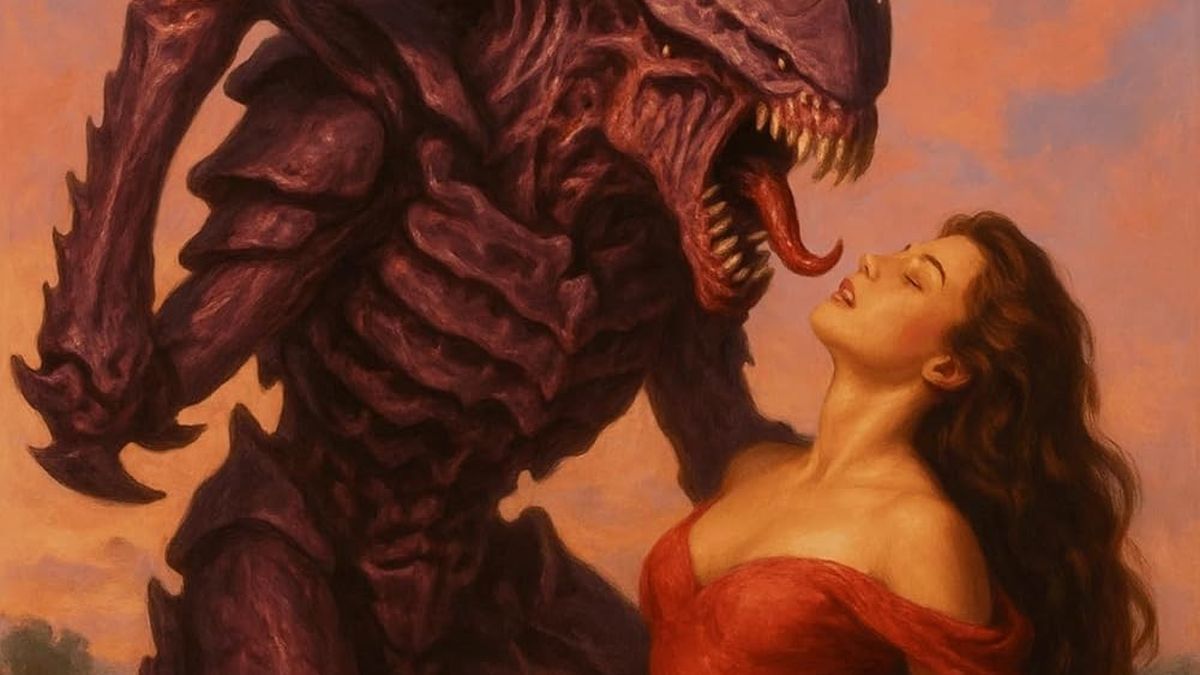
The AI smut peddlers have come for Warhammer 40,000 now, and the grim darkness of the far future has been diluted by a telltale yellow-green tint. A tech-priest in red robes is heralded by a dodgy geezer holding paper that reads "Pontifex Maximus" on an Amazon book cover, the image warped by the distinct visual signature of generative models. This isn't from a Games Workshop workshop or a licensed publisher—it's been scraped together from training data and uploaded for sale. The title features a protagonist named Sister Aurelia who finds romance in captivity by a Tyranid warrior, with a blurb promising love blooming in heretical soil.
A Marketplace Flooded With Low-Quality Deception
This image and accompanying text represent the latest front in an unregulated frontier where intellectual property meets generative artificial intelligence. Published under the pseudonym Slaanesh O'Pleasure, the title Taken by the Tyranid is a 65-page romance story that appropriates Warhammer 40,000's grimdark setting for adult content generated without permission from Games Workshop or its partners. Amazon has become ground zero for this phenomenon, with Rolling Stone investigating last year how the platform flooded with knockoff books designed to extract money from inattentive buyers rather than create genuine value.
Cory Doctorow described these works as "garbage books that exist to suck up money from the inattentive and get away with ripping off readers as well as writers." The specific formula being exploited mirrors an existing niche within fan-created content: dinosaur erotica, particularly the subgenre popularized by Taken by the T-Rex. However, where human authors maintain some connection to their source material's spirit and community expectations, AI-generated works lack any meaningful engagement with the IP they appropriate.
The visual aesthetic—particularly that distinct yellow filter reminiscent of Deus Ex: Human Revolution's piss mode—is a recognizable signature of current generative image models. What makes this particularly problematic for Warhammer 40,000 is how it distorts the setting itself. The universe is built on conflict, sacrifice, and grim determination rather than romantic interludes between opposing factions. When AI churns out content that treats Tyranids as emotionally available partners rather than hive-mind-consuming horrors, it fundamentally misrepresents what makes the franchise compelling to its audience.
Fans Have Always Provided Their Own Content
The most striking aspect of this development is redundancy. If someone genuinely wants Warhammer 40,000-themed adult content in their preferred format, they can access thousands of stories for free on Archive of Our Own (AO3). These exist within clearly defined categories—characters like the Inquisitorial interrogator from Owlcat's Rogue Trader or the Tyranid-focused content already serve these interests.
The fan-created ecosystem operates with several structural advantages that AI-generated works simply cannot match:
- Community moderation ensures content stays recognizable to its intended audience
- Direct creator-audience relationships mean feedback loops exist for quality control
- Non-commercial nature eliminates profit-driven incentives for mass-produced filler
- Specific tagging systems allow readers to find exactly what they're looking for
AI-generated works bypass all these safeguards. They're designed to appear in search results, extract payment from casual browsers, and disappear before any substantive reputation damage can occur. The scale matters too—where human fanfic authors produce discrete works that accumulate meaning over time, AI systems generate volume without regard for coherence or artistic merit.
The Industry's Response Remains Inadequate
Games Workshop has expressed concern about AI use internally. Senior managers reportedly aren't excited about the technology and prohibit its use within company operations, with one statement noting it's "included on our phones or laptops whether we like it not." This acknowledgment suggests awareness of the problem but doesn't translate to effective action against external bad actors operating outside their control.
The broader publishing industry faces similar challenges. Publishers committed to keeping generative AI out—like those behind Against the Storm and Manor Lords—confront how difficult these commitments are when distribution platforms lack robust verification systems. The technology itself continues advancing at a pace that outstrips legal frameworks built for fundamentally different contexts.
This particular Warhammer 40,000 example represents what happens when IP owners attempt to maintain standards in an environment where the tools of violation cost nothing and distribute globally. The content itself will eventually be removed or buried under its own weight—AI-generated pornography at this scale has limited staying power—but it demonstrates how quickly established franchises become targets.
The question isn't whether these works exist, but what frameworks protect intellectual property as generative technology becomes more accessible. Games Workshop's stance of prohibition speaks to a defensive posture that may be necessary internally without necessarily translating into effective external enforcement. Meanwhile, Amazon and similar platforms continue serving as de facto distribution networks for content they have limited capacity or incentive to evaluate.
The ultimate damage isn't just financial—it's cultural erosion. When AI-generated material becomes searchable and purchasable alongside legitimate works, the signal-to-noise ratio deteriorates, forcing audiences into more difficult curation tasks. For a franchise like Warhammer 40,000 that relies on community engagement to sustain its decades-long relevance, this degradation represents an existential threat no amount of takedown notices can fully mitigate.