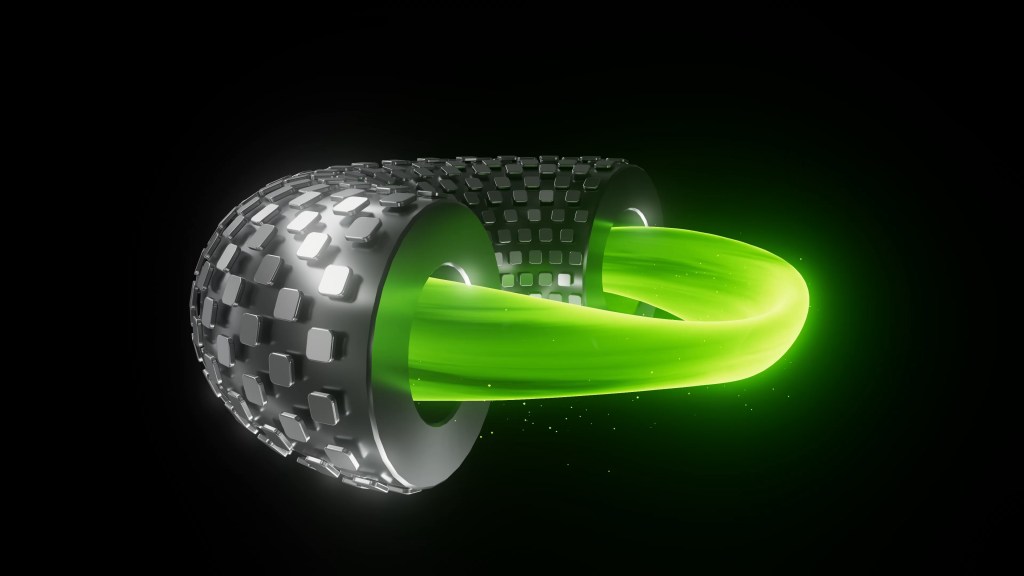
Princeton University spin-off Thea Energy has officially cemented its position as a leading fusion startup, closing a massive $100 million Series B funding round. Backed by US Innovative Technology Ventures (USIT), founded by Thomas Tull, this capital injection signals a major shift in investor confidence toward alternative reactor architectures. While the industry has long obsessed over tokamak designs, Thea is proving that the stellarator—a twisted pretzel-shaped reactor—offers a pragmatic and potentially faster route to commercial power.
Thea Energy's $100M Series B Signals a Shift in Fusion Capital
The global energy landscape is witnessing a capital rush toward nuclear fusion, yet most investors have remained hesitant to back designs outside the mainstream tokamak model. Thea Energy's latest valuation places it directly in conversation with industry heavyweights, validating the stellarator path against conventional wisdom despite the company's relatively compact footprint compared to multimillion-dollar competitors.
This funding provides the necessary runway for Thea to transition from theoretical modeling to physical hardware deployment. By securing this level of investment, the company is demonstrating that its engineering approach can attract elite-tier venture capital, accelerating its timeline and validating the stellarator concept in a market often dominated by hype.
Quasi-Symmetric Engineering Reduces Manufacturing Costs
The success of fusion hinges on achieving net-positive energy gain while keeping costs lower than traditional renewables. Thea Energy addresses one of the stellarator's biggest challenges—manufacturing complexity—with its proprietary quasi-symmetric design.
Unlike the tokamak, which relies on a toroidal chamber and internal plasma current, the stellarator uses external coils to create the magnetic cage required for confinement. This geometry allows for steady-state operation without the pulsed power limitations seen in some tokamaks. However, the twisting shape typically demands incredibly complex superconducting magnets. Thea's design simplifies these magnetic fields, reducing manufacturing costs while retaining the stability advantages that have made Princeton's stellarator research a gold standard in physics for over 50 years.
Engineering Efficiency for Steady-State Power by 2030
Thea Energy is targeting scalability and cost reduction simultaneously. By refining the Princeton Stellarator concept, the company aims to significantly cut the capital expenditure required for initial pilot plants. This focus on efficiency is critical as the industry races toward commercial deployment.
Continuous Operation Targets Grid Parity by 2030
One of fusion's persistent bottlenecks is maintaining plasma confinement reliability in a steady-state environment. Because stellarators do not require massive electrical current pulses to stabilize plasma, they are theoretically capable of running continuously. For grid integration, this consistency is vital; power plants operating on a duty cycle produce bursts of energy followed by rest periods, which can be less efficient for base-load electricity than uninterrupted operation.
Thea Energy's roadmap prioritizes this continuous output, making the technology an attractive candidate for utilities looking to replace fossil fuel baseload plants with nuclear alternatives. With its recent funding, Thea is accelerating its timeline toward grid parity by 2030, aiming to prove that its engineering approach can deliver reliable power at scale.
Racing Against Heavyweights in the Fusion Arena
The $100 million Series B elevates Thea Energy into a rarefied group of fusion companies that have crossed major fundraising thresholds. While smaller startups emerge weekly with ambitious promises, only a handful have secured the capital depth necessary to build pilot-scale hardware. This investment positions Thea alongside established competitors in the high-stakes fusion race:
- Helion Energy: Raised over $2 billion, focusing on direct energy conversion and compact tokamak designs.
- Commonwealth Fusion Systems (CFS): Backed by Breakthrough Energy and Bill Gates, utilizing high-temperature superconducting magnets for compact reactors.
- Tokamak Energy: Developing spherical tokamaks that leverage similar superconducting magnet technologies.
- General Fusion: Employing a unique piston-driven compression system to squeeze plasma rather than relying solely on magnetic fields.
Thea Energy's bet on the stellarator suggests a maturing industry where engineering efficiency and steady-state operation may outweigh historical momentum. If its quasi-symmetric design holds up in production, Thea could become the first to deliver continuous nuclear power to the grid, potentially redefining the fusion startup landscape and rendering the tokamak the dominant design of the past.