Trump’s High-Stakes AI Diplomacy: Why Jensen Huang is on Air Force One
The relationship between President Donald Trump and China has oscillated between tension and transactional engagement throughout his political career. However, the current geopolitical landscape is defined by one critical factor: the race for artificial intelligence supremacy. As Beijing accelerates its push for hardware independence, Washington is pivoting to a strategy of aggressive market penetration.
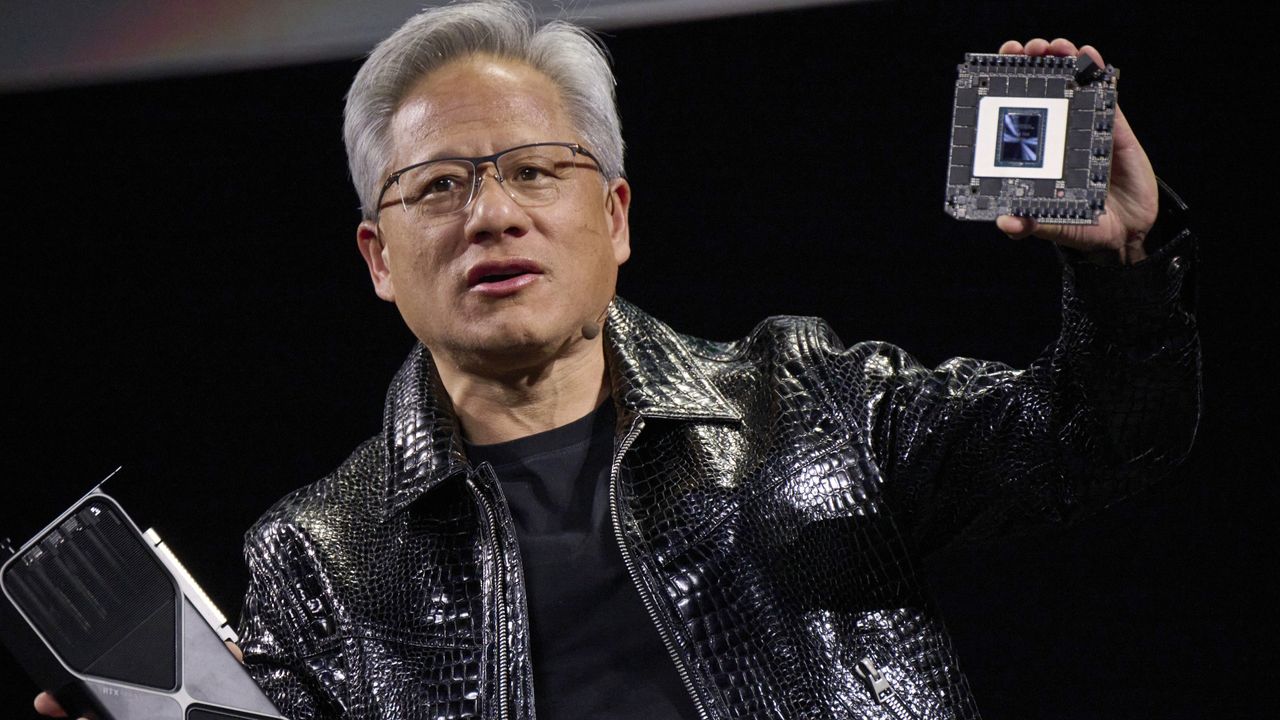
To facilitate this, Trump has confirmed that Nvidia CEO Jensen Huang is aboard Air Force One, traveling with the presidential delegation to Beijing. This marks a significant diplomatic maneuver, aiming to "open up" Chinese markets to American technology giants amidst escalating trade restrictions.
Correcting the Record: The "Great Jensen Huang"
Recent reports had suggested that Nvidia’s invitation to join the presidential delegation was overlooked or lost. Trump moved quickly to dispel these rumors on Truth Social, adopting a forceful tone to clarify Huang’s presence.
Addressing the misinformation, Trump called Huang the "Great Jensen Huang" and stated clearly:
"In actuality, Jensen is currently on Air Force One and, unless I ask him to leave, which is highly unlikely, CNBC’s reporting is incorrect or, as they say in politics, FAKE NEWS!"
This correction underscores the importance of Nvidia in the current trade dialogue. Trump has also invited other titans of the tech and finance worlds to this first US presidential visit to China since 2017, including:
- Larry Fink, CEO of BlackRock
- Elon Musk, CEO of Tesla and SpaceX
- Representatives from Micron and Qualcomm
- Tim Cook (referred to as "Tim Apple"), the incoming CEO of Apple
The presence of this "who’s who" of Silicon Valley and Wall Street signals that the administration views AI infrastructure as a core component of future US-China economic relations.
The Strategic Case for Nvidia in China
Jensen Huang is not merely a figurehead; his stance on the Chinese market has been consistent and provocative. Huang has long argued that denying US companies access to China’s booming AI sector is strategically foolish.
His position rests on several key arguments:
- Market Reality: In May of last year, Huang warned that "China is right behind us" in AI development, urging the US to export technology "like crazy" to stay ahead.
- Inevitable Competition: He noted that if Nvidia refuses to sell chips, Chinese competitors will simply develop their own solutions, leaving US firms with no foothold.
- Security Dismissal: Earlier this year, Huang dismissed concerns about US chips powering the Chinese military, stating, "we don't have to worry... they simply can't rely on them."
The financial stakes are immense. Nvidia has recently surpassed $5 trillion in net worth, becoming the first company to achieve this milestone, driven by insatiable global demand for AI GPUs. However, the company’s dominance in China has eroded. Due to a combination of US export bans and Chinese retaliatory taxes, Huang noted that Nvidia’s market share in the region dropped from 95% to 0%.
Navigating the "Open Up" Mandate
The core objective of this expedition is clear. In his Truth Social post, Trump stated he will "be asking President Xi, a Leader of extraordinary distinction, to 'open up' China so that these brilliant people can work their magic."
This request comes at a complex time. While the US government has imposed strict caps on AI chip exports to China, recent reports indicate that Beijing has approved the import of Nvidia’s H200 AI GPUs. This suggests a potential, albeit fragile, détente in hardware trade.
For Nvidia, the goal is to maintain its technological supremacy by keeping its products in the hands of Chinese developers and enterprises. If China is to become fully independent of Western hardware, as it currently aims to do, the window for American companies to establish long-term dependencies is closing.
What Comes Next?
Trump and his delegation of tech leaders are currently in Beijing, with a scheduled return to the US by May 15, 2026. The outcomes of these high-level talks will likely determine the trajectory of US-China tech relations for the next decade.
Whether this diplomatic push results in renewed access for American firms or further entrenchment of China’s domestic supply chain remains to be seen. However, one thing is certain: the inclusion of Jensen Huang in the presidential entourage highlights that AI cooperation (or competition) is the central battleground for the future of global trade.