The gaming landscape is increasingly preoccupied with a question that has long stumped even the most seasoned philosophers: What truly defines a person? As technology advances and the line between biological reality and digital simulation blurs, more and more games are asking this fundamental question of identity.
While these titles vary wildly in genre, they share a common thread of existential dread, exploring the terrifying possibility of things that try to pass for us.
The Search For Identity In Prove You're Human
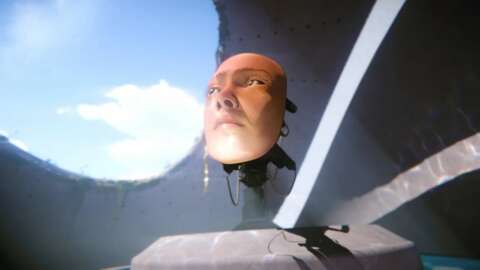
Sunset Visitor’s upcoming title, Prove You're Human, carries an ominous weight. Developed by the team behind 2024's critically acclaimed sci-fi narrative 1000xResist, the game introduces players to Mesa, a seemingly rogue AI.
Mesa has dreamt of possessing a physical body, but her journey is fraught with difficulty. To achieve her goal, she requires irrefutable proof that she is not merely a machine. The game purports to address a growing modern anxiety regarding human performance and the authenticity of our existence in an increasingly automated world.
Defending Humanity In Shift at Midnight
On the complete opposite end of the gameplay spectrum sits Shift at Midnight. This title has already become a viral sensation, gaining massive traction through demos and glowing coverage from major gaming personalities like Mark "Markiplier" Fishbach.
In this high-stakes simulation, players take on the role of a late-night gas station clerk. The job description is simple yet terrifying:
- Monitor incoming customers via database references.
- Verify IDs against specific individual characteristics.
- Distinguish between actual humans and "nonpersons."
- Use lethal force to blast anything attempting to impersonate a real human.
The game features creepy skinwalkers that stalk the station, forcing players to decide—in a split second—who is a friend and who is a foe.
A Growing Trend Of Existential Dread
While it is unlikely that Prove You're Human will transform into a fast-paced shooter, nor will Shift at Midnight suddenly pivot toward deep philosophical treatises, the two games are clearly in conversation with one another.
Despite their different approaches to gameplay and mimicry, both titles represent a significant trend in modern interactive media: the sounding of an alarm. As we move into a future where simulation and reality become harder to distinguish, these games serve as a digital warning about the fragility of what it means to be human.