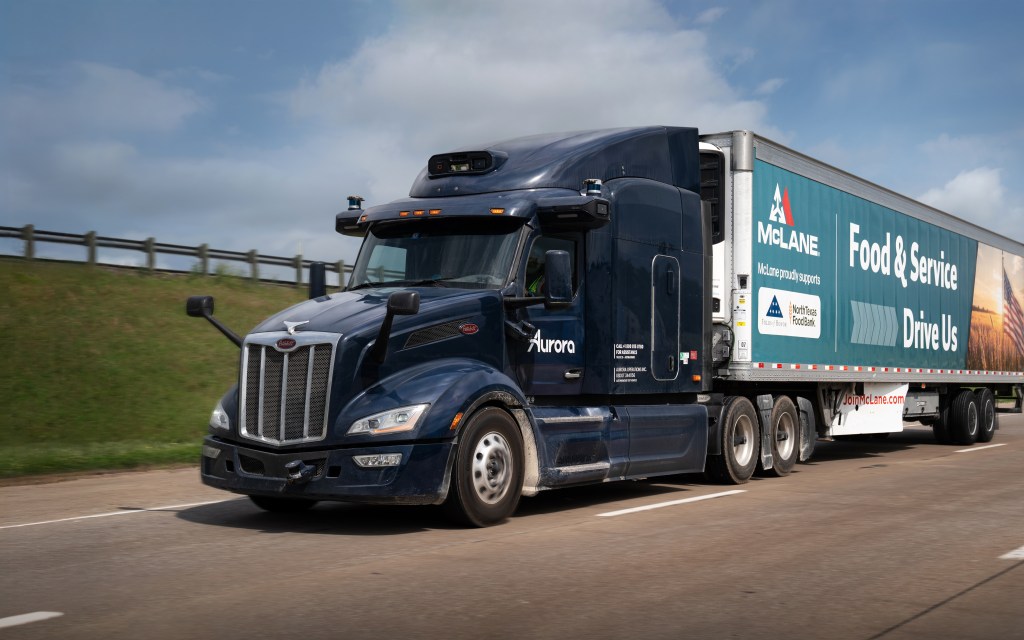
The hum of electric drivetrains blends with the steady rhythm of Texas highways as autonomous rigs glide past billboards advertising fryer oil and cattle markets. In a significant move for the logistics industry, Aurora lands McLane deal to run driverless truck routes in Texas, marking a major step toward full commercial autonomy.
As these silhouettes are framed by the sunrise over the Gulf Coast, operators monitor routes from control centers while vehicles carve a path between distribution hubs. This partnership represents a shift in how freight moves through states where regulations have become a primary proving ground for innovation.
The Scope of the Aurora and McLane Deal
Aurora Innovation is set to deploy driverless freight on designated corridors linking major McLane distribution centers across Texas. These long-haul segments are designed to operate without onboard safety drivers, though the current model includes a human observer in the cab to oversee systems and intervene if necessary.
With McLane’s approval, the partnership enables 24/7 movement between Dallas and Houston, extending operations across the Sun Belt as Aurora transitions from pilot programs to scalable commercial deployment. Key features of the operational rollout include:
- Autonomous trucks handling primary cross-state highway runs.
- Human observers retaining oversight capacity without active control.
- Full operational autonomy targeting increased cost efficiency and uptime.
Operational Model and Route Design
The arrangement utilizes a hybrid structure that splits responsibilities between high-tech automation and traditional logistics expertise. Aurora’s technology focuses on the heavy lifting of highway stretches, while McLane’s drivers manage the complex local delivery legs to restaurants, convenience stores, and industrial sites.
This model uses existing infrastructure, such as terminal facilities in Dallas and Houston, to facilitate seamless handoffs. The strategy relies on several core pillars:
- Prioritizing highway efficiency during driverless segments.
- Maintaining human operator expertise for local delivery.
- Streamlining logistics flow through terminal-based transitions.
Industry Significance and Market Context
This agreement reflects Aurora’s strategic pivot toward full commercial operation. Building on a 2023 pilot that expanded from two daily trips to continuous service, this move follows recent wins in securing haulage contracts and signals growing confidence in autonomous freight's viability.
Texas’s relatively permissive stance on autonomous testing has attracted multiple innovators seeking real-world validation. By targeting Sun Belt distribution networks, both companies are positioning themselves to influence regulatory frameworks and operational standards for driverless transport. This partnership underscores the value of reducing driver fatigue on extended runs while maintaining human oversight during complex scenarios.
The Path Forward for Autonomous Logistics
Aurora’s focus remains on scaling routes, refining sensor systems, and expanding into additional corridors across the region. As the company moves toward broader commercial operations beyond initial pilot phases, upcoming quarterly updates will assess performance metrics, safety outcomes, and integration with partner networks.
For logistics providers, this deal illustrates a tangible model for blending autonomous efficiency with local expertise to meet growing demand. As Texas routes become testbeds for next-generation logistics, the outcome could influence how global freight networks adapt to changing labor dynamics and technological capabilities throughout the decade ahead.